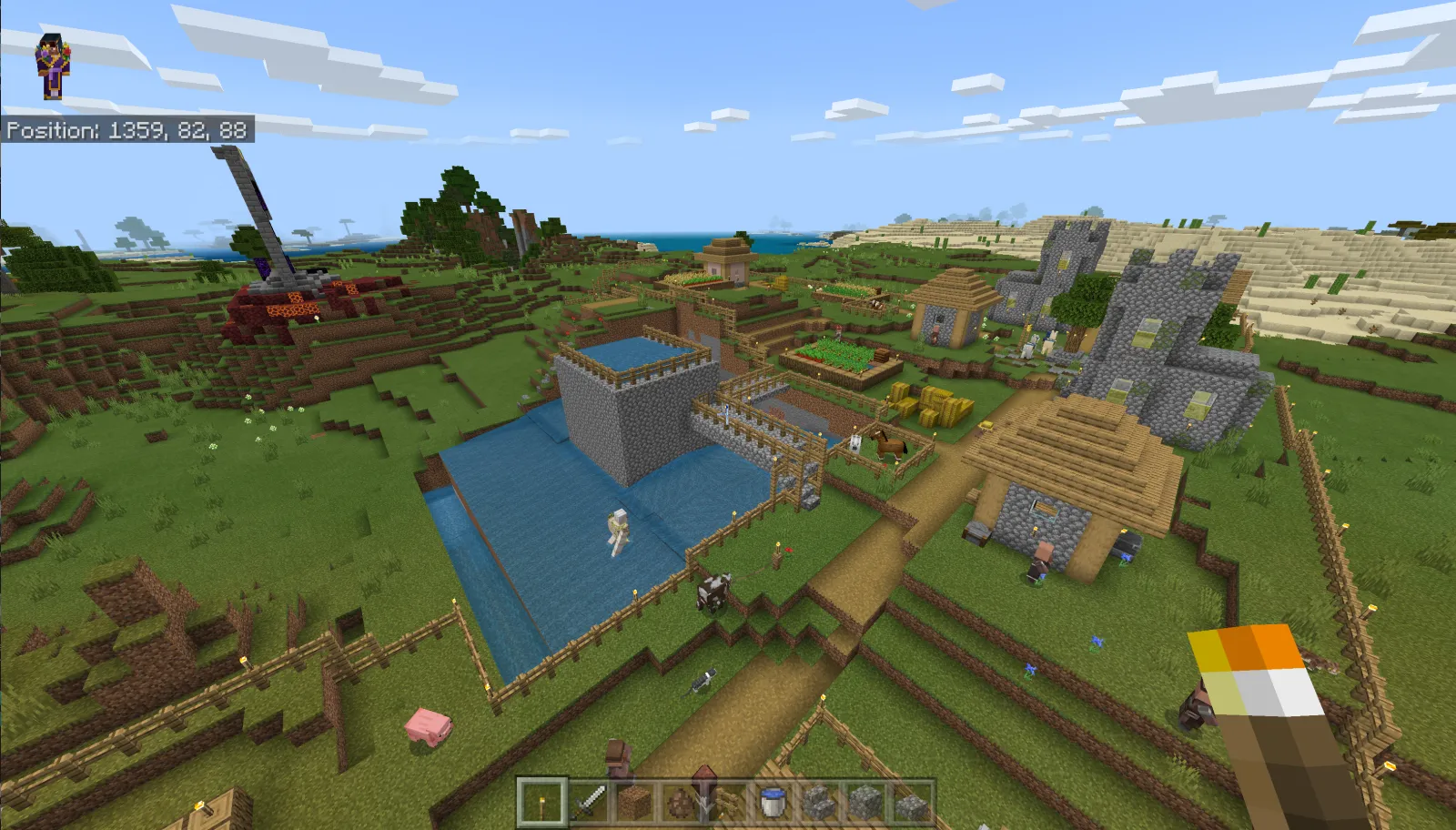
How to Build an Underground Farm in Minecraft
Underground farming in Minecraft means building your crops, animals, or mob grinders below ground in the dark. You gain safety from surface threats, easier automation, and tons of protected space for your operations. It's genuinely one of the best decisions for scaling up.
Why Underground Farms Work
There's something about farming underground that just clicks. You don't have to worry about creepers wandering through your wheat field at midnight, rain affecting growth timers, or angry mobs spawning near your operation. Underground is controlled space. Underground is reliable.
The real draw though? You can cram a massive farm into a relatively small footprint and no one topside sees it. Your beautiful terrain stays intact. And actually, farming underground is more efficient than surface farms because you can stack vertically without worrying about light levels competing for the same sky space.
Space underground is basically infinite if you dig right.
Mob farms especially benefit from the underground treatment. Darkrooms need to be pitch black, and underground naturally gives you that. Same goes for animal farms where you want to control every variable. Once you build your first underground operation, it's hard to go back to surface farming.
Picking Your Underground Location
Before you start swinging a pickaxe, think about what you actually need. How big is your ambition here? A small crop farm for personal use needs way less space than a full-scale mob grinder operation. I'd recommend starting with at least a 30x30 cleared area for your first underground farm, but honestly, bigger is almost always better later when you get ideas.
Depth matters more than people think. You want to be deep enough that surface light doesn't creep in through cracks, but not so deep that you're hitting bedrock or dealing with lava lakes constantly. Around Y-level negative thirty to negative sixty works great in modern versions (this varies by your Minecraft version, actually - in older versions the math is different).
Check for existing caves.
This sounds obvious, but I see people miss it. You don't want to start digging out your farm only to break into a massive cave system halfway through. Use a tool like our Minecraft Block Search to identify your surrounding area and plan accordingly. Takes five minutes and saves you from catastrophic redesigns.
Accessibility matters. You'll be visiting this farm constantly to harvest, restock, check systems. Make sure you can get there without needing a twenty-minute parkour course. A simple staircase or minecart tunnel works perfectly.
Getting Light Down There
Here's where most people overthink things. You need a light source that doesn't take up tons of space and doesn't interfere with farm mechanics (like mob spawning or crop detection). Got options.
Soul lanterns are my pick for pure aesthetics, but they don't beat glow berries if you want something truly space-efficient. Glow berries grow on cave vines, they provide light, and they don't require infrastructure. Just place them and let them vibe. Jack o'lanterns work in a pinch for more structured lighting layouts. Candles? They're festive but don't provide much light honestly.
What about amethyst clusters? They're pretty but barely bright enough for crop farms.
The thing is, your light choice depends on what you're farming. Mob farms need absolute darkness outside the spawning area. Crop farms need light for growth. Animal farms don't care as much, but your sanity usually demands being able to see. Pick a lighting solution that fits your farm type, test it, and move on. Don't spend three hours debating between soul lanterns and small amethyst buds.
What You're Going to Farm
Different underground farms have different needs. Crop farms with wheat, carrots, potatoes, or beetroot just need water channels and light. These are simple and relaxing to build. Water flows predictably, crops behave predictably, harvesting is straightforward.
Mob farms are another beast entirely. You're creating a structure where mobs spawn, funnel to a central area, and die in a way that's efficient for you. These require more Redstone knowledge and testing. The payoff is insane though. One fully operational mob farm produces more drops than you'd ever grind for manually.
Tree farms, bee farms, and kelp/sugar cane farms are all viable underground too.
Here's my honest take: start with a simple crop farm to get comfortable with the underground building process. Learn how water works at your Y-level, understand your light distribution, get a feel for the space. Once that's stable and running, you can expand to more complex operations.
Making It Efficient
Efficiency in underground farming comes down to three things: light coverage, water distribution, and access routes. Get these right and your farm practically runs itself.
Water mechanics don't change underground, so design your water channels exactly like you would on the surface. Crops need hydrated soil within four blocks horizontally. Plan your rows so every plant is within range of water. This takes planning but pays off immediately when you're harvesting.
Light distribution is where most people waste space. Don't light every single square if you don't need to. Look, crops need light level eight minimum for growth, but they don't care about specific colors or block types. Use your block search tool again to find efficient lighting blocks that match your farm's style, then space them appropriately (roughly every 14 blocks in a grid works for most crops).
Build your harvesting system before you plant anything.
I learned this the hard way. Planting without a harvesting plan means manual labor forever. Whether it's Redstone-automated pistons, hopper systems, or a simple collection point, set it up first. Test it with some crops. Once it works, expand confidently.
Your First Underground Farm
Start small. I'm talking 20x20 blocks, single-level crop farm. Clear the space, place water, add light, plant some wheat. Get it working smoothly. This teaches you the fundamentals without overwhelming yourself.
Once that farm is stable and producing, you've learned:
- How to navigate Y-coordinates in your version
- How water behaves at your chosen depth
- What your light coverage actually needs
- How fast crops grow in your setup
- What harvesting method works for you
Now you can build bigger. Add another level. Expand sideways. Try mob farming. Build a tree farm on the other side of your chamber. If you're running a multiplayer server and want to showcase your farm, you can set up an inviting server message using our Minecraft MOTD Creator to attract players to your farm area.
Underground farming is genuinely rewarding because it transforms wasted space into productivity. Your farm won't look fancy from above. It'll look like regular terrain. But underneath, you've got a fully automated operation producing food, resources, or mob drops on demand. That's the real flex in Minecraft.

Lead writer at minecraft.how. Long-time Minecraft player running a small SMP server, testing every build, mod, and seed before writing about it.
Frequently Asked Questions
What's the best depth for an underground farm?
Can you use natural cave light for underground farms?
What crops grow fastest underground?
How do you prevent water from flooding your underground farm?
Is mob farming worth doing underground?
Have a Question or Tip about this Guide?Community Q&A
Ask a question or help other players below. Join the discussion and share your Minecraft tips!
Comments
No comments yet. Be the first to share your thoughts!