Minecraft Potion Recipes: Every Brew for 2026
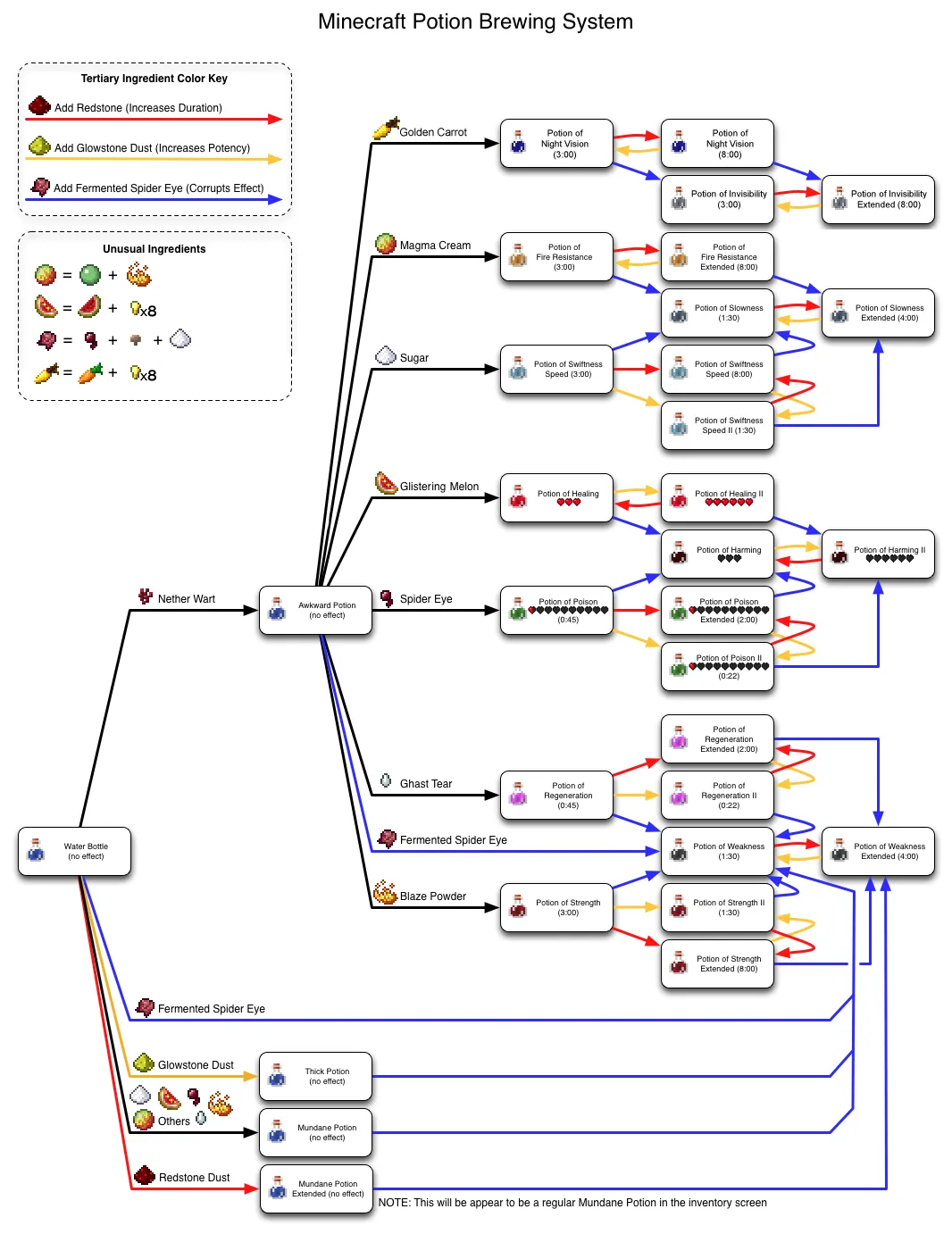
Minecraft potion recipes all work the same at the start: brew a water bottle into an awkward potion with nether wart, then add the ingredient for the effect you want. Redstone makes most brews last longer, glowstone makes them stronger, gunpowder turns them into splash potions, and dragon's breath makes them linger.
Minecraft potion recipes basics: start with awkward potions
You need four things before any serious brewing session: a brewing stand, blaze powder for fuel, glass bottles filled with water, and nether wart. Minecraft.net's Brewing Stand article still covers the setup well, and one blaze powder handles 20 brewing actions, so a single fortress trip goes further than most players expect.
Most useful minecraft potion recipes begin with Water Bottle + Nether Wart = Awkward Potion. That's the real starting line, not the stand itself. If you're organized, pre-brew a stack of awkward potions before you make anything else. Future you will be less annoyed.
Weakness is the weird exception, because Minecraft apparently needs one tiny act of chaos in every system.
- Redstone dust: extends duration on time-based potions.
- Glowstone dust: boosts potency, usually creating a level II version with shorter duration.
- Gunpowder: makes a splash potion you can throw or fire from a dispenser.
- Dragon's breath: turns a splash potion into a lingering cloud.
- Fermented spider eye: corrupts certain brews, like Night Vision into Invisibility or Healing into Harming.
One more caveat: mundane and thick potions exist, but for normal survival play they're mostly dead ends. If you're trying to learn minecraft potion recipes without turning your storage room into an alchemy-themed landfill, focus on awkward potions and the direct Weakness recipe.
All core minecraft potion recipes you should memorize
I keep the recipes in groups, because trying to remember them as one giant rainbow list is how you end up brewing Slowness at 2 a.m. while insisting you definitely clicked sugar. Been there.
Travel and utility brews
- Night Vision: awkward potion + golden carrot. Redstone extends it from 3:00 to 8:00.
- Invisibility: night vision + fermented spider eye. Redstone gives you 8:00. Armor still shows, so this isn't true movie magic.
- Swiftness: awkward potion + sugar. Redstone makes it 8:00, glowstone makes Swiftness II for 1:30.
- Leaping: awkward potion + rabbit's foot. Redstone makes it 8:00, glowstone makes Leaping II for 1:30.
- Fire Resistance: awkward potion + magma cream. Redstone extends it from 3:00 to 8:00.
- Water Breathing: awkward potion + pufferfish. Redstone extends it from 3:00 to 8:00.
- Slow Falling: awkward potion + phantom membrane. Redstone stretches it from 1:30 to 4:00.
Ever sprinted into a bastion with no Fire Resistance because you were just checking a chest? That's not bravery. That's admin-application behavior. My default Nether pair is Fire Resistance plus Swiftness, and for big cave runs I swap Swiftness for Night Vision.
Combat and recovery brews
- Healing: awkward potion + glistering melon slice. Glowstone turns it into Healing II. Instant effects don't use redstone because there's no timer to extend.
- Regeneration: awkward potion + ghast tear. Glowstone makes Regeneration II. Redstone extends it to 1:30 on Java and 2:00 on Bedrock.
- Strength: awkward potion + blaze powder. Redstone makes it 8:00, glowstone makes Strength II for 1:30.
- Poison: awkward potion + spider eye. Glowstone makes Poison II, redstone extends it to 1:30 on Java and 2:00 on Bedrock.
- Harming: healing or poison + fermented spider eye. Glowstone makes Harming II.
- Weakness: water bottle + fermented spider eye. Redstone extends it from 1:30 to 4:00.
- Slowness: usually swiftness or leaping + fermented spider eye. Redstone extends regular Slowness to 4:00.
- Turtle Master: awkward potion + turtle shell. Redstone makes the effect last 0:40, glowstone makes a nastier short version. Powerful, yes. Also a fantastic way to feel like you're sprinting through wet cement.
I tested this batch order on Basalt Bay, my little Paper server, and on a Bedrock Realm while draining an ocean monument. Healing, Strength, Water Breathing, and Slow Falling were the ones I kept remaking. Turtle Master mostly sat in a barrel looking dramatic.
Actually, that's not quite fair. Turtle Master is excellent if you know the hit is coming, especially in tight PvP or during a panic-heavy boss moment. It's just miserable for general movement.
The 1.21+ trial chamber brews
- Wind Charging: awkward potion + breeze rod. Lasts 3:00 and triggers a wind burst when the target dies.
- Weaving: awkward potion + cobweb. Lasts 3:00 and drops cobwebs when the target dies.
- Oozing: awkward potion + slime block. Lasts 3:00 and spawns slimes when the target dies.
- Infestation: awkward potion + stone. Lasts 3:00 and gives the target a chance to spawn silverfish when hit.
These four came in with the trial chamber era, and they're much weirder than the classic lineup. I love that, honestly. Potions were getting a little too tidy.
They're not daily-driver brews for most survival bases, but on multiplayer servers they're incredible for traps, mini-games, and chaos that's technically strategic. The Minecraft Wiki brewing page is still the fastest place to sanity-check the odd ones if you haven't touched them since 1.21 landed.
If you want the full witch-hut look while you brew, potion-themed cosmetics help more than they should. I like this potion-themed Minecraft skin, the sharper potions PvP Minecraft skin, the stylish VanityPotion Minecraft skin design, and the gloriously specific beeofpotions Minecraft skin. None of that changes the recipes, obviously, but neither does armor trim and we all still care.
How modifiers change minecraft potion recipes
Once the base potion is done, the real decisions start. Redstone and glowstone don't stack, so you pick time or power. And yes, everyone chooses wrong at least once before a boss fight.
- Redstone is best for long trips, like Nether travel, monument clearing, or general exploring.
- Glowstone is better for burst value, especially Healing, Strength, Poison, and Regeneration.
- Gunpowder matters more in PvP, co-op fights, and zombie villager cures than in solo caving.
- Dragon's breath is niche, but lingering clouds can lock down chokepoints or make tipped arrows.
- Fermented spider eye is the recipe flipper, and it's the ingredient people forget most often.
Fermented spider eye is doing a lot of work behind the scenes. It's not just for Weakness. It flips Night Vision into Invisibility, Swiftness into Slowness, and Healing or Poison into Harming. If a recipe feels strangely mean, that's probably the ingredient doing it.
Splash and lingering potions are where brewing stops being prep and starts being tactics. Splash Healing hurts undead, splash Weakness cures zombie villagers when paired with a golden apple, and lingering clouds turn doorways into bad career choices.
Need tipped arrows? Craft eight arrows around a lingering potion. Expensive, yes. But for PvP, raid defenses, or carefully planned boss arenas, it's still cleaner than juggling bottles mid-fight.
Best minecraft potion recipes for survival, bosses, and PvP
Not every recipe deserves inventory space. My rule is simple: carry the bottle that prevents the thing most likely to kill you, not the one that looks smartest in a chest screenshot.
- Nether loadout: Fire Resistance, Healing, and either Strength or Swiftness. Fire Resistance is non-negotiable unless you enjoy lava as a teaching tool.
- Ocean monument loadout: Water Breathing, Night Vision, and Healing. You can brute-force monuments without Night Vision, but you'll hate every second.
- Ender Dragon loadout: Slow Falling, Strength, Healing, and optional Regeneration. Slow Falling is the actual MVP here, not the flashy one.
- Trial chamber or PvP loadout: Strength, Healing, Swiftness, and then something rude like Wind Charging or Weaving if the map allows it.
- Village rescue loadout: Splash Weakness plus a golden apple. Keep both on you before you start the cure, because sprinting through chests while a zombie villager groans at you is a pathetic look.
PCGamesN recently pointed out that vanilla Minecraft now has more than 80 mobs in 1.21.11. That's exactly why potion choice matters more in 2026 than it did years ago. You're not preparing for combat in the abstract anymore, you're preparing for lava, wardens, elder guardians, piglin brutes, trial chambers, and that one skeleton on a ledge who somehow has perfect comedic timing.
Short version: brew for the problem, not for the fantasy. Strength looks cool. Fire Resistance keeps your stuff.
Java, Bedrock, and console caveats in 2026
The good news is the actual recipes are the same across Java, Bedrock, console, and mobile. The bad news is the little details still wander off and make trouble.
Bedrock lets you store potions in cauldrons and tip arrows from them, which is genuinely handy. Java doesn't. Extended Poison and Regeneration also differ a bit, with Java using 1:30 and Bedrock commonly showing 2:00. So if a friend swears your numbers are wrong, check the edition before you start a family argument over ghast tears.
Console players don't need a separate brewing chart. The Loadout covered Mojang's native PS5 plans back in 2024, but the potion system itself stayed consistent, which is exactly how it should be. Same ingredients, same modifiers, same moment of realizing you just brewed three mundane potions because you clicked too fast.
One extra oddball: Potion of Luck exists in Java creative and commands, but you don't brew it in normal survival. If you're searching for that recipe and feeling gaslit, no, you didn't miss a secret clover ingredient.
Minecraft potion recipe mistakes people still make
Most brewing failures aren't complicated. They're just annoying.
- Forgetting blaze powder fuel, then assuming the stand is bugged.
- Trying to make Weakness from an awkward potion instead of a plain water bottle.
- Using glowstone and redstone on the same bottle and wondering why the second ingredient won't apply.
- Brewing expensive drinkable potions when a splash version would solve the fight faster.
- Ignoring storage labels until the potion room looks like a pharmacy run by raccoons.
So yes, minecraft potion recipes look messy at first, but they're really a small set of patterns: awkward potion first, effect ingredient second, modifier last. Learn that loop, memorize the half-dozen brews you actually use, and the rest becomes a lookup job instead of a panic job.

Lead writer at minecraft.how. Long-time Minecraft player running a small SMP server, testing every build, mod, and seed before writing about it.
Frequently Asked Questions
What's the easiest useful potion to brew first?
How do you turn a normal potion into a splash or lingering potion?
Which potion matters most in the Ender Dragon fight?
Do potion recipes change between Java and Bedrock?
Can you stack multiple potion effects at the same time?
Have a Question or Tip about this Guide?Community Q&A
Ask a question or help other players below. Join the discussion and share your Minecraft tips!