How to Use Minecraft Smithing Table: Netherite Upgrade Guide
The Smithing Table is your ticket to Netherite gear in Minecraft. Here's how to use it: place the table, put your diamond tool or armor in the left slot, add a Netherite Ingot to the right slot, and craft. The table combines them into a Netherite version, preserving enchantments and durability. It's the only official way to upgrade diamond gear in the game.
What Is a Smithing Table?
Before jumping into the upgrade process, let's be clear about what you're looking at here. The Smithing Table isn't a general crafting station like a standard Crafting Table. It's specifically designed for upgrading diamond gear to Netherite - nothing else. Well, almost nothing. In recent versions, you can also apply Armor Trims with it, but that's a separate thing entirely. Look, on my SMP server, we use the Smithing Table exclusively for the Netherite grind.
The visual design is pretty distinctive: it looks like a heavy metalworking station with an anvil-like surface on top. You can find them in Villages (Toolsmith houses are your target), or craft one yourself. For crafting, you'll need Planks (any type), Iron Ingots (three of them), and a Diamond. Just one Diamond, actually - I said Diamonds plural the first time I explained this and got corrected pretty quick.
You can place it anywhere and use it as much as you want. No wear, no cost beyond the initial materials.
Materials You'll Need for Netherite Upgrades
Here's what actually trips people up in the comments. To upgrade diamond gear to Netherite, you need:
- The diamond tool or armor piece you want to upgrade
- One Netherite Ingot per item
That's genuinely it. No extra diamonds, no enchantment books, no rare materials. Just those two things sitting in the Smithing Table slots.
But here's the catch: finding Netherite Ingots is the real pain. You'll need to mine Ancient Debris in the Nether (which only spawns below Y level 15, and only in certain biomes), smelt it into Netherite Scrap, then combine four Scraps with four Gold Ingots in a regular Crafting Table to get a single Netherite Ingot. One ingot. Per upgrade. So upgrading a full armor set plus tools and weapons means farming a lot of ancient debris and hoarding gold.
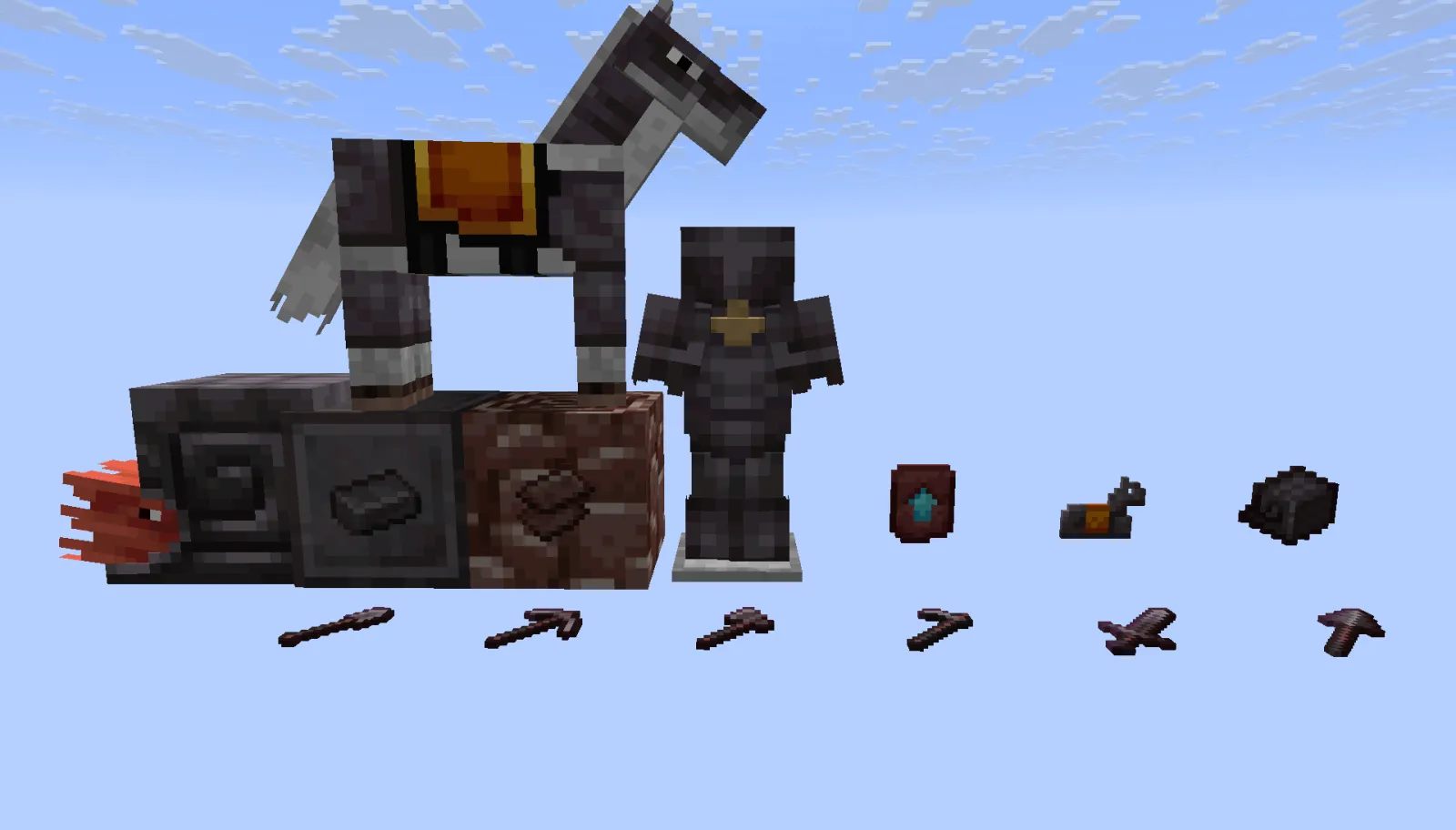
I've gone through the calculation before, and it's brutal. A full Netherite setup (helmet, chestplate, leggings, boots, sword, pickaxe, axe, shovel, hoe) requires nine ingots. That's 36 Ancient Debris, 36 Gold Ingots, and a ton of smelting time. Bring a Diamond Pickaxe to the Nether too - you literally can't mine Ancient Debris with anything weaker than diamond. I learned that lesson the hard way in early versions.
Upgrading to Netherite: Step-by-Step
This is where the Smithing Table actually shines (no pun intended). The upgrade process is dead simple:
- Place your Smithing Table in your crafting area
- Right-click to open the interface
- Put your diamond gear in the left input slot
- Put a Netherite Ingot in the right input slot
- Take your upgraded item from the output slot
Done. That's the whole thing.
The upgraded item emerges with all its previous enchantments intact, the same durability level it had, and that beautiful dark Netherite appearance. If you had Mending on a diamond pickaxe, it stays Mending. If it had Efficiency V, you keep Efficiency V. The Smithing Table doesn't strip anything - it just upgrades the base material.
One important caveat: the Smithing Table doesn't repair. If your diamond tool rolled in with half durability, it exits as a half-durable Netherite tool. The table upgrades the material, not the condition. So do yourself a favor and repair anything before upgrading it.
Common Mistakes (And How to Avoid Them)
I've watched this happen in servers and singleplayer worlds, and it's usually one of a few problems.
First: trying to upgrade with the wrong material. Diamond tools and armor? Yes. Iron or gold? Nope. You can't skip directly from iron to Netherite - you'd need to upgrade iron to diamond first, then diamond to Netherite. That's extra steps and extra resources. Just go straight to diamond if you're planning ahead.
Second: thinking the Smithing Table works on anything besides diamond gear. It doesn't. Strictly diamond tools and armor. If you need to do other crafting, use a regular Crafting Table, Furnace, or Grindstone.
Third: forgetting that Netherite isn't invisible. It's visually slower. The animations on Netherite tools are heavier and less snappy than diamond - intentional design to show the weight difference. Some players expect upgraded gear to feel faster, but that's just how it works.
There's also a common misconception that Netherite is better in every way. It's not faster at breaking blocks (though pickaxes have the same speed), just more durable. For weapons, there's a slight damage boost, but it's minimal. The real value is durability and lava protection.
Why Netherite Anyway?
Because it refuses to die. Netherite tools have double the durability of diamond - roughly 2,031 uses instead of 1,561. For pickaxes and shovels doing serious mining or terraforming, that's a massive difference. You spend less time crafting replacements and more time doing actual work.
For armor, Netherite gives one extra durability point per piece, which sounds minor but adds up. More importantly: Netherite doesn't burn in lava. If you die in lava, your Netherite gear survives for 40 seconds before burning, giving you time to retrieve it. Your diamond gear? Gone instantly. That alone makes Netherite worth the grind if you're doing any Nether mining or exploration.
In terms of actual protection, it's functionally the same as diamond armor. No extra defense points. But the durability and lava resistance make it objectively better for serious play.
Tips for Maximum Efficiency
Planning a Netherite upgrade run? Here's my strategy:
Concentrate on farming Ancient Debris first. Don't split your focus between mining and other tasks - you'll waste time. Get all your Netherite Ingots made and sitting in a chest before you touch your diamond gear. This keeps your workflow smooth: mine, smelt, craft, then upgrade. No bouncing between stations.
Store your materials in one location. I keep mine in a dedicated Netherite farm chest next to the Smithing Table. It's boring, but it saves enormous amounts of time when you're upgrading multiple pieces.
Here's something most guides miss: think about what you actually need upgraded first. A Netherite pickaxe? Essential if you're mining Ancient Debris (ironic, I know). Armor? Depends on your playstyle. If you're building more than fighting, prioritize the pickaxe. If you're exploring dangerous caves, prioritize armor.
If you're showing off your new Netherite gear, consider getting a skin that complements the dark metallic look. The community has thousands of free options, and our Minecraft skin gallery has a 3D previewer so you can see exactly how your character looks in-game before committing.
Playing on servers with your upgraded gear? If you've got a server you're investing time in, verify it's legitimate using our Votifier Tester. It's worth knowing you're on a stable server before you dump resources into upgrades.
One last thing: position your Smithing Table somewhere accessible but organized. I keep mine in a dedicated crafting area separate from storage - it's easier to navigate and makes your base look intentional rather than chaotic. Treat it like the important station it's.

Lead writer at minecraft.how. Long-time Minecraft player running a small SMP server, testing every build, mod, and seed before writing about it.
Frequently Asked Questions
Can you upgrade any tool to Netherite, or just diamond?
What happens to enchantments when I upgrade to Netherite?
Do I need multiple Netherite Ingots for a full set?
Why doesn't Netherite gear burn in lava?
Is there a faster way to get Netherite than mining Ancient Debris?
Have a Question or Tip about this Guide?Community Q&A
Ask a question or help other players below. Join the discussion and share your Minecraft tips!
Comments
No comments yet. Be the first to share your thoughts!