
Minecraft Axolotl Spawning, Drops & Farming

Axolotls spawn in lush caves and drop experience when killed. They're primarily useful for their utility in combat and decorative purposes. To farm them, you'll need water, breeding mechanics, and tropical fish buckets.
Where Axolotls Spawn and How to Find Them
So here's the thing about axolotls: they're not exactly everywhere. You'll only find them in lush caves, which means you actually have to explore a bit first. These underwater biomes have this vibrant, glowing aesthetic with glow berries hanging everywhere, and that's where axolotls hang out in the water.
The biome itself is pretty distinctive. If you're wandering caves at Y-level 63 to 64 or so and suddenly spot massive water reservoirs with all these aquatic plants, you've probably found a lush cave. Axolotls spawn here naturally in the water blocks.
They only spawn in water.
Now, here's a practical tip: instead of wandering around underground hoping to stumble on a lush cave, you can use a cave finder. Check out the Minecraft Block Search tool to help locate lush cave biomes near your base. It saves time and honestly, a lot of frustration. You can set up your farm much closer to your actual builds this way.
If you want to skip the exploration entirely, you could always join a server where others have already found these biomes. The Minecraft Server List has communities that maintain shared resources and farm locations, which takes the guesswork out of it.
When you finally spot them in the water, axolotls come in different colors: pink (the default), brown, gold, cyan, and blue. They're relatively slow swimmers compared to other aquatic mobs, which makes them easier to catch or corral.
What Do Axolotls Drop?
Here's where it gets less exciting than you might hope. Axolotls don't drop much of practical value, to be honest. When you kill them, they drop experience orbs. That's it for the standard drops.
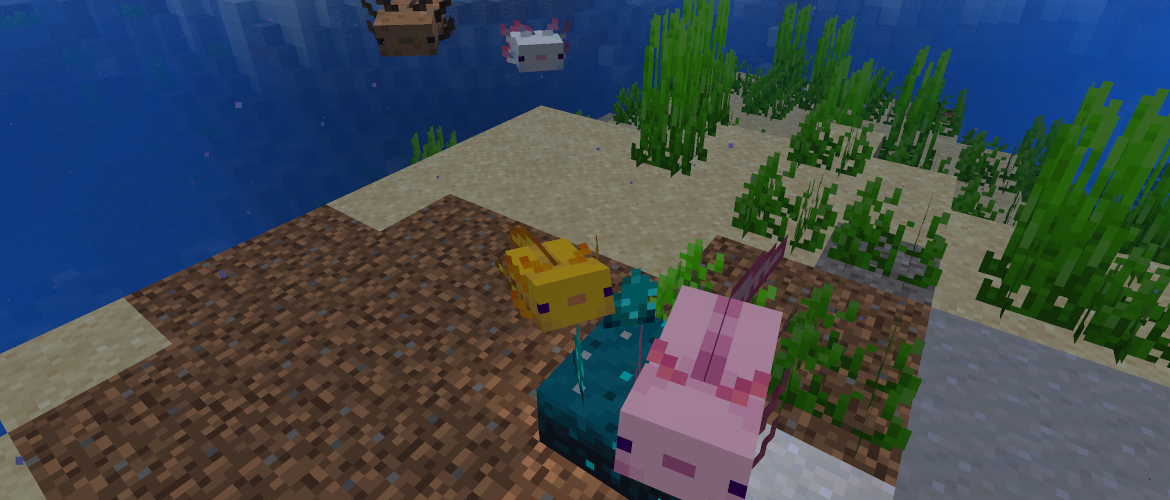
Experience from axolotls is fine if you're grinding levels, but there are better mob farms for that purpose. Not exactly new.
The real value of axolotls isn't in their drops, though. It's in their behavior and how they interact with other mobs. They'll attack and kill some aquatic creatures automatically, they grant you regeneration effects in water during combat, and they play dead (turn upside down) when they take damage. That last mechanic is interesting from a gameplay perspective, even if it doesn't translate to loot.
If you're building an axolotl farm specifically for drops alone, you'll be disappointed. But if you're farming them for other reasons (decoration, keeping tropical fish populations in check, or just because they're fun), then it makes more sense.
Setting Up Your First Axolotl Farm
Building an axolotl farm is simpler than you'd think, actually. You don't need anything super elaborate. Start with a basic water collection area. A 5x5 pool at least 2 blocks deep works fine for starters.
Water placement matters here. Make sure the water is still and calm, not flowing. Axolotls prefer stationary water, and flowing water can mess with their behavior and breeding patterns. You'll want to block off any current.
Lighting is optional indoors but matters outdoors. If you're building this in a cave or enclosed space underground, you don't need to worry much. If you're building at surface level, make sure there's no light source above the water, because you don't want other mobs spawning in your farm area. A roof or some coverage helps.
Add some decorative elements like glow berries or amethyst blocks if you want, but they're not necessary for the farm to function. Axolotls will breed and survive in basic water just fine. What matters is having enough space and minimal obstacles.
Gathering Your Breeding Stock
You need to actually get axolotls into your farm first. Bucket them from lush caves, one at a time if needed. Axolotls fit in water buckets just like fish, so grab some buckets and head back underground. Two axolotls minimum to start breeding, but honestly, grab a few extras in case something happens.
Breeding and Scaling Your Farm
Here's where axolotl farming gets interesting. They breed just like fish do: using tropical fish buckets. Hold a tropical fish bucket near two axolotls in water, and boom, they'll enter breeding mode and create a baby axolotl.

You'll need to farm tropical fish separately to keep your axolotl breeding going. Actually, that's not quite right for pure farming efficiency. You could just use buckets sparingly and let your axolotls breed naturally over time if you wait long enough between feedings. But if you want production, tropical fish buckets are your go-to.
Baby axolotls take about 20 minutes to grow into adults in-game. They're tiny and adorable until then.
To scale beyond a small breeding setup, you'll want multiple breeding pools or one larger area subdivided with glass panes. This prevents overcrowding and makes it easier to separate age groups or color variants if you care about that sort of thing.
Avoiding Common Mistakes
Don't leave your axolotls on land for more than a few minutes. They'll start taking damage. Keep them in water or damp places, and definitely don't try to transport them on dry land. Water buckets are your friend here.

Avoid putting them near aggressive mobs. Drowned, striders, or other water-spawning mobs can stress the axolotls or cause trouble. Here's the thing, keep your farm isolated if possible.
Some players make the mistake of assuming axolotls are useful as a general defense mob. They're not terrible, but there are way better options for protecting your base or farm from hostile mobs. Think of them more as a utility mob than a guard.
Don't overfill your tank thinking more water means more breeding. They need swimming space, and dense water with no room to move around will frustrate them. Quality over quantity with the pool size.
Finally, remember that axolotls are fun but not meta. You're not going to change your survival world with an axolotl farm, but they're genuinely cool to have around if you like aquatic mobs and colorful builds. Sometimes that's reason enough.