How to Find Abandoned Camps in Dappled Forests
Abandoned camps in Dappled Forest biomes are scattered throughout certain areas, particularly near specific environmental markers. You'll find them most reliably by looking for terrain interruptions and using specific search patterns. Here's what actually works when you're hunting for them.
Understanding What You're Looking For
First thing to clear up: abandoned camps aren't the same as structures like villages or outposts. These are smaller, more organic-looking settlements that spawn in forest regions. They're partial structures, often incomplete or heavily weathered, which is why they're actually harder to spot than you'd think.
In Dappled Forests specifically, these camps tend to blend in with the dense foliage and terrain. The Dappled Grove's dense canopy and moss-covered blocks make visual searches challenging. You need to know what architectural patterns to look for.
Think of them as the remnants of settlements that didn't quite make it. No torches, no organized layout like a village - just scattered structures that suggest someone tried to settle there once.
Best Areas to Search in Dappled Forests
Dappled Forests have specific geography that affects camp spawn locations. Clearings are your first stop - those natural open spaces where the forest thins out. Camps almost always spawn in areas where there's enough room to build but still surrounded by forest. Look, if you find a depression in the terrain with relatively flat ground and close-by wood sources, you've found prime camp territory.
Focus your search on:
- Natural valleys or hollows within the forest
- Areas where the canopy breaks and light filters through
- Zones bordering the Dappled Forest and adjacent biomes
- Regions with exposed stone or moss blocks near ground level
Water sources matter too. Abandoned camps often sit near small ponds or streams. And this makes sense - whoever built them wanted water access. Look for settlements roughly 40-80 blocks away from larger water bodies, positioned where early explorers would naturally stop.
Using Commands to Narrow Your Search
If you're running a server, the locate command is your friend. You can use `/locate structure abandoned_camp` (the exact syntax depends on your version, but 26.2 supports structure location commands). This removes the guesswork entirely.
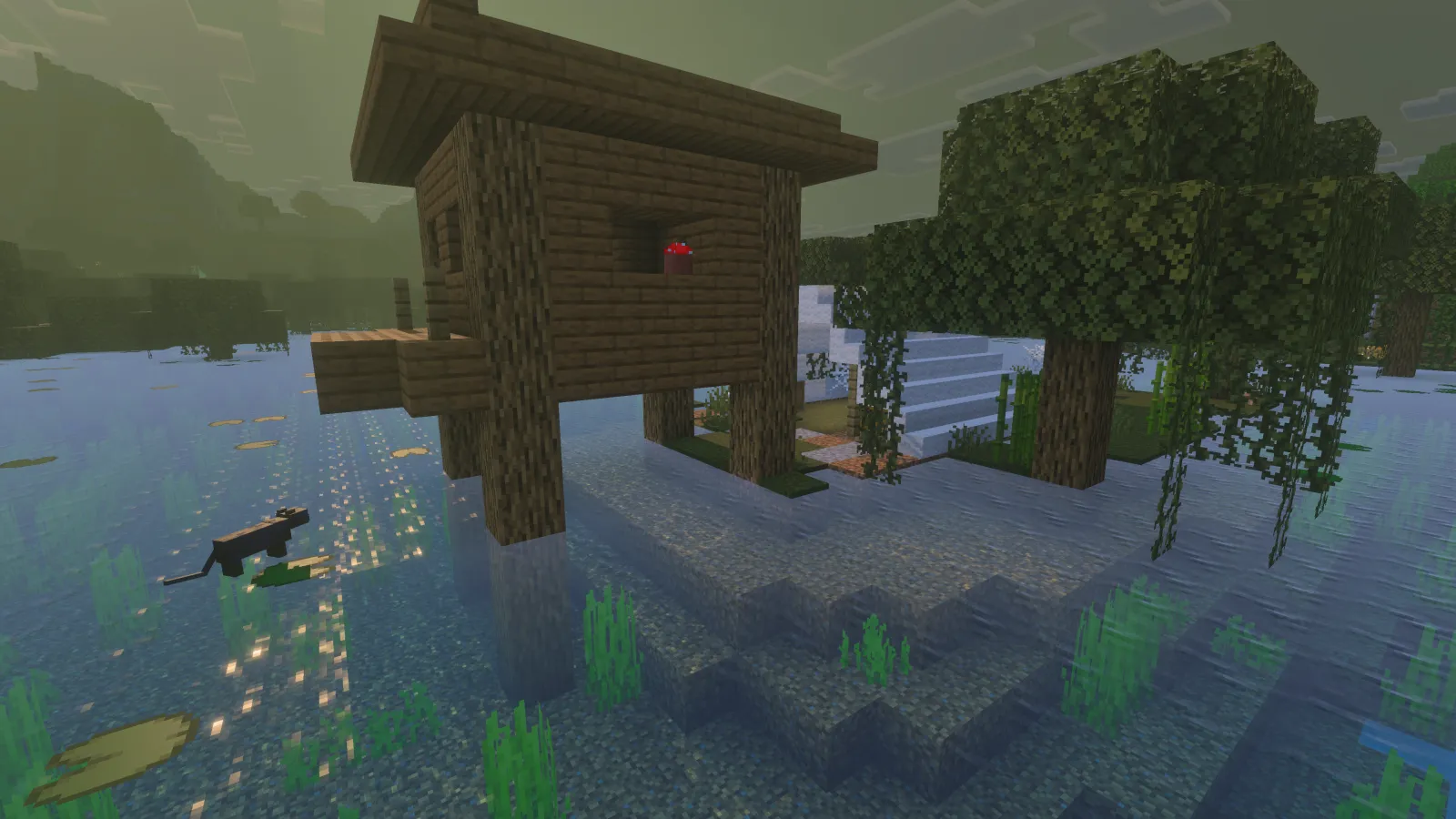
Actually, that's worth pausing on. If you're setting up a proper SMP with multiple players exploring the same world, you might want to track these locations properly. Our Server Properties Generator can help you configure settings that make structure exploration rewarding for your group. Set `announce-player-achievements` to true so when someone finds something cool, everyone knows.
Without commands, you're doing the analog version. Systematic grid searches work, but they're tedious. Better approach: follow game logic. Camps spawn where players would naturally build. And that means accessible terrain with resources nearby.
Visual Markers That Signal a Camp
Once you know where to look, learn what camps actually look like. They're not always obvious.
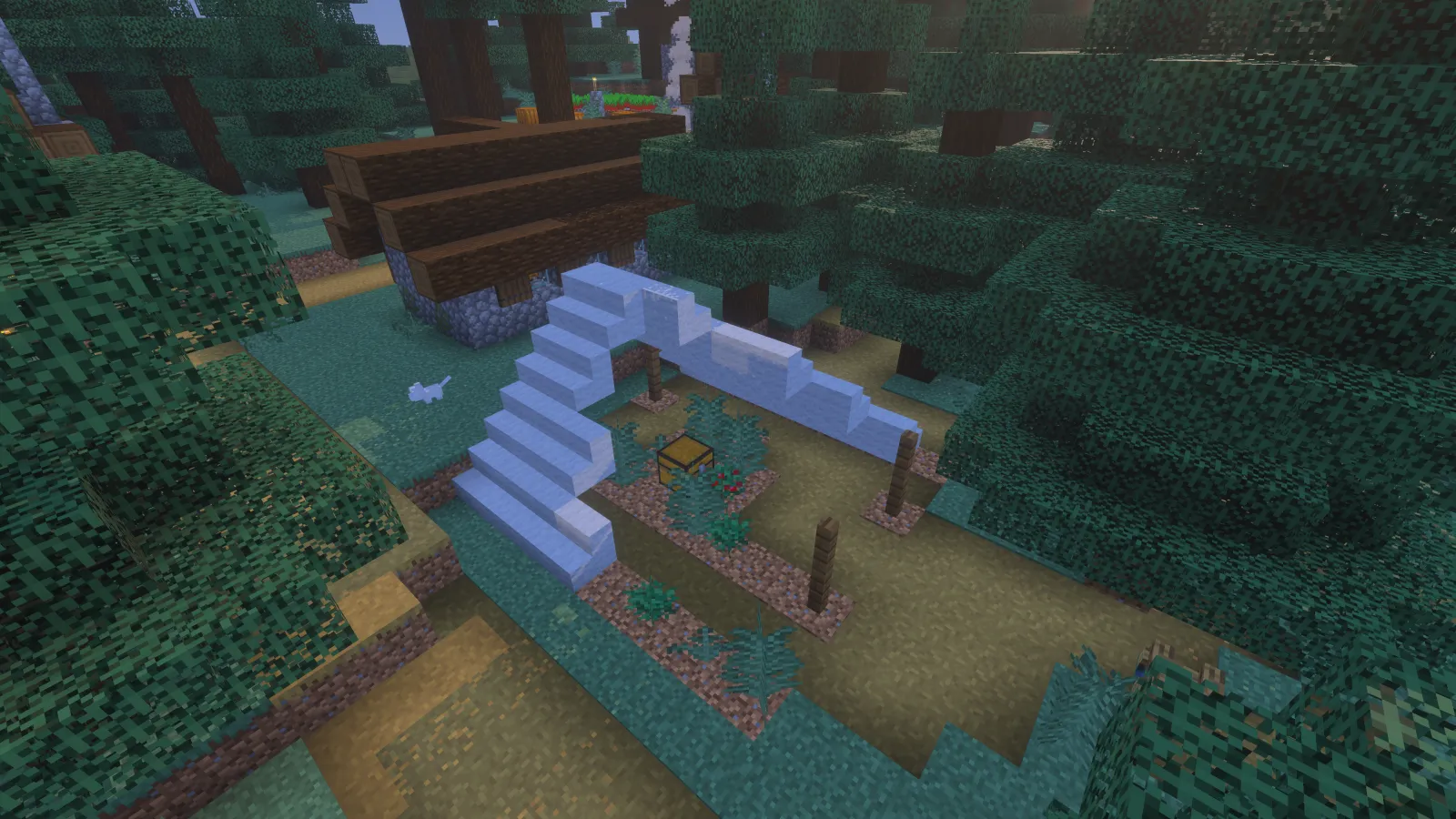
Watch for incomplete wooden structures - partial walls, missing roofs, or building attempts that were clearly abandoned partway through. Dappled Forests with their dark wood palette make these harder to spot, but the shape gives them away. You're looking for geometric patterns in a natural-looking environment.
Scattered item frames, barrels, or chests are giveaways. Camps often have storage left behind. Furnaces or anvils sitting randomly in clearings are red flags that someone set up there. Once you spot one piece of evidence, look around - the rest of the camp is usually nearby.
Overgrown construction is common too. Camps that blend with moss, vines, and saplings. In Dappled Forests, where those elements are everywhere, you need to examine unusual concentrations. If you see way too many block types clustered in one spot when the surrounding forest is homogeneous, investigate.
Practical Searching Strategies
Strip mining is overkill here, but surface-level transects work well. Walk in a straight line through a Dappled Forest region, moving perpendicular to landmarks so you cover ground methodically. Change elevation as you go - camps can sit on hillsides or depressions you might miss if you only look at eye level.
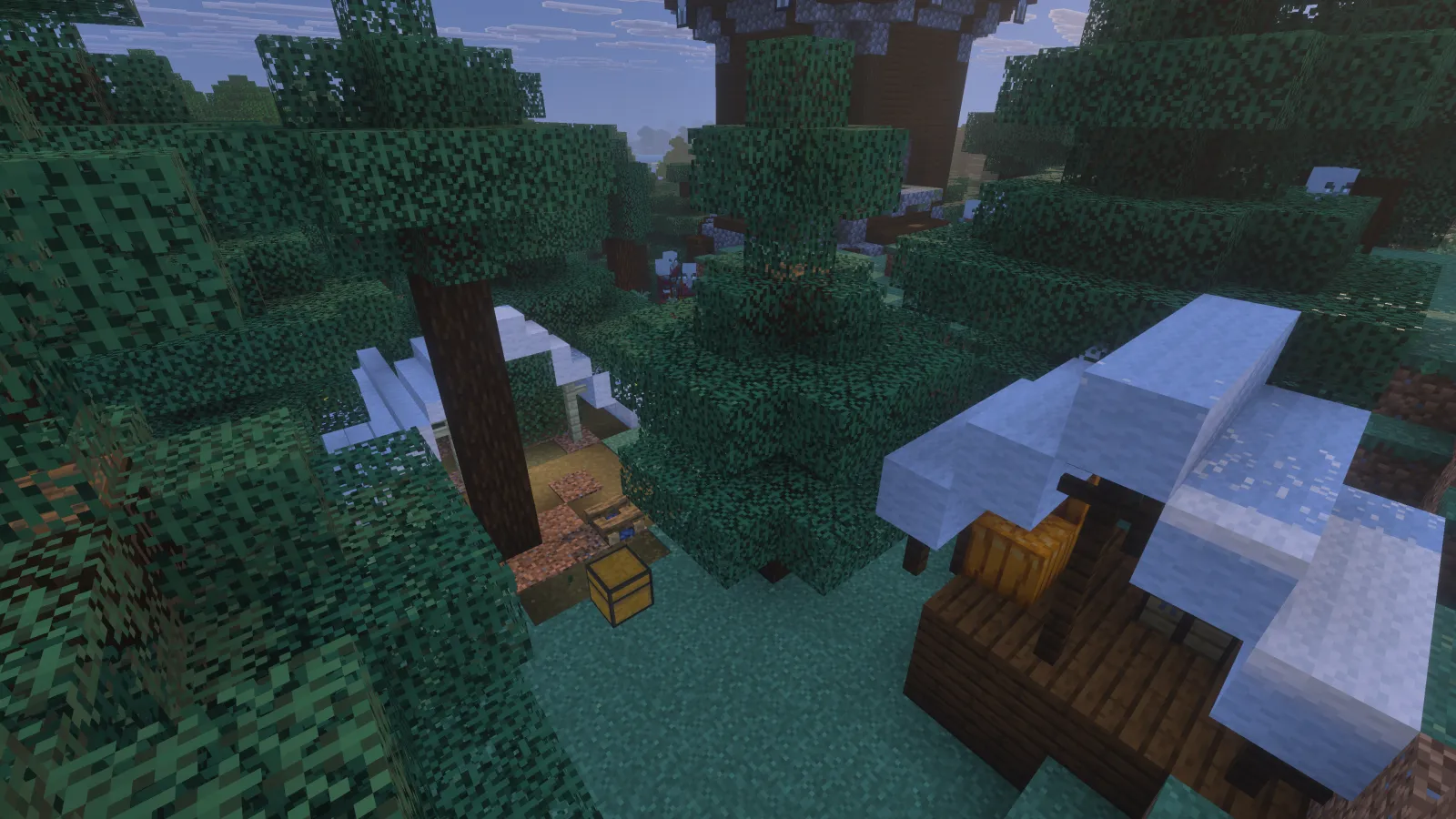
Bring a boat and check waterways. Not every camp is near water, but enough are that it's worth following streams and small lakes. I've found more camps this way than by walking through dense forest, honestly.
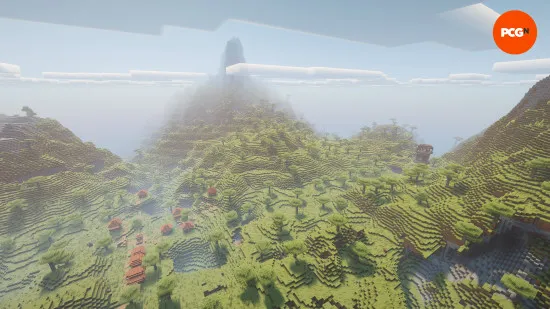
Also worth trying: explore from heights. Build a tall pillar or find a naturally high spot and scan the landscape. Abandoned camps create subtle terrain interruptions - flat spots where everything else is rolling hills, or clustered structures that break the forest's visual rhythm. Distance helps you see these patterns.
If your server or world has multiple players, pool information. Someone will eventually stumble on a camp. When they do, note the coordinates. Camps tend to cluster, so once you find one, search the surrounding 200-300 blocks more carefully.
Managing Your Exploration Setup
Bring the basics: food, a reliable pickaxe, torches for marking routes, and a sword for wildlife. Dappled Forests spawn mobs like anywhere else, and you don't want to get caught off-guard while peering at architecture.
Navigation is important. Mark your path back to spawn or home base. Mark potential camps with wool or torches so you can return with better gear if needed. Nothing worse than finding something valuable, realizing you need better tools, then losing track of the location on the way back.
If you're managing a server and want reliable camp discovery across multiple players, setting up a good spawn area with proper waypoints or teleportation helps. Our Free Minecraft DNS tool keeps server connections stable, which matters when teams are coordinating exploration. Server stability directly affects exploration efficiency - nothing kills momentum like lag or disconnects when you're mid-expedition.
What Makes Finding These Camps Worth Your Time
Abandoned camps reward thoroughness. You'll find rare loot sometimes left behind. Partial structures can inspire your own building projects - I've honestly stolen design ideas from camps that were half-finished a hundred years ago in-game.
There's also the satisfaction of solving a location puzzle. Unlike massive structure hunts, finding camps requires pattern recognition and attention to detail. You're reading the landscape like a detective, and when you nail it, you get that hit of success.
Plus, camps are quiet. No hostile mob spawners, no complex puzzles. Just the calm discovery of a place someone tried to build long ago. In a game full of noise and danger, that's actually refreshing.

Lead writer at minecraft.how. Long-time Minecraft player running a small SMP server, testing every build, mod, and seed before writing about it.
Frequently Asked Questions
What exactly is an abandoned camp in Minecraft?
Do abandoned camps only spawn in Dappled Forests?
Can I use commands to find abandoned camps faster?
What loot can I find in abandoned camps?
How far apart are abandoned camps usually?
Have a Question or Tip about this Guide?Community Q&A
Ask a question or help other players below. Join the discussion and share your Minecraft tips!