Building the Perfect Animal Pen in Minecraft
An animal pen is an enclosed farm structure designed to contain and manage livestock in Minecraft. Building one is straightforward but offers tons of design flexibility. Here's what you need to know to create a pen that actually works.
Why You Need an Animal Pen
Ever tried managing a herd of cows without any containment? They scatter everywhere. This is why animal pens exist. A properly built pen keeps your livestock organized, lets you breed them more efficiently, and makes collecting drops way less chaotic. You're not just building walls here - you're creating a functional system.
Plus, there's something satisfying about a well-organized farm.
The basic idea is simple: animals need a confined space where they can't wander off into the wilderness and get lost. You get to decide how fancy you want to make it.
Basic Pen Design Fundamentals
Most animal pens follow the same basic structure. You need fencing to create a perimeter - and honestly, that's it. Mobs can't climb fences, so a simple fence-enclosed area does the job. But practical pens usually add a few more elements to avoid headaches later.
A decent pen needs:
- Fencing all around (wood, dark oak, whatever matches your builds)
- A gate for access
- Enough space for animals to move around and breed
- A roof if you're worried about them jumping out unexpectedly
- Ideally, somewhere to store breeding items nearby
The size depends on what you're raising. A cow pen can be smaller than you'd think, but cramped spaces look ugly and feel inefficient. Start with something like 10x10 blocks for a small operation.
Building Your First Pen: Materials and Setup
Start with a rectangular area. Dig out the perimeter or place fencing around it. Here's where material choice actually matters beyond just "does it work."
Fences look decent and serve their purpose well, but you could also use walls, slabs, or even full blocks for a more integrated look into your base. Personally, I prefer fences because they let you see inside easily and take up less visual space. But it depends on your build aesthetic - some players prefer the solid look of a wall-based enclosure.
Don't forget gates.
You'll need at least one, probably more if your pen is large. Trapdoors or fence gates work fine - gates let you move animals in and out without them escaping during the process. Nothing's worse than accidentally releasing three cows while trying to add one more.
The roof is optional but worth considering. If animals can path-find onto your roof and off the other side, you've got escapees. Most simple setups skip it, but it never hurts to add one, especially if you're dealing with goats or other creative jumpers. A simple dark oak or spruce wood roof matching your fence style looks clean.
Different Animals, Different Setups
Different livestock have slightly different needs in Minecraft, though honestly, most animals don't care about much beyond "is there space" and "are there breeding items nearby."
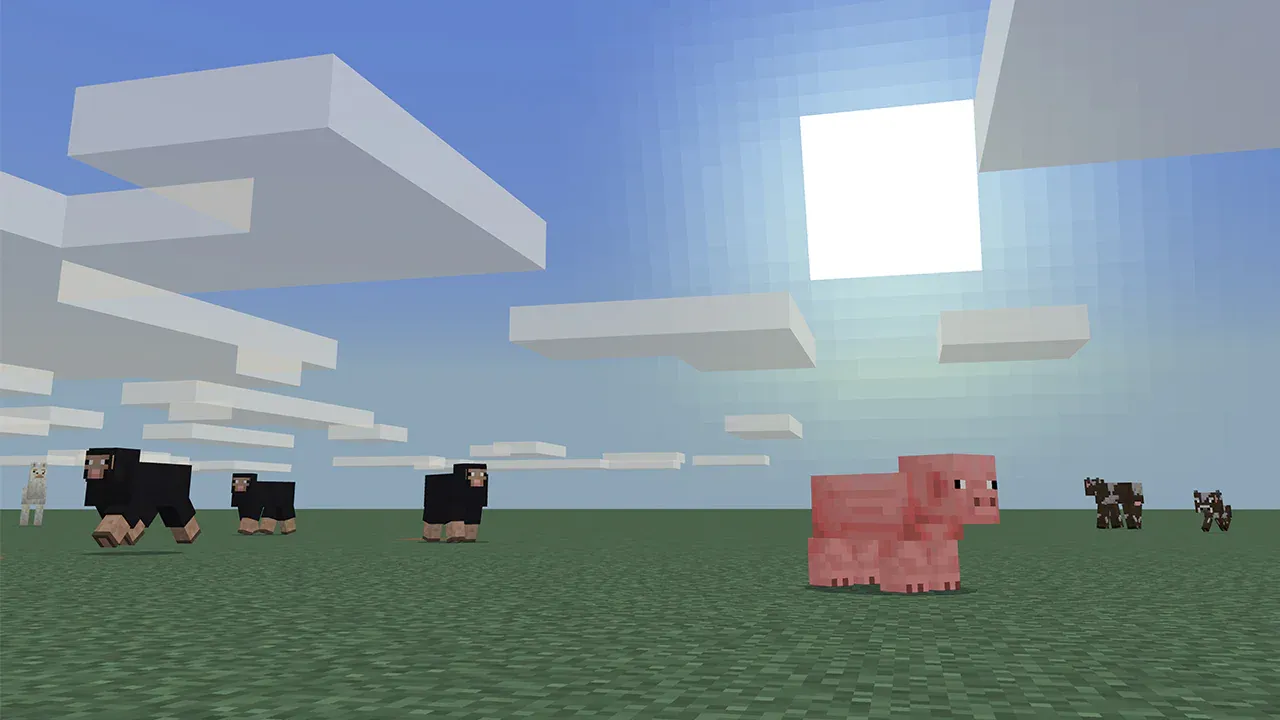
Cows are the tank of livestock. They need two adults to breed, they're not picky about space, and they eat grass. A basic pen works fine. Pro tip: use hay bales inside as a visual indicator of a cow farm, even though they don't actually interact with them in vanilla Minecraft - it just looks the part.
Sheep breed with wheat and are smaller overall. Some players make slightly smaller pens for sheep since they're less aggressive about pathfinding into weird corners. The main advantage of sheep is wool farming - you can dye them different colors and build them right next to each other since they're harmless to each other.
Chickens breed with seeds, and any type of seed works. Jungles are great for mass chicken farms because you get tons of seeds from trees. Chickens lay eggs regularly, which is useful early game but less critical later. A roofed pen works better for chickens since they jump constantly and can be escape artists.
Pigs breed with carrots or potatoes from the Overworld. They're similar to cows in behavior but breed slightly faster. Some players prefer pigs to cows for early-game protein since you don't need a duplicate to start breeding.
And then there's the weird ones. Goats need specific conditions with powder snow and walls they can climb on. Axolotls need water blocks. Frogs need water too. These aren't traditional wall-enclosed pens, but the same principles apply - give them space and the right blocks.
Making Your Pen Efficient
Once your basic pen exists, you can add features that make it functional rather than just decorative. This is where farm design gets genuinely interesting.
Breeding stations are the big one. If you want automatic breeding, which requires redstone, set up a system where animals can access breeding items. Manual breeding is simpler - you just toss the items on the ground and watch them breed. Most players start here and upgrade later.
Hopper systems work nicely if you want to collect drops automatically. Animals drop items when they die, and hoppers can collect them into a chest. You'll need to set up a slaughter mechanism (usually fall damage or suffocation traps) to get the drops, but it scales incredibly well on larger farms.
If you want to add custom labels and instructions to your pen, check out the Minecraft Text Generator tool. It's perfect for creating signage that keeps your farm organized visually and helps you remember breeding cooldowns or feeding schedules.
Item sorting doesn't matter much for basic animal farms, but keeping your drops sorted from other farm products is nice. Stack your chests nearby and label them clearly so you don't mix food sources.
Pro Design Tips and Considerations
Aesthetics matter more than you'd think. A pen that looks good is one you'll actually want to visit and maintain regularly.
Build the pen close to your base unless you've specific reasons not to. Traveling 500 blocks to breed cows gets old fast. Actually, wait - if you're doing fully automatic breeding with redstone, distance doesn't matter as much since it runs without you. But for manual breeding, proximity is everything.
Use complementary building blocks to integrate the pen into your existing build. If your base is mostly dark wood, make the pen out of dark wood. If it's stone, use stone. Visual consistency makes everything feel more cohesive and planned.
Leave room for expansion.
A pen that's "big enough now" will feel cramped after a week of breeding animals. Plan space for growth or be prepared to rebuild later when you want to scale up. It's easier to plan ahead than relocate everything.
Lighting is important but easy to forget. Animals spawn if it's dark, which is annoying in a pen and defeats the purpose. Throw some lanterns or glow berries around to keep hostile mobs from spawning. Plus, good lighting just looks nicer.
If you're planning a mega-farm with multiple species, layout matters significantly. Group similar animals together - cows with cows, chickens with chickens - and leave clear pathways between pens so you can move around efficiently. You're going to be running back and forth constantly, so make navigation smooth.
Consider your farm's location in relation to your base and other structures. If you're planning major construction, you might want to think about portal locations or pathways. Tools like the Nether Portal Calculator can help you plan efficient transportation networks across your world if you want to connect your farm to other areas.
Making Your Farm Work
Is a pen really worth the effort? Honestly, yes. Even a minimal pen beats running around trying to round up cows that scattered across three biomes. Plus they're weirdly fun to design once you get into it.
Start simple with basic fencing and a gate. Add features as you go - breeding items, collection systems, better lighting. Don't stress about making it perfect immediately. Your first pen will probably look rough, and that's fine. Most farms evolve over time as you figure out what you actually need versus what's just nice to have.
The best farm is one you'll actually use.

Lead writer at minecraft.how. Long-time Minecraft player running a small SMP server, testing every build, mod, and seed before writing about it.
Frequently Asked Questions
What materials do I need to build an animal pen?
Can animals escape from a Minecraft pen?
What's the best size for an animal pen?
How do I breed animals faster in Minecraft?
Should I use hoppers for an animal farm?
Have a Question or Tip about this Guide?Community Q&A
Ask a question or help other players below. Join the discussion and share your Minecraft tips!