Minecraft Breeding Villagers Guide: Beds, Food, and Fixes
Minecraft breeding villagers is simple once three conditions are true: enough unclaimed beds, enough food, and enough space for pathfinding. Get those right and villagers breed consistently on both Java and Bedrock. Get one wrong and they just stare at each other like coworkers avoiding eye contact.
Minecraft breeding villagers rules in 2026
Let's start with the core logic, because most breeder failures are rule failures, not "my world is cursed" failures. Villagers need to be willing, and willingness comes from food sharing. They also need valid beds they can claim. In practical terms, each new baby needs a free bed available in range, not just two beds for the parents.
And yes, doors no longer matter for modern breeding. If an old tutorial tells you to build a giant door village, close that tab and protect your sanity.
On Java, villagers usually become willing after receiving enough bread, carrots, potatoes, or beetroots. Bread is easiest to count quickly, but carrot farms scale better in long-term breeder designs. Bedrock follows similar logic, but pathfinding and job-site behavior can feel more finicky, especially in crowded compact builds.
One caveat people miss: villagers won't breed infinitely in one burst unless bed capacity keeps expanding. Babies also need to eventually unlink from breeder beds if you want continuous output. If your breeder worked for ten minutes and then stopped, this is probably why.
How to set up a villager breeder that works
The best setup right now is still a small, isolated breeder 80-100 blocks away from your main trading hall. Could you place it closer? Sure. Will hidden bed links and workstation confusion waste your evening? Also sure.
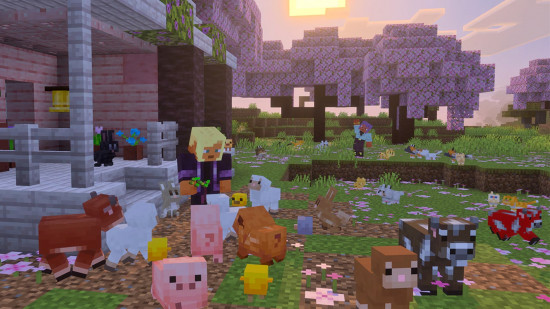
Reliable layout (works on both editions)
Use this baseline structure:
- A 9x9 farm patch (carrots are my pick)
- Two adult villagers inside the breeder chamber
- At least 4-6 reachable beds to start, then expand
- A baby escape route using trapdoors and water
- Collection point that moves babies away quickly
I tested this pattern on a private Paper server and a Realm-style Bedrock world, and it worked in both after minor spacing tweaks. The big win is separation: breeder up top, baby stream below, adult villagers locked in place.
Keep villagers safe from mobs, lightning, and random zombie incidents. One surprise zombie can "optimize" your breeder population to zero in seconds.
Distance and chunk behavior
Breeders run best when loaded, but not jammed against your entire base logic. Put it in spawn chunks only if you understand your server's tick behavior. If you don't, just build near where you actively play and sleep nearby while testing.
Actually, that's not quite right for Bedrock in every case: ticking areas and simulation distance matter more there than classic Java chunk loading assumptions. So if Bedrock breeding feels inconsistent, verify simulation distance first before rebuilding the whole thing.
Food math, bed math, and timing you can trust
Food counts are where people overcomplicate things. Villagers don't need gourmet variety, they need enough units to trigger willingness. In survival, I drop stacks into the chamber, let them farm and share naturally, then top up every so often.

Quick practical numbers that work:
- Start each breeder pair with plenty of carrots or bread (more than you think)
- Add one extra bed per expected baby, plus a buffer bed
- Move babies away fast so bed claims recycle cleanly
- Wait through day-night cycles before declaring a build "broken"
Breeding attempts aren't perfectly rhythmic. Sometimes villagers pause because of schedule behavior, blocked paths, or temporary bed claim conflicts. That's normal. What's not normal is zero activity for multiple in-game days with food and beds clearly available.
So here's my blunt rule: if hearts appear but no baby arrives, check bed availability. If no hearts appear, check food and willingness. If neither explains it, check pathfinding and nearby village links.
Short version, beds gate population, food gates willingness.
Why villagers stop breeding, and fast fixes
This section saves the most time, because breeder bugs repeat across almost every world.
1) Hidden bed links to your trading hall
If your breeder is too close to other villagers, beds get claimed across walls and floors. Adults then "think" no valid beds exist for babies. Move breeder farther away or remove conflicting beds temporarily and retest.
2) Mob griefing is off
Some servers disable mob griefing, which can break farmer harvesting and food sharing behavior. If farmers aren't collecting crops, willingness tanks. Server owners forget this setting constantly (I've forgotten this setting constantly).
3) Inventory starvation
Villagers can hold weird item mixes that reduce useful sharing. Clear conditions by resetting with fresh food inputs and giving the system time. Don't spam extra villagers into the pen, that usually makes pathfinding worse.
4) Bedrock-specific path weirdness
Bedrock villagers can fail to path to beds or workstations in cramped spaces where Java still behaves. Give them cleaner lanes, fewer corner traps, and full blocks around bed access points. Ugly layout, better output.
5) Server lag and tick throttling
On busy SMP servers, villagers "freeze" behavior under lag spikes. You can troubleshoot perfectly and still get bad throughput if TPS is low. Measure server health before blaming your breeder design.
Yes, this is the least fun answer.
Turning breeder output into a trading hall pipeline
Breeding villagers is only step one. The real payoff is controlled profession assignment and discount stacking. I move babies into a holding lane, age them up safely, then assign jobs one by one with isolated workstations. Slow? A little. Effective? Extremely.

My preferred pipeline:
- Baby collection stream sends villagers to a safe chamber.
- Adults move into single-cell job pods near one workstation each.
- Lock desired trade on first good roll (especially librarians).
- Transport extras to iron farm breeder backup or recycling zone.
And if you're building a village-themed district, lean into the aesthetic while you work. I like pairing practical breeder builds with villager skins for screenshots and roleplay bits, like villagersteam Minecraft Skin or VillagersAreBae Minecraft Skin. For medieval markets, Villagers654 Minecraft Skin and kingofvillagers Minecraft Skin fit nicely. If your vibe is chaotic merchant energy, Villagershrm Minecraft Skin is weird in a good way.
Not required for mechanics, obviously, but Minecraft is better when builds have personality.
Version notes, console differences, and what changed recently
Mojang's update cadence matters because villager behavior can shift in subtle patches. PCGamesN reported the current "drop" model and estimated Minecraft 1.26.1 ("Tiny Takeover") around March 2026, which lines up with Mojang's recent quarterly rhythm. When baby-mob themed updates roll in, I always re-test breeder timing before committing to a giant hall.

Console players should pay extra attention to platform behavior. The Loadout reported in 2024 that Mojang started testing a native PS5 version, aimed at better parity and performance. That matters for villagers more than people think, because smoother simulation and fewer frame hitches often make breeder troubleshooting less painful.
But don't overreact to every rumor patch note. Most breeder failures are still build logic problems, not dramatic mechanics overhauls.
If you want a clean checklist before you log off tonight, use this:
- Two villagers alive, fed, and pathing normally
- Extra unclaimed beds physically reachable
- No nearby village stealing bed claims
- Babies moved away from breeder quickly
- Server settings and lag checked
Do those five things and minecraft breeding villagers becomes boringly reliable, which is exactly what you want from infrastructure.

Lead writer at minecraft.how. Long-time Minecraft player running a small SMP server, testing every build, mod, and seed before writing about it.
Frequently Asked Questions
How many beds do I need for villager breeding to keep going?
What food works best for making villagers willing to breed?
Why does my breeder work in Java but fail in Bedrock?
Should I build my breeder inside my trading hall?
Do game updates change villager breeding mechanics often?
Have a Question or Tip about this Guide?Community Q&A
Ask a question or help other players below. Join the discussion and share your Minecraft tips!