Minecraft Enchantment Guide: How to Max Your Gear
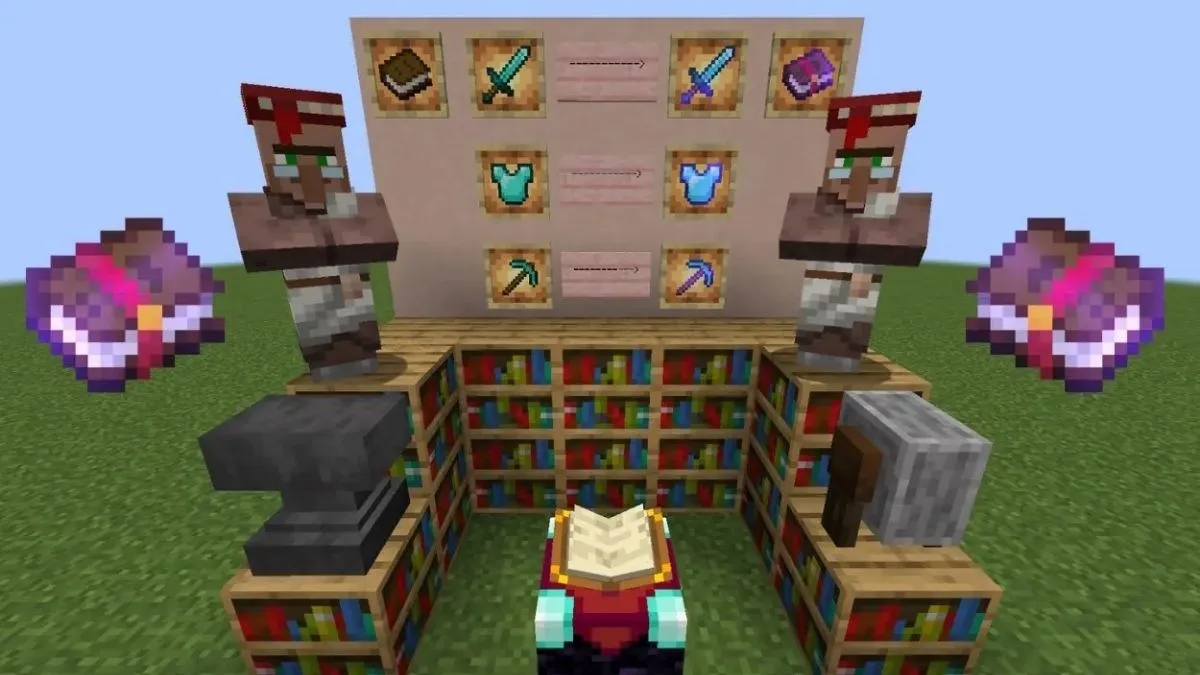
Enchanting in Minecraft enhances weapons, armor, and tools with special powers and increased durability. Applying enchantments requires either an enchanting table powered by bookshelves or an anvil combining gear with enchanted books. In current Java release 26.3, managing anvil prior work penalties is crucial to avoid hitting the dreaded "Too Expensive!" limit.
Ever spent thirty levels on a sword only to find the anvil locking you out later? We've all been there. Enchanting has been a core pillar of survival since version 1.0.0, expanding across 43 distinct enchantments for all types of equipment. Getting the best gear isn't just about collecting high-level books, it is about combining them in the right sequence.
How Enchanting Works: Tables vs. Anvils
You have two primary paths to enchant items: the enchanting table and the anvil.
Enchanting tables offer direct buffs using experience levels and lapis lazuli. Honestly, surrounding the table with up to 15 bookshelves unlocks tier-30 enchantments, offering random rolls on un-enchanted tools and armor. It's great for early setups, but you rarely get a full set of top-tier modifiers in a single roll.
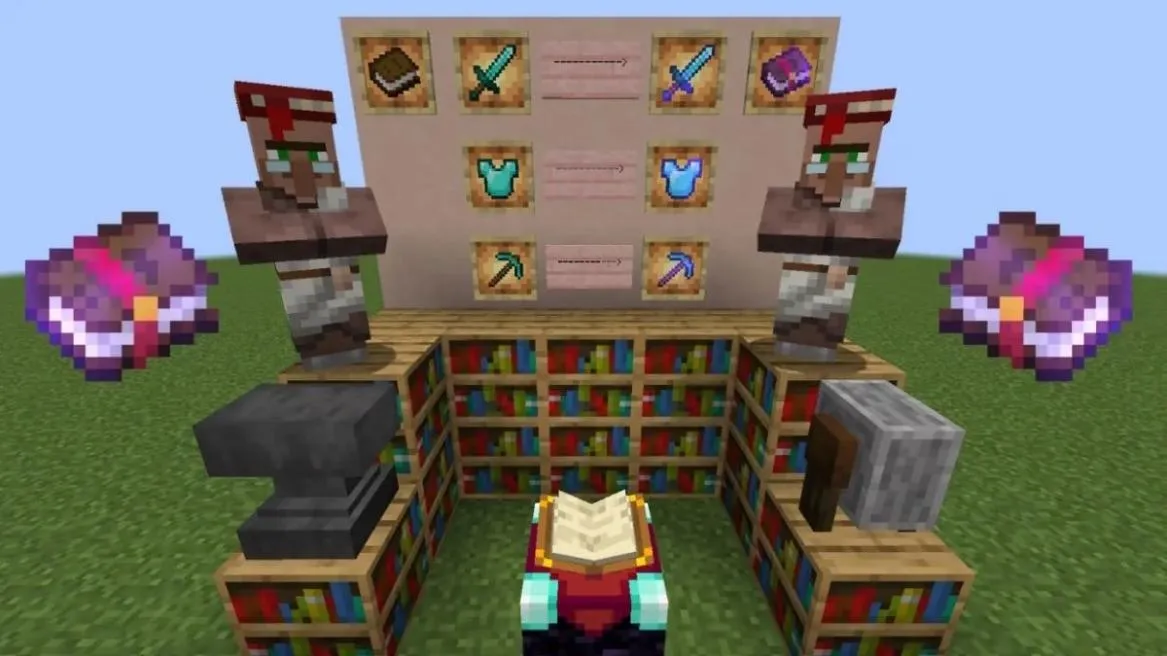
Anvils let you combine specific enchanted books with your tools or merge two damaged items into one. This gives you exact control over which perks land on your gear. Villager trading remains the most reliable method for acquiring max-tier books like Protection IV or Unbreaking III without gambling experience points at the table.
The Prior Work Penalty and the "Too Expensive!" Barrier
Every time you modify an item in an anvil, Minecraft increments its internal prior work penalty. Each operation roughly doubles the extra level cost for subsequent anvil uses.
When the required experience cost for a single operation reaches 40 levels or higher in survival mode, the anvil outright rejects the combination with the "Too Expensive!" message. If you repeatedly tack on one single enchantment book after another to your sword, you'll trigger this cap long before applying every desired perk.
To avoid hitting the cap, you must combine your books in pairs before applying them to your item. This keeps the prior work penalty tree balanced across all components.
Optimal Combining Order: The Binary Tree Method
The secret to fully enchanted gear is structuring your merges like a tournament bracket.
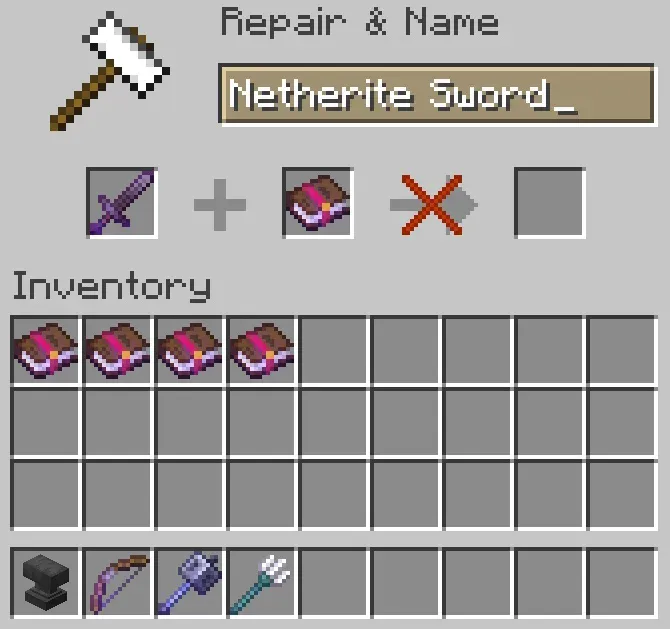
Instead of doing Item + Book 1, then Result + Book 2, then Result + Book 3, you group your books into matching pairs first. Combine Book 1 with Book 2 to create Combo Book A. Combine Book 3 with Book 4 to make Combo Book B. Then combine Combo Book A with Combo Book B before finally merging the finished master book onto your tool.
This tree structure ensures the base gear only goes through a minimal number of anvil operations, keeping total level costs low and avoiding the hard cutoff.
Cal Henderson's enchantment ordering tool highlights why starting with high-level books from villager trades is so valuable. Merging low-level books to craft higher tiers adds prior work penalties to the books themselves before they ever touch your armor.
Mutually Exclusive Enchantments
Not all enchantments can live on the same piece of gear. Mojang balances powerful perks by making certain enchantment pairs mutually exclusive.
- Armor Protection Types: Protection, Fire Protection, Blast Protection, and Projectile Protection can't be stacked on the same armor piece under standard rules.
- Damage Buffs: Sharpness, Smite, and Bane of Arthropods are incompatible on swords and axes.
- Ranged Perks: Infinity and Mending cannot be placed together on a standard bow.
- Tool Silk Touch vs. Fortune: You must choose between harvesting raw blocks with Silk Touch or multiplying drops with Fortune.
- Trident Modifiers: Riptide can't be combined with Loyalty or Channeling.
- Crossbow Shots: Multishot and Piercing are mutually exclusive.
General Protection remains the standard recommendation for most survival armor sets because it cushions all incoming damage types rather than specializing in just one.
All Enchantable Gear in Minecraft
Enchanting extends across lots of weapons, defensive gear, and utility items.
| Category | Items |
|---|---|
| Armor | Helmet, Turtle Shell, Chestplate, Elytra, Leggings, Boots |
| Melee & Ranged Weapons | Sword, Axe, Mace, Spear, Bow, Crossbow, Trident |
| Mining & Digging Tools | Pickaxe, Shovel, Hoe |
| Utility & Survival Gear | Shield, Fishing Rod, Brush, Shears, Flint And Steel |
| Specialty Items | Carrot On A Stick, Warped Fungus On A Stick, Pumpkin |
Whether preparing high-tier gear for faction battles on community servers like Donutsmp (which regularly peaks over 28,000 concurrent players on our server list) or exploring quiet survival worlds, planning your tool builds beforehand prevents wasted diamonds.
Steps for Crafting Max-Tier Gear
- Gather your base diamond or netherite item fresh with zero anvil penalties.
- Acquire the highest tier of each desired enchantment book directly from librarian villagers or loot chests.
- Sort your enchantments so that expensive books are merged with cheaper books in balanced pairs.
- Combine book pairs in the anvil to create multi-enchantment books.
- Apply the final combined books to your tool or armor piece.
- Add Mending and Unbreaking III to preserve your equipment indefinitely using experience orbs.
One quick caveat: renaming an item on the anvil also counts as an operation, so always rename your item during your very first book combination to save levels.

Lead writer at minecraft.how. Long-time Minecraft player running a small SMP server, testing every build, mod, and seed before writing about it.
Frequently Asked Questions
What causes the Too Expensive message on Minecraft anvils?
Can you combine Mending and Infinity on a bow?
How many bookshelves are needed for maximum enchantment table power?
Why is combining books together in an anvil better than adding them one by one?
Which armor protection enchantment is best for general survival?
Have a Question or Tip about this Guide?Community Q&A
Ask a question or help other players below. Join the discussion and share your Minecraft tips!