Minecraft Horse Guide: How to Tame, Breed and Farm Them
Horses spawn in plains and savanna biomes, usually in small herds, and drop leather plus a little experience when they die. You tame one by climbing onto its back over and over until the hearts pop, then breed pairs using golden apples or golden carrots. That's the quick version. Getting a genuinely good horse is where the real game starts.
Where Horses Spawn
Open grassland is what you're after. Horses generate in Plains, Sunflower Plains, and the Savanna group (Savanna, Savanna Plateau, and Windswept Savanna). They appear in herds of two to six, and every animal in that herd has a 20% chance of spawning as a foal. So if you stumble onto a group with babies trotting around, congrats, that's free breeding stock for later.
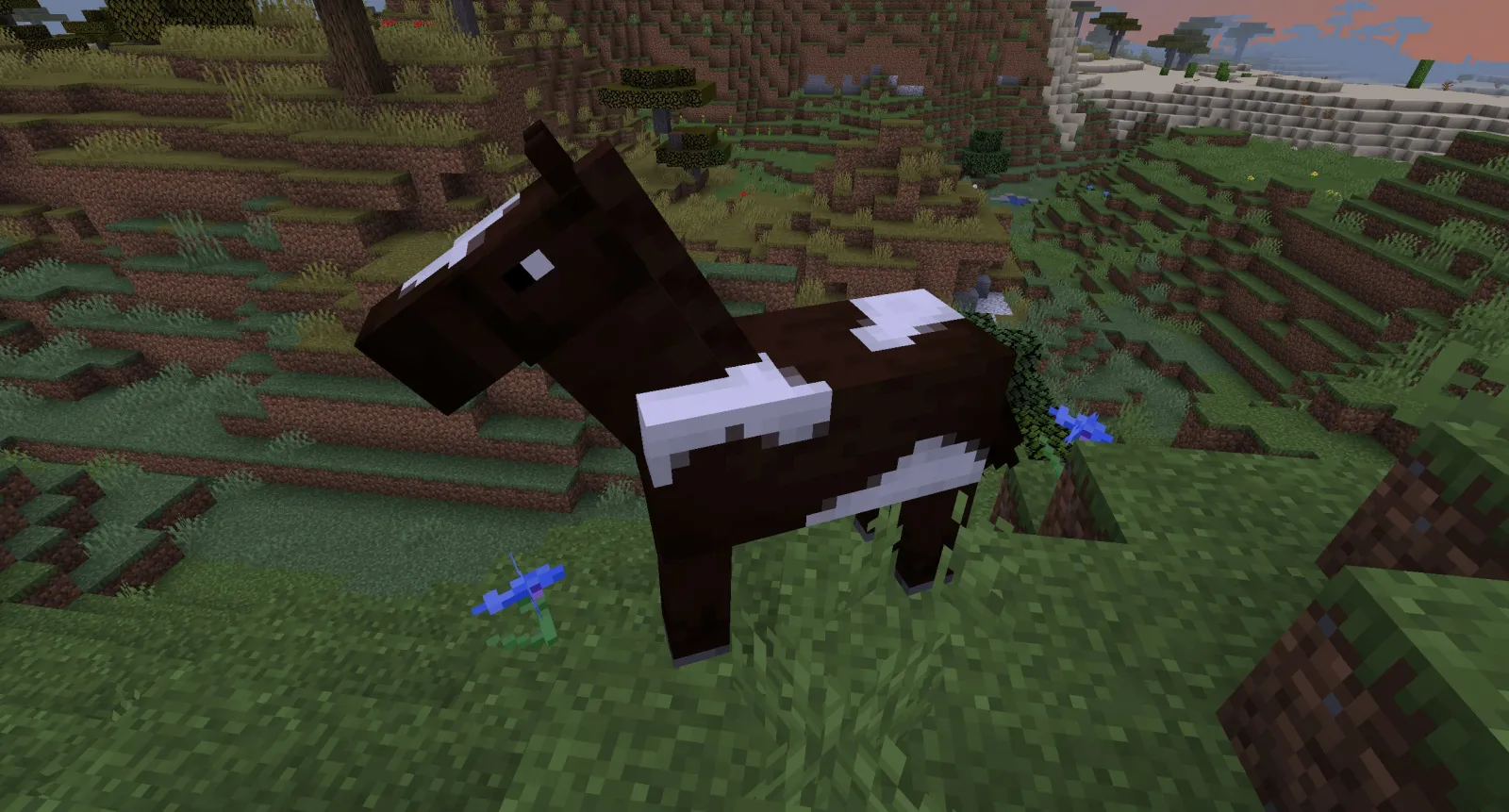
Coat color gets decided the moment they spawn. The Minecraft Wiki lists seven base colors (white, creamy, chestnut, brown, black, gray, and dark brown) layered with five marking patterns, which works out to 35 possible looks. None of it touches their stats. A pasty white horse can be a rocket; a gorgeous black You can be a slug. Looks lie.
One thing worth flagging: a whole herd usually shares the same color. Mojang spawns them that way to mimic real herds, so chasing variety means wandering between biomes.
Finding them fast comes down to terrain. Skip forests, jungles, and anything steep. If you land somewhere green and flat, sprint along the edges where plains meets savanna, since those borders tend to be horse-rich. On a server I played last month we turned up three separate herds within about 400 blocks of spawn just by following a river through flat grassland.
How to Tame a Horse
No items needed to start, which surprises people. Walk up to a wild horse with an empty hand (or at least nothing it can eat) and right-click to mount. It'll buck you off. Climb back on. Repeat. Each attempt raises the horse's hidden 'temper' value, and once temper crosses the threshold, hearts appear and the horse is yours.

The Fastest Way to Tame
Feeding speeds things up massively. Sugar, wheat, and apples each nudge temper upward, golden carrots push harder, and golden apples give the biggest single jump. If you've got gold to burn, a couple of golden apples can tame a stubborn horse in two or three tries instead of ten. Worth it when you've finally cornered a horse that looks promising.
Then comes the saddle. You still can't craft one, after all these years, so you're digging through dungeon and stronghold chests, fishing, or trading with leatherworker villagers. Once it's equipped you steer fully. Horse armor is optional but smart if you ride near mobs: leather, iron, gold, and diamond versions exist, and only the leather one is craftable.
What Horses Drop
Kill a horse and you get 0 to 2 leather, plus 1 to 3 experience if a player lands the final blow. Looting raises the leather ceiling by one per level, so Looting III can pull up to 5 hides from a single horse. Foals drop nothing at all, which is both merciful and a little annoying if you were hoping for a quick payout.

Tamed horses also drop whatever they're wearing. Saddle, horse armor, the lot. Lose your prized stallion to a creeper and you can at least scoop the saddle back off the ground, assuming the blast didn't fling it into a ravine.
Breeding and Farming for Better Stats
This is where horses get genuinely fun.

Feed two tamed adults a golden apple or golden carrot each and they'll enter love mode and produce a foal. The catch (and honestly the whole point) is how that foal's stats get calculated.
Every horse rolls three hidden stats: health, movement speed, and jump strength. When you breed two horses, the foal inherits an average of both parents for each stat, then mixes in a third completely random value. Breed two fast parents and you've got a strong shot at a faster baby. Keep breeding your two best, and you slowly climb toward the ceiling.
What's the ceiling? Roughly 30 health (15 hearts), around 14.23 blocks per second of speed, and a jump high enough to clear about five blocks. Well, closer to five and a quarter if you want to be precise, but who's measuring. For comparison, normal walking is about 4.3 blocks a second, so a maxed horse is properly quick.
Foals take 20 minutes to grow up on their own. You can shave that down by feeding them the same way you'd grow any baby animal: sugar, wheat, hay bales, and the gold foods all knock time off the clock. A hay bale is the cheapest big boost if you've got a wheat farm running.
Spotting a good horse without mods is mostly feel. Speed you notice the second you ride. Jump strength you test against a two or three block wall. Health is the hard one to eyeball, so a lot of breeders just assume their fastest horse is also their toughest and move on. Not scientific, but it works.
Now, leather farming. People ask about it, and honestly? Cows win. A cow farm gives more reliable leather with far less faffing about, and cows breed on plain wheat instead of gold. Horses are worth farming for the perfect mount, not for hides. If you want a leather machine, build a cow pen and walk away.
Half the fun is showing the thing off, of course. I keep a small stable on my survival world purely for racing friends, and before anyone joins I'll tweak the server greeting with the Minecraft MOTD creator so the lobby actually looks the part. Petty? Sure. Worth it? Also yes.
Donkeys, Mules, and the Spooky Variants
Horses aren't the only rideable hooved mob. Donkeys spawn in Plains and Meadow biomes, move a touch slower, but carry a chest worth 15 slots of storage, which turns them into rolling backpacks. Breed a horse with a donkey and you get a mule, also chest-capable. Mules can't breed with each other, though, so every single one is a one-off.
Then there's the creepy corner. Skeleton horses arrive through 'skeleton traps', those innocent-looking lone horses that spawn during thunderstorms and zap a squad of skeleton riders at you the moment you wander close. Survive the ambush, tame one, and you've got a mount that ignores fall damage and walks happily underwater. Zombie horses exist too, but they're unobtainable in survival without commands.
And if you're decking out a screenshot of your new skeletal steed, grab a matching look from our Minecraft skins library. A skeleton horse deserves a rider that fits.
Is a Stable Worth Building?
For most players, one good tamed horse covers everything. Honestly, faster than walking, completely free, and you'll bond with it more than you'd admit.
If you're the type who wants the absolute fastest mount on the server, though, a breeding stable pays off. Tame four or five, keep the two best, breed, drop the slow foals from the rotation, repeat. After a few generations you'll have something that crosses a savanna in seconds flat. As of 26.1.2 the stat math hasn't changed, so older breeding guides still hold up fine. Just bring a serious pile of golden carrots.

Lead writer at minecraft.how. Long-time Minecraft player running a small SMP server, testing every build, mod, and seed before writing about it.
Frequently Asked Questions
What do horses eat in Minecraft?
Can you tame a skeleton horse?
How fast is the fastest horse in Minecraft?
Do horses despawn in Minecraft?
What's the difference between a horse, donkey, and mule?
Have a Question or Tip about this Guide?Community Q&A
Ask a question or help other players below. Join the discussion and share your Minecraft tips!