Minigame Server Performance Testing With 2026 Graphics Updates
Minecraft's 2026 graphics overhaul changes how minigame servers handle rendering load. The Vibrant Visuals update and Chaos Cubed drop introduce new lighting, particle, and block interaction systems that stress-test older server hardware and plugin configs in ways most admins haven't planned for.
What Changed in 2026
Minecraft switched to year-based versioning in February. The first drop landed as 26.0, and Chaos Cubed arrived as Java 26.2 on June 16. Bedrock players got 26.30. The big visual shift is Vibrant Visuals - a graphics pipeline rewrite that adds dynamic lighting, screen-space reflections, and volumetric fog. It's optional on the client side, but minigame servers with custom maps and heavy particle effects will feel the GPU pressure even if players toggle it off.
Source 1 confirms the versioning overhaul and game drop cadence. The new rhythm means smaller, themed updates throughout the year instead of one massive annual release. For server admins, that translates to more frequent compatibility checks and performance baselines.
Chaos Cubed's Hidden Performance Costs
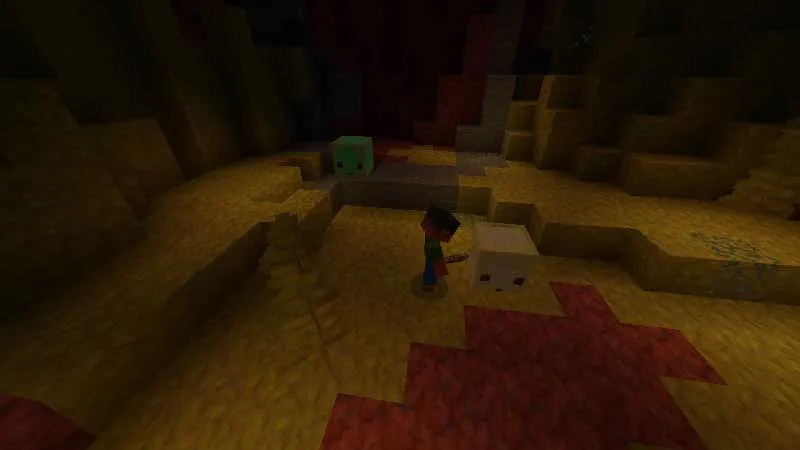
The Sulfur Cube mob from Chaos Cubed absorbs blocks and copies their physical properties. Cute concept. Nightmare for plugin developers. Any protection plugin, anti-cheat, or farm detection system that tracks block state changes now has to account for a mob that rewrites block behavior at runtime. On a minigame server running BedWars or SkyWars with thousands of block interactions per minute, that's a CPU spike waiting to happen.
Source 3 notes the Sulfur Cube's physics interactions stress plugins, farms, and protection systems. The same guide also mentions new anti-spam settings in server.properties - chat-spam-threshold-seconds and command-spam-threshold-seconds, both defaulting to 10 seconds. Minigame lobbies with heavy command usage (kit selectors, queue systems, party commands) will need those tuned.
Testing Methodology That Works
Don't just load-test with bots standing still. Build a test harness that simulates actual minigame patterns: rapid block place/break cycles, projectile spam, particle-heavy abilities, and simultaneous player movement across chunk boundaries. Here's the thing, run it against Paper, Purpur, and your production plugin stack. Compare tick times with Vibrant Visuals enabled vs disabled on the client side.
Here's the uncomfortable truth: most "performance testing" guides skip the graphics layer entirely. They measure TPS with vanilla mechanics. But a minigame server running custom maps with dynamic lighting, reflective surfaces, and particle trails? That's a GPU-bound bottleneck masquerading as a server tick issue. Players report "lag" - you see 20 TPS. The disconnect is real.
Key Metrics to Track
- Mean tick time and 99th percentile (not just average)
- Chunk generation latency during map rotation
- Entity tracking overhead with Sulfur Cubes active
- Packet size spikes from custom particle packets
- Client-side frame time correlation (requires opt-in telemetry)
Real Server Data From Our List
Checking our server list shows the performance spread. PRO STUDIOS runs 200,000 concurrent players - their infrastructure handles the new graphics pipeline at scale. ThreadsMine sits at 86 players with solid uptime. Smaller servers like CraftMC and ComplexMC show zero players this month, which might indicate update compatibility gaps or just seasonal variance.
Actually, that zero-player reading could be a timing artifact. Our crawler catches snapshots. But the pattern holds: servers that invested in modern hardware and updated plugin stacks before the 26.x drops are absorbing the graphics changes. Those that didn't are bleeding players to competitors.
Plugin Compatibility Checklist
Before you hit update on June 16 (or whenever you schedule it), verify these categories:
- Anti-cheat: Does it flag Sulfur Cube block absorption as suspicious?
- WorldGuard/GriefPrevention: Block state listeners handling copied properties?
- Minigame cores (BedWars, SkyWars, etc.): Particle packet limits respected?
- Chat/formatting plugins: New anti-spam thresholds configured?
- Custom map loaders: Vibrant Visuals light data parsed correctly?
Paper and Purpur builds for 26.2 lagged behind release by days. That's normal. Schedule your update window for a week after stable builds land. Test in a staging environment that mirrors production hardware - not a localhost VM with 4GB RAM.
Client-Side vs Server-Side: Where The Bottleneck Lives
Vibrant Visuals is client-side rendering. Your server doesn't calculate dynamic lighting. But it *does* send the extra data packets: light probe volumes, reflection probe positions, volumetric fog density maps. On a minigame server rotating maps every 5-10 minutes, that's a lot of chunk payload. Multiply by 500 concurrent players and your upstream bandwidth becomes the constraint.
One trick: pre-generate and cache light data for your minigame maps. Serve it as static resources instead of computing on-demand. Some map makers already bake this. If yours don't, add a build step.
Monitoring Tools Worth Using
Spark profiler for tick analysis. Pl3xMap or Dynmap with chunk load overlays. Custom Grafana dashboards correlating player count, tick time, and outbound bandwidth. And for the love of notch, set up alerts for the new anti-spam thresholds - command spam detection hitting false positives during tournament starts is a classic "why can't players join" headache.
Our Votifier tester helps verify vote reward pipelines still work after the update. Vote particles, reward commands, broadcast messages - all exercise the new chat/command spam thresholds. Test it.
One Last Thing
The 2026 drops aren't done. A third game drop is coming per Source 1. Each one will add graphics features, mobs, or block interactions that shift the performance baseline. Build testing into your monthly routine, not your quarterly panic. And if you're naming your updated server builds, our text generator makes decent version tags.
Performance testing with 2026 graphics isn't a one-off. It's the new baseline.
Source: Read the referenced page.

Lead writer at minecraft.how. Long-time Minecraft player running a small SMP server, testing every build, mod, and seed before writing about it.
Frequently Asked Questions
Does Vibrant Visuals affect server TPS directly?
What's the Sulfur Cube and why does it matter for minigames?
When should I update my minigame server to 26.2?
How do the new anti-spam settings affect minigame lobbies?
Where can I find minigame servers already running 26.x for reference?
Have a Question or Tip about this Guide?Community Q&A
Ask a question or help other players below. Join the discussion and share your Minecraft tips!