Minecraft Nether Fortress Finder: The Complete 2026 Guide
A Minecraft nether fortress finder is a seed-based tool that reads your world's generation data and shows exactly where fortress structures spawn, before you even step through the portal. Plug in your seed and version (26.2 is the current Java release), and the tool marks the nearest fortresses on a map. No wandering through lava fields required.
Fortresses matter because they're the only reliable source of blaze rods and one of the few places to find nether wart naturally. Skip the finder and you're gambling on blind exploration in one of the most hostile dimensions in the game. Not exactly a fun way to spend an evening.
How a Nether Fortress Finder Works
World generation in Minecraft is deterministic. Feed the same seed and version into the game twice and you get the same terrain, the same structures, the same everything. Honestly, a fortress finder exploits that fact: it simulates the chunk generation math your seed produces without actually loading or rendering the world, then flags every location where a fortress would generate.
Chunkbase's Nether Fortress Finder does exactly this. You choose a version (everything from Java 1.7 up through the current 26.2 release is supported, plus Bedrock ranges), type or paste your seed, and it draws fortress locations directly onto a biome map. There's a toggle for biomes, a toggle for other features like bastions, and grid lines if you want to line up coordinates precisely.
Finding Your Seed First
You need your world's seed before any of this works. In singleplayer, open the world options menu and look for the seed field, or type /seed in chat if cheats are enabled. On a server, this depends entirely on the host. Some servers block the seed command outright since knowing it can trivialize exploration, so check server rules before assuming you can pull it.
Using the Finder Step by Step
The process is short once you have your seed:
- Open the finder and select your Minecraft version, matching Java or Bedrock as appropriate
- Enter your world seed in the seed field
- Type in your current X and Z coordinates so the map centers near you
- Hit Go and let it plot every nearby fortress marker
Click any marker and it'll usually give you rough coordinates to travel toward once you're in the Nether. Distances in the Nether are compressed eightfold compared to the Overworld, so a fortress that looks far away on the map might only be a short walk once you cross over.
Finding Fortresses the Old Fashioned Way
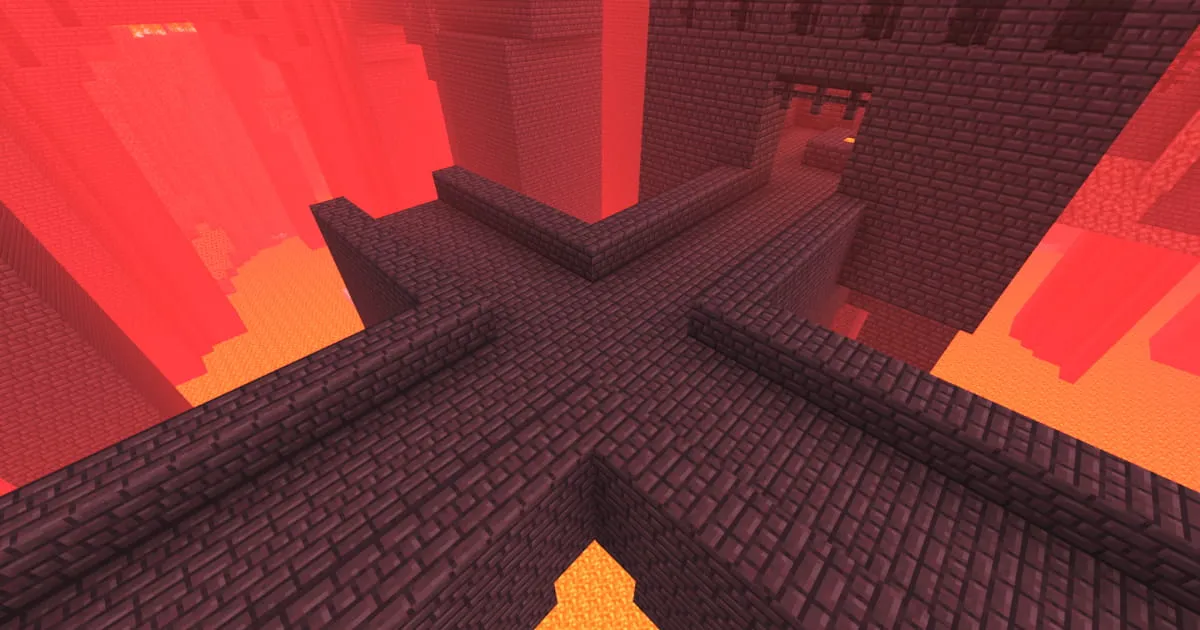
Not everyone wants to alt-tab to a browser mid-game. If you'd rather explore blind, fortresses generate as long bridge-like structures built from nether brick, usually stretching across lava lakes and open caverns. Blaze spawners sit inside, wither skeletons patrol the walkways, and chests scattered through the halls can hold saddles, horse armor, and other loot.
Eyes of Ender can help narrow your search in the Overworld before you even go to the Nether, since they path toward the nearest stronghold rather than a fortress directly. That's a common mix-up worth clearing up: strongholds and fortresses aren't the same structure, and an eye of ender points you toward the former, not the latter. For fortresses specifically, a finder tool or straightforward wandering along the X or Z axis from spawn tends to work better.
Testing a Finder on a Known Seed
If you want to see how a fortress finder behaves before relying on it in your main world, testing it on a seed with documented structures is a smart first move. Our seed library has 45 hand-tested seeds with generated biome maps, and the current community favorite is worth a look.

Punch that seed number, 5063885805507972583, into the finder alongside version 1.21 and compare what it predicts against the biome map already generated for it. It's a fast way to get comfortable with how coordinates translate between the map view and in-game movement.
Are Standalone Fortress Finder Apps Worth Installing
Web tools aren't the only option out there. Older standalone apps exist too, like Fortress Finder for Minecraft, an Android app from developer Saranomy that's been around since 2019 and sits at a 3.0 out of 5 average rating from its listing. It claims to locate ten nearby fortresses from a given seed and reportedly works with Forge modpacks as well.
Here's the honest take: an app that hasn't seen updates in years is a gamble against a game that ships new versions regularly, and 26.2 support isn't something an abandoned app is likely to have. Browser-based tools like Chunkbase get updated alongside new Minecraft releases, which matters more than it sounds. If you do try a third-party app, scan it with antivirus software first and don't grant it more permissions than it needs.
Picking the Right Version Before You Search
One mistake that trips up a lot of players: running a finder on the wrong version. Nether generation changed meaningfully between old and new updates, so a seed checked against 1.16 settings won't match what actually generates in 26.2. Always match the finder's version dropdown to whatever your world is actually running. It sounds obvious. People still get it wrong constantly.

Lead writer at minecraft.how. Long-time Minecraft player running a small SMP server, testing every build, mod, and seed before writing about it.
Frequently Asked Questions
Do nether fortresses always spawn on the same seed?
Can I use a nether fortress finder without cheats enabled?
Why can't I find my fortress even after using a finder?
What's the difference between a fortress and a bastion remnant?
Is it safe to share my world seed to use an online finder?
Have a Question or Tip about this Guide?Community Q&A
Ask a question or help other players below. Join the discussion and share your Minecraft tips!