Red Shrubs in the Dappled Forest: More Than Just Decoration
Red shrubs in the Dappled Forest are way more useful than they initially appear. They're the unsung MVPs of decorative building, offering unique aesthetic value that works with almost any architectural style. If you've dismissed them as pure decoration, it's time to rethink that.
What Are Red Shrubs, Really?
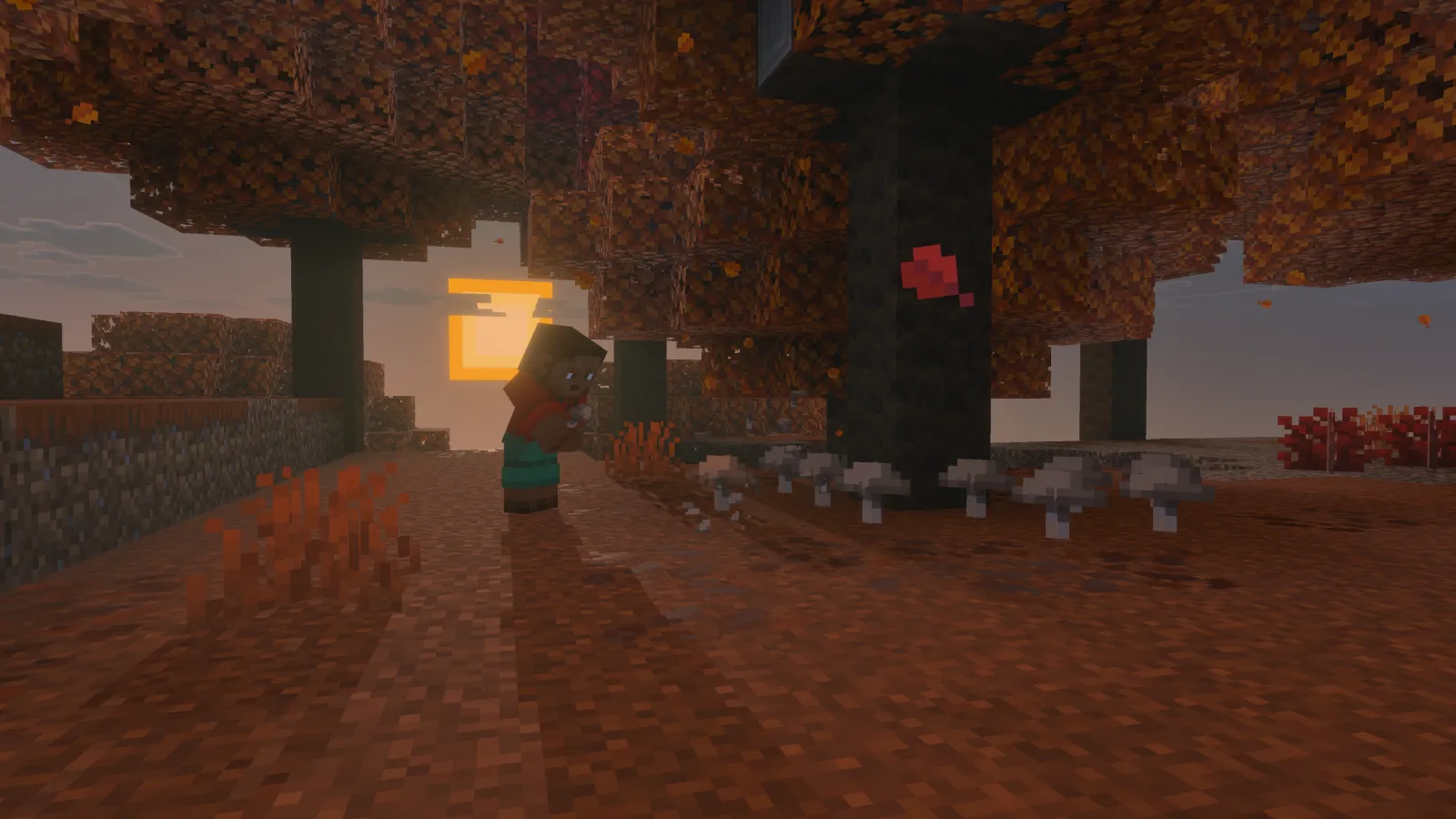
Red shrubs are small, multi-block plants that naturally spawn throughout the Dappled Forest biome. They're part of the biome's post-update decorative overhaul, sitting alongside cherry trees and pink petals as Minecraft gradually pushes toward more diverse, colorful landscapes. Each shrub is relatively compact - they don't sprawl like trees or vines. Instead, they form tight clusters of foliage with a pale stem base, creating these little pockets of color scattered across the forest floor.
You can break them by hand or with any tool, and they drop nothing when harvested.
That's where most players stop thinking about them. "Drops nothing, so they're useless" - I've heard that take a hundred times on Reddit. Not exactly fair though.
Finding Them in Dappled Forest
You can't miss Dappled Forest biomes if you're looking for them. Poke around with Minecraft 26.2 on any reasonably sized world and you'll stumble across them pretty quick. They're characterized by tall cherry trees, that distinctive pale green canopy, and scattered colorful plants throughout the floor - it's unmistakable once you've seen it once.
Red shrubs specifically cluster in the understory, that zone between ground level and the lower tree branches. If you're strip-mining or exploring and thinking "huh, tons of red plants here," you've likely hit a Dappled Forest's decorative layer. Good news? They're abundant. Mining them is straightforward - no specific tool required, no waiting around.
Beyond Decoration: Where the Real Value Sits
Here's where most builders miss out completely. Just because red shrubs don't drop useful materials doesn't mean they don't have value. Far from it. Think of them like concrete powder or smooth basalt - their worth comes from what you do with them, not from what they give you when broken.
Red shrubs excel at breaking up large surfaces that would otherwise feel monotonous. They add organic texture to terraforming projects. These create "wild" aesthetic contrast against structured builds. Most populate custom forest biomes in building competitions. These handle thematic landscaping around houses, temples, villages - basically anywhere you want something that reads as "deliberately placed but naturally-looking."
I tested this on my server about a month back.
Built two identical cottage designs side-by-side - one with basic dirt and grass terrain, another with red shrubs, ferns, and podzol layered throughout. The difference was stunning. One second version felt lived-in, belonged to the world. A first looked like I'd copy-pasted a building template. Same cottage model. Completely different vibe based purely on ground decoration density.
Terraforming and Custom Biome Building
If you're doing serious terraforming work, red shrubs become essential tools. They're the filler that makes your landscape believable. And here's a trick most people don't do: mix red shrubs with other decorative flora at different density levels. A solid block of red shrubs reads as "someone placed these in a grid." Scattered clusters with gaps? That reads as "nature organically put these here." Biome realism comes entirely from that irregularity.
The Dappled Forest naturally teaches you how to use them - just observe how Minecraft's terrain generation actually places them. Look for random distribution with subtle clustering. Varied heights. Occasional gaps where something else shows through. Steal that pattern directly for your own builds and you'll instantly look more sophisticated than players who just plop shrubs everywhere.
When setting up a large custom biome, you'll want consistent resource access.
My recommendation? Create a sustainable collection approach by identifying a Dappled Forest close to your main base, then harvest only what you need per project. Let it regrow between building phases. If you're running a server with multiple players, use the Minecraft Whitelist Creator to designate specific forest areas as rotating harvest zones.
For positioning coordinates across multiple forest areas and optimizing travel routes, the Nether Portal Calculator actually helps more than you'd think - use the distance logic to plan your most efficient harvest route, especially if you're portaling between zones.
The Farming Reality
Most players don't think about "farming" decorative plants, but if you're building a large custom biome or doing extensive terraforming, steady supply matters. Red shrubs respawn in Dappled Forests as long as you haven't completely mined the biome bare - actually that's not quite right for all servers with custom difficulty settings. What I mean is: rotate your harvest sites. Pick three or four different forest areas and cycle through them every few building projects. You get your materials, the biome regenerates naturally, everyone wins.

Don't overthink this one.
For small terraforming jobs? Use what you find. For massive worldbuilding projects? Identify your harvest zones ahead of time and plan accordingly.
My Take: Worth the Effort
Honest answer? Red shrubs aren't worth farming obsessively for most players. They're a "use as you find them" block, best suited for anyone already doing serious terrain work and wanting to add those finishing touches that matter.
Where I'd go all-in: any large-scale terraforming project, fantasy worldbuilding scenarios, or server spawn builds where visual density and polish matter. The effort-to-beauty ratio tips heavily in your favor there. Small single-player cottage projects? You can skip them entirely. Here's the thing, grass, dirt, and flowers get the job done without extra harvesting work.
But if you've got the real estate and the ambition, red shrubs are criminally underrated. They're exactly why some builders' worlds look photorealistic while others look like creative mode placeholder builds, even when using the same base structures.

Lead writer at minecraft.how. Long-time Minecraft player running a small SMP server, testing every build, mod, and seed before writing about it.
Frequently Asked Questions
Where exactly do red shrubs spawn in Minecraft?
Do red shrubs drop anything when harvested?
Can I farm red shrubs for my building projects?
What building styles work best with red shrubs?
How do I place red shrubs artificially in my world?
Have a Question or Tip about this Guide?Community Q&A
Ask a question or help other players below. Join the discussion and share your Minecraft tips!