Minecraft XP Calculator Guide: Exact Levels, Farms, and Costs

A minecraft xp calculator tells you exactly how many experience points you need for any level, how much a level-up really costs, and whether your farm plan is enough before you sink hours into it. If you enchant a lot, repair gear with Mending, or run survival servers, it's one of the most useful tools outside the game.
What a minecraft xp calculator does
Most players think in levels, but Minecraft stores XP as raw points. So that mismatch is why people keep saying things like, "I only need five more levels," then wonder why the grind suddenly feels worse at level 28 than it did at level 8. A good calculator translates both ways: points to levels, levels to points, and level range costs.
So what should it calculate?
- Total XP to reach a level from zero
- XP needed from your current level to a target level
- Points consumed by enchanting or anvil actions
- Post-cost level result so you can chain actions without guessing
That last one matters more than people admit. On my small SMP, I've watched players burn books in the wrong order and lose hours of trading-hall XP because they assumed level costs were linear. They're not. Not even close.
And yes, "30 levels" is not equal to "three 10-level enchants." Minecraft math has no mercy there.
Minecraft XP formulas in 2026 (Java and Bedrock)
The core level curve is still the same structure players have used for years, and calculators in 2026 still rely on the same breakpoints. You don't need to memorize these, but knowing the shape helps you sanity-check any tool.
XP needed to gain one level
- Level 0 to 15: 2L + 7
- Level 16 to 30: 5L - 38
- Level 31+: 9L - 158
Where L is your current level before leveling up.
Total XP to reach a target level
- Level 0 to 16: L^2 + 6L
- Level 17 to 31: 2.5L^2 - 40.5L + 360
- Level 32+: 4.5L^2 - 162.5L + 2220
Quick check: level 30 is 1395 total XP, not 900, not 3000. If a calculator misses that, close the tab and move on.
One caveat, because this trips people up. Java and Bedrock share the level curve behavior players care about for planning, but specific XP sources and platform behavior can still feel different in real gameplay loops, especially if your Bedrock world uses different farm mechanics or mob caps. Actually, that's not quite right for Bedrock, the formula behavior is effectively aligned for leveling math, it's the collection rate and setup constraints that diverge.
PCGamesN reported Minecraft's recent quarterly "drop" cadence continuing into 2026, and that pace can shift gameplay priorities season to season. XP math stays stable, but your best XP source might not.
How I use a minecraft xp calculator before I even log in
My routine is boring, and that's why it works.
I set three targets: enchanting burst, anvil work, and maintenance buffer. Enchanting burst means I want enough points to hit level 30, reroll if needed, and still perform follow-up combines. Anvil work means planned book merges for one tool set. Maintenance buffer is the XP I keep available so Mending doesn't leave me flat after one rough Nether trip.
Then I run the numbers in a calculator instead of winging it. On one Paper server, my old "just farm until it feels right" method gave me huge over-farming. I was collecting about 35 to 40 percent more XP than needed for my actual gear cycle. Great for flexing, bad for time.
Use this simple planning flow:
- Enter current level and target level for your next enchant window.
- Add expected anvil actions and convert those level costs into points.
- Add a safety margin (I use 15 to 20 percent in survival).
- Convert total required points into farm runtime from your known XP per minute.
Yes, runtime estimates are messy. Server lag, spawn-proofing quality, and your collection method all affect the true number. But rough math beats vibes every time.
XP calculator use cases that save the most time
Not every use case gives equal value. These are the big ones.
1) Enchanting table sessions
People focus on reaching level 30 once. Better move: plan for several level-30 cycles in one session. If you're upgrading armor plus tools, calculate total points for repeated climbs to 30 and include lapis/book rerolls. It prevents the classic "I came with plans, left with one okay pickaxe" outcome.
2) Anvil stacking and book order
Anvil penalties are where XP plans go to die. A calculator won't choose your ideal enchant order by itself, but it tells you how expensive each sequence becomes in points. Test two or three merge paths before touching your best gear.
I once combined books in what looked like the "clean" order and doubled my cost. Clean look, messy bill.
3) Mending-heavy playstyles
If your world is Elytra-first and you repair constantly, calculate a weekly XP budget instead of per-item budgeting. Count average sessions, expected durability burn, then convert to points. This turns Mending from random upkeep into planned maintenance.
4) Villager trading loops
Trading halls produce steady XP, not flashy XP. Calculators help decide if your hall can cover your enchant pipeline without a separate mob farm. For casual worlds, that's a big quality-of-life win and fewer redstone contraptions to babysit.
And fewer midnight moments where one zombie in full armor breaks your "safe" farm perimeter.
Picking the right calculator (and spotting bad ones fast)
Most XP calculators look identical at first glance. They're not.
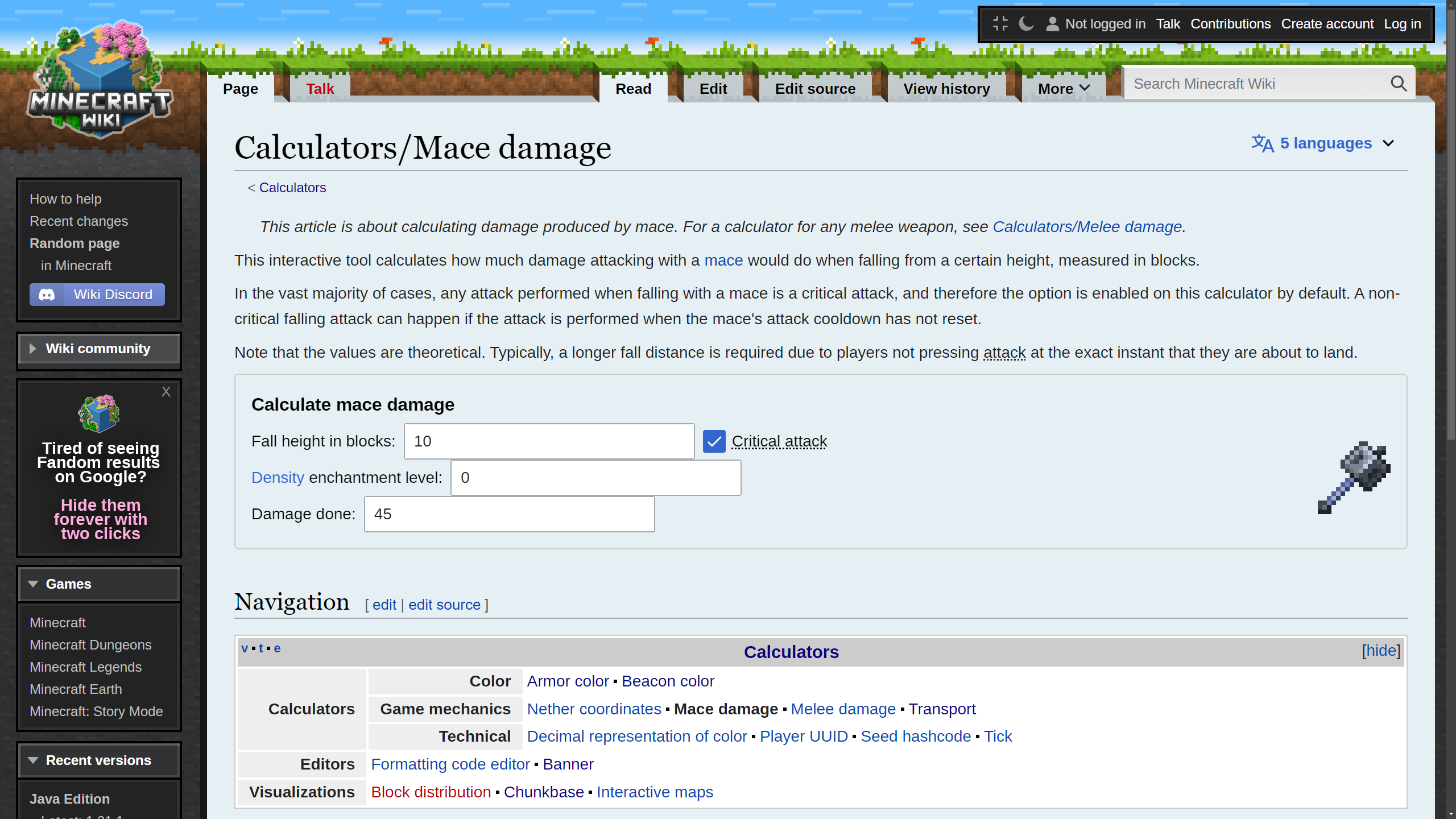
Good ones expose both incremental cost and total cost. Great ones let you start from current XP progress inside a level, not just whole levels. If a tool only has a single "from level X to Y" field, it's fine for quick checks, weak for serious planning.
Here's my checklist before trusting any calculator:
- Shows formulas or at least testable outputs for level 16, 30, and 50
- Handles both directions: level-to-points and points-to-level
- Explains whether costs are rounded and where
- Lets you chain multiple operations
- Loads fast on mobile, because that's where most players check mid-session
If it fails two of those, skip it.
One related platform note: The Loadout covered Mojang's native PS5 version announcement back in 2024. Console performance improvements help XP collection feel smoother, but no hardware upgrade changes the XP curve math itself. Faster frame pacing won't turn level 29 into level 30, sadly.
Common XP math mistakes players still make
Short list, painful consequences.
- Assuming level numbers are linear in effort
- Planning only for "reach 30 once" instead of full enchanting session needs
- Ignoring anvil sequence cost differences
- Forgetting that dying without recovery can erase your entire XP plan
- Measuring farm quality in vibes instead of XP per minute
Another one: mixing "orbs collected" tests from creative experiments with survival reality. Creative test chambers are tidy. Your survival base has pathing issues, chunk border weirdness, and that one corner you swear is spawn-proofed (it isn't).
Want a practical benchmark? Time ten minutes of real play with your exact collection method, then plug that measured rate into the calculator. That's your baseline. Re-test after farm changes. Keep notes. Tiny spreadsheet, big payoff.
So, what's the best minecraft xp calculator strategy in 2026? Use one tool consistently, validate it with known checkpoints, and build XP plans around points, not feelings. You'll enchant faster, waste less effort, and stop rage-grinding that last "easy" level that somehow takes forever.