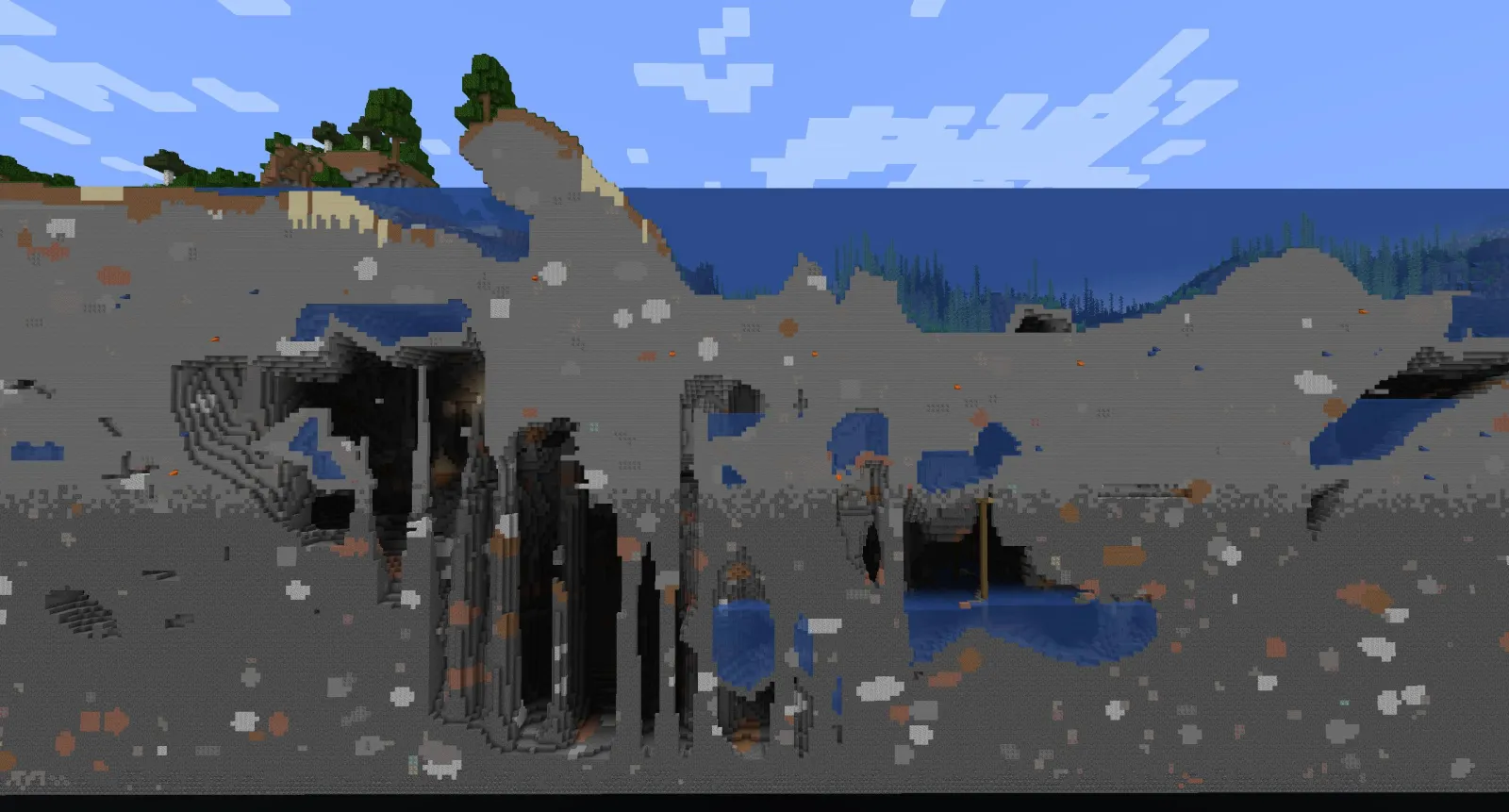
Minecraft caves contain several different biomes and structures, and each one has its own hazards and useful resources. Lush Caves are full of vegetation and water, Dripstone Caves contain dangerous pointed dripstone, Deep Dark areas use sculk sensors and shriekers, and Amethyst Geodes contain growing crystals. A safe cave trip starts with knowing which biome you have entered and what its blocks actually do.
Prepare before going underground
Bring a pickaxe, food, a shield, torches or another light source, blocks for bridging, a water bucket and spare tools. Keep enough inventory space for ores and blocks you want to collect. If you plan to explore a Deep Dark or Ancient City, bring wool blocks or carpets to reduce vibrations and avoid carrying unnecessary noisy equipment.
Set a bed and storage at a safe surface base before a long expedition. A normal bed can set your respawn point in the Overworld, but do not rely on a respawn anchor underground: respawn anchors are intended for the Nether and explode when used in the Overworld or End.
Lush Caves: vegetation, water and light
Lush Caves contain moss, azalea plants, spore blossoms, glow berries, dripleaf and pools of water. An azalea tree on the surface can indicate that a Lush Cave is below. Clay often appears around the water pools, and axolotls can spawn in suitable water areas.
Glow berries provide light and can be eaten as food. They are not a brewing ingredient. The biome's vegetation can make some areas bright, but Lush Caves are not automatically safe: hostile mobs can still spawn in dark spaces. Light the areas you plan to use as a base or mining route.
Dripstone Caves: watch the ceiling and floor
Dripstone Caves contain Dripstone Blocks and Pointed Dripstone. Pointed Dripstone hanging from the ceiling can fall if its support is removed, while stalagmites on the floor can damage entities that fall onto them. Water and lava can also interact with the pointed dripstone system, so watch for narrow pools and falling hazards.
Do not mine directly beneath a pointed dripstone formation without checking the block above it. If you are building a farm or lava collection setup, test the design in a safe area first and make sure the cauldron or collection point is positioned correctly.
Deep Dark and Ancient Cities: avoid the Warden
The Deep Dark contains sculk blocks, Sculk Sensors and Sculk Shriekers. Sensors detect vibrations and can transmit signals through nearby sculk. A naturally generated Sculk Shrieker can summon the Warden after enough warnings. The Warden is extremely dangerous; it is usually safer to avoid it than to fight it.
Move carefully, use wool blocks or carpets to dampen vibrations and avoid triggering sensors. Throwing a snowball or another projectile away from your route can distract the Warden, but do not assume one distraction guarantees a safe escape. If the Warden appears, create distance, break line of travel and leave the area quietly.
Ancient Cities are structures found in the Deep Dark. Their chests can contain valuable loot such as echo shards, disc fragments and enchanted items. They do not contain Dark Oak Wood as a special city resource; bring your own building materials if you plan to make a shelter. Avoid sprinting through the city and pay attention to shrieker locations.
Amethyst Geodes: collect crystals without destroying the source
Amethyst Geodes have an outer layer of Smooth Basalt, a middle layer of Calcite and an inner layer of Amethyst Blocks and Budding Amethyst. Budding Amethyst grows small buds on its exposed faces, which progress through small, medium and large stages before becoming a full Amethyst Cluster.
Budding Amethyst cannot be collected in Survival, even with Silk Touch. Leave it in place if you want the geode to keep producing crystals. Fully grown Amethyst Clusters drop four Amethyst Shards when mined with a pickaxe; Fortune can increase the number. Silk Touch collects the cluster block itself. Small, medium and large buds do not drop shards when broken without Silk Touch.
Amethyst Shards are used for items such as Spyglasses and Tinted Glass. If you want a renewable supply, preserve the budding blocks and harvest only fully grown clusters.
Other cave hazards and useful resources
Large caves can expose lava, water currents, ravines and sudden drops. Keep a water bucket ready, mark branching tunnels and avoid digging straight down. If you find diamonds, remember that ore generation depends on the version and depth; the modern Overworld has a different distribution from older pre-1.18 worlds.
When exploring a large cave system, use a consistent navigation method. Place torches on one side of the tunnel, mark the route back with signs or blocks, and record coordinates for geodes, Ancient Cities and exits. This is more reliable than assuming every cave has the same layout.
Safe exploration checklist
- Light the route and keep food, shield and spare tools ready.
- Use water to control falls and reduce lava hazards where possible.
- Do not stand beneath unsupported pointed dripstone.
- In the Deep Dark, avoid vibrations and use wool to dampen movement.
- Do not mine budding amethyst if you want it to keep growing crystals.
- Mark your route and record coordinates for valuable structures.
- Return to a safe base before your inventory fills or your equipment becomes damaged.
For detailed block and biome mechanics, see the Minecraft Wiki cave biome reference, plus its pages for Deep Dark, Amethyst Geodes and Amethyst Buds and Clusters.
Minecraft.How is an independent community site and is not affiliated with Mojang or Microsoft.