Minecraft is easy to describe as a game about placing blocks, surviving the night and building whatever you can imagine. Spend time on a good multiplayer world, though, and another part of the experience becomes obvious: the people. A shared base turns into a meeting place, a weekly build becomes a tradition, and a player who was a stranger at the start of a season can become someone the group genuinely looks forward to seeing.
That is why Minecraft multiplayer can feel like more than a game. Its open-ended worlds give people a reason to do things together, while the stories that grow around those projects give a community something to remember. The friendships are not automatic, and not every server is welcoming. They develop through repeated interaction, shared goals, trust and the way a community treats its members.
A shared world gives friendship somewhere to happen
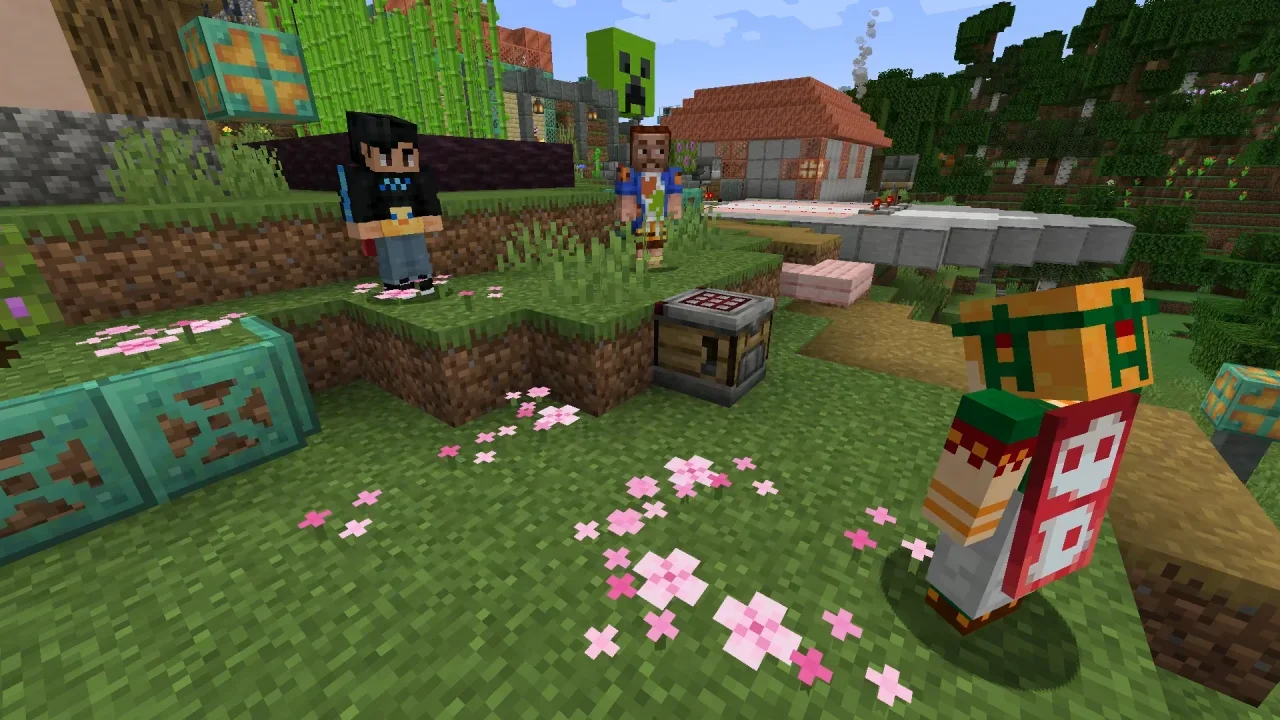
Many multiplayer games bring players together for a match. Minecraft can give a group a place to return to after the match would normally be over. A survival world might begin with a few basic tools and a temporary shelter, then slowly become a settlement with farms, roads, shops, public builds and private corners that reflect the people who made them.
Those projects create natural reasons to communicate. Someone gathers resources while another plans the layout. One player knows redstone, another is good at building, and someone else remembers where the group left its supplies. The value is not that every player has the same skill. It is that different skills can contribute to one shared result.
Even small routines matter. Meeting at spawn before an expedition, helping a new member find a bed, leaving supplies for someone who missed a session or finishing a bridge together can become familiar rituals. Over time, the world holds a record of the group's decisions and inside jokes. A structure is no longer just a structure when everyone remembers the night it was built.
Why cooperation can turn strangers into teammates
Cooperation in Minecraft is visible and practical. Players can divide tasks, exchange materials, plan routes, protect a base or work toward a common build. A group does not need a formal guild system to develop teamwork; it only needs a goal that is easier, more interesting or more ambitious when people work together.
Research on online multiplayer Minecraft communities has examined how prosocial behaviour, moderation and community development shape the experience. Kenzie Ann Burniston Woodbridge's 2018 study, presented in the Association of Internet Researchers' selected papers, highlights the importance of player behaviour and committed moderators in maintaining a helpful community. The implication is useful: the game creates opportunities for cooperation, but people and community standards determine whether those opportunities become a positive social experience.
That distinction matters. A friendly group can make room for beginners, explain server rules and treat mistakes as part of learning. A hostile group can turn the same mechanics into griefing, exclusion or arguments. The blocks do not decide which culture develops; the players do.
Online friendships are real relationships, but they need balance
It is tempting to dismiss a friendship that begins in a game because the people first meet through avatars and chat. That misses how relationships work. People can get to know one another through regular conversation, shared effort, humour and mutual support, even when the first meeting happens online. A Minecraft world can be the setting for those interactions, rather than the whole relationship.
Research into online gaming networks offers a more measured picture than either extreme. A 2024 study in the Journal of Public Mental Health surveyed 301 online gamers and found that closer online ties were associated with lower social isolation and greater perceived support, while in-person social networks showed stronger associations with several mental-health outcomes. The authors' findings do not mean that gaming friendships replace offline relationships. They suggest that online connections can matter while face-to-face relationships remain important too.
In practice, healthy multiplayer friendships leave room for life outside the server. Friends can play regularly without expecting everyone to be online every evening. They can respect different time zones, school, work, family commitments and breaks. A good community makes it easy to return after time away instead of treating absence as betrayal.
Different Minecraft communities create different kinds of connection
There is no single multiplayer experience. The best fit depends on what a player enjoys and how much social interaction they want.
- Survival and SMP worlds: These often create long-running shared stories. Players build homes, trade resources, explore together and gradually shape a world that reflects the group.
- Creative communities: Builders can exchange ideas, collaborate on large projects and learn techniques by seeing how other people approach the same challenge.
- Minigame networks: Short matches make it easy to meet people, practise teamwork and play casually without committing to a long-term world.
- Roleplay and themed servers: Shared settings, characters and community events can give players a reason to cooperate beyond collecting resources or winning matches.
- Private worlds and Realms: Smaller invited groups can create a more familiar space for friends and family who prefer to play together without joining a public community.
If you are still deciding what kind of world suits your group, our guide to Minecraft server types explains common formats such as Survival, SMP, Skyblock and minigames. If you want to compare public communities, you can also browse the Minecraft.How server directory.
What makes a Minecraft server feel like a community?
A large player count can make a server look busy, but activity alone does not create belonging. Players are more likely to feel part of a community when they can understand its culture, find people to play with and see that their contributions are treated fairly.
The same idea is appearing across gaming beyond individual game servers. DailyGame’s new gamer community brings players together through profiles, friendships, groups, Twitch integration and shared events , another example of how gaming communities can help people find teammates and build connections beyond a single match.
Some practical signs are easy to look for:
- Clear rules: Members know what behaviour is expected and what happens when rules are broken.
- Consistent moderation: Staff respond to harassment, griefing and disputes without favouritism, and players have a way to report problems.
- Welcoming onboarding: New arrivals can find basic information, ask questions and learn how the world works without being mocked.
- Shared activities: Events, build projects, community goals and seasonal challenges give people reasons to interact.
- Room for different play styles: Builders, explorers, casual players and competitive players can all find a meaningful way to participate.
A study focused specifically on prosocial Minecraft servers also points to the importance of moderator commitment and the behaviour of the players themselves. Good tools and server features can help, but they cannot substitute for fair rules and people who take responsibility for the atmosphere.
Mojang's official Minecraft server page describes community-created multiplayer worlds and points players toward its server standards. Before joining any public server, read its rules and check how it handles chat, reporting and moderation. For a closer look at server identity, moderation and community activities, see our article on what matters in Minecraft server communities. Younger players and parents can also review Minecraft's official player-safety guidance.
Small moments often matter more than the biggest builds
Not every memorable multiplayer story involves a huge project. Sometimes it is a player sharing their first diamonds, someone guiding a lost teammate home, a group rebuilding after a creeper explosion or a friend logging in just to see how a project is going. These moments are ordinary, which is exactly why they can make a shared world feel familiar.
Community events can help create those moments, but they do not have to be elaborate. A weekend building challenge, a group expedition, a friendly tournament or a shared town project is enough to give people a reason to meet. The most successful activities usually have a clear purpose and leave room for players to contribute in their own way.
For server owners, this is a useful reminder: do not measure community health only through peak player counts. Look at whether newcomers return, whether members help one another, whether events bring different groups together and whether people feel comfortable raising concerns. A smaller community with trust and a clear identity can be more meaningful to its members than a much larger server where everyone remains anonymous.
Finding your own people in Minecraft
If you want to make friends through Minecraft, start with the kind of play you genuinely enjoy. Look for a server whose rules, pace and game mode fit you. Join a group activity, ask a question about a build or offer help with a shared task. You do not need to force a conversation; repeated, low-pressure interactions are often how familiarity develops.
Take sensible precautions when meeting people online. Do not share passwords, home addresses, school or workplace details, or other private information in game chat. Be cautious with links and downloads sent by strangers, use the game's reporting and blocking tools when needed, and leave communities where harassment is ignored. If you are a younger player, involve a trusted adult when choosing public servers or dealing with uncomfortable interactions.
If you prefer to play with people you already know, you do not need to start with a public server. Our guide to playing Minecraft with friends online compares friend-hosted worlds, Realms and public servers. Each option supports a different kind of group and level of commitment.
The world is made of blocks; the memories are made together
Minecraft's greatest social strength is not a promise that every player will find a lifelong friend. It is the space the game gives people to cooperate, create, solve problems and return to a shared place. Some groups will stay together for years; others may play for one season and move on. Both experiences can be worthwhile.
When players treat one another with respect, make room for newcomers and build something together, a multiplayer world can become more than a map or a collection of game modes. It becomes a place with shared history. The bridge, town square or tiny starter house may be made of pixels and blocks, but the reason people remember it is human.
Research and official references
- Kenzie Ann Burniston Woodbridge (2018), “Crafting Prosocial Community in Online Multiplayer Minecraft”, Association of Internet Researchers Selected Papers.
- Tyler Prochnow and Megan S. Patterson (2024), “It's not just a game: social networks, isolation and mental health in online gamers”, Journal of Public Mental Health.
- Minecraft official server information and community standards.