Minecraft Guide To Redstone: Complete 2026 Edition

Redstone is essentially Minecraft's electrical system, and honestly, it's one of the most powerful mechanics in the entire game if you're willing to learn it. Whether you're building automatic doors, creating farm machines, or designing elaborate logic circuits, understanding redstone is what separates players who build impressive contraptions from those who just slap blocks down and call it done.
What Is Redstone?
Redstone is a conductive material found deep underground that acts like wiring in vanilla Minecraft. When powered by an energy source, it transmits a signal through redstone dust, which you can place along blocks and cables. The signal travels up to 15 blocks away from the power source before it drops to zero, but you can extend it with repeaters. It's not complicated once you stop overthinking it, but there's a learning curve.
The basic idea: power source (lever, button, sensor) sends a signal through redstone dust to an output (piston, door, lamp, dispenser). Everything in between is just the wiring. And honestly, that's 90% of redstone right there.
We've been building with redstone since early Minecraft, and the mechanics haven't fundamentally changed in years (despite rumors about cave updates adding new mobs with interesting properties, as mentioned in PCGamesN's coverage of recent Minecraft Live announcements). The core logic remains the same: inputs, outputs, and components in between.
Getting Started Without Losing Your Mind
Before you even touch redstone, know this: you don't need mods. Vanilla redstone can do almost everything except maybe some hyper-optimized flying machines, and even then, the community figures it out. My advice? Start stupidly simple. Build a lever connected to a door. That's it. You're done with step one.
Next, try a button connected to a piston. Then combine them. Once you stop being afraid of the stuff, it clicks. Redstone isn't mystical or magical. It's just a system with rules, and those rules are actually pretty straightforward.
- Redstone dust only works at full power within 15 blocks. Use repeaters to extend signals.
- Repeaters can be set to delays (1-4 ticks). This matters more than you think.
- Pistons push blocks; sticky pistons pull them. Direction matters.
- Observers detect block changes and emit a pulse. They're stupidly useful.
That list covers maybe 60% of what you'll actually use. The rest is just variations.
The Components You Need to Know
Let's talk about the building blocks. Most of redstone boils down to a handful of components doing specific jobs.
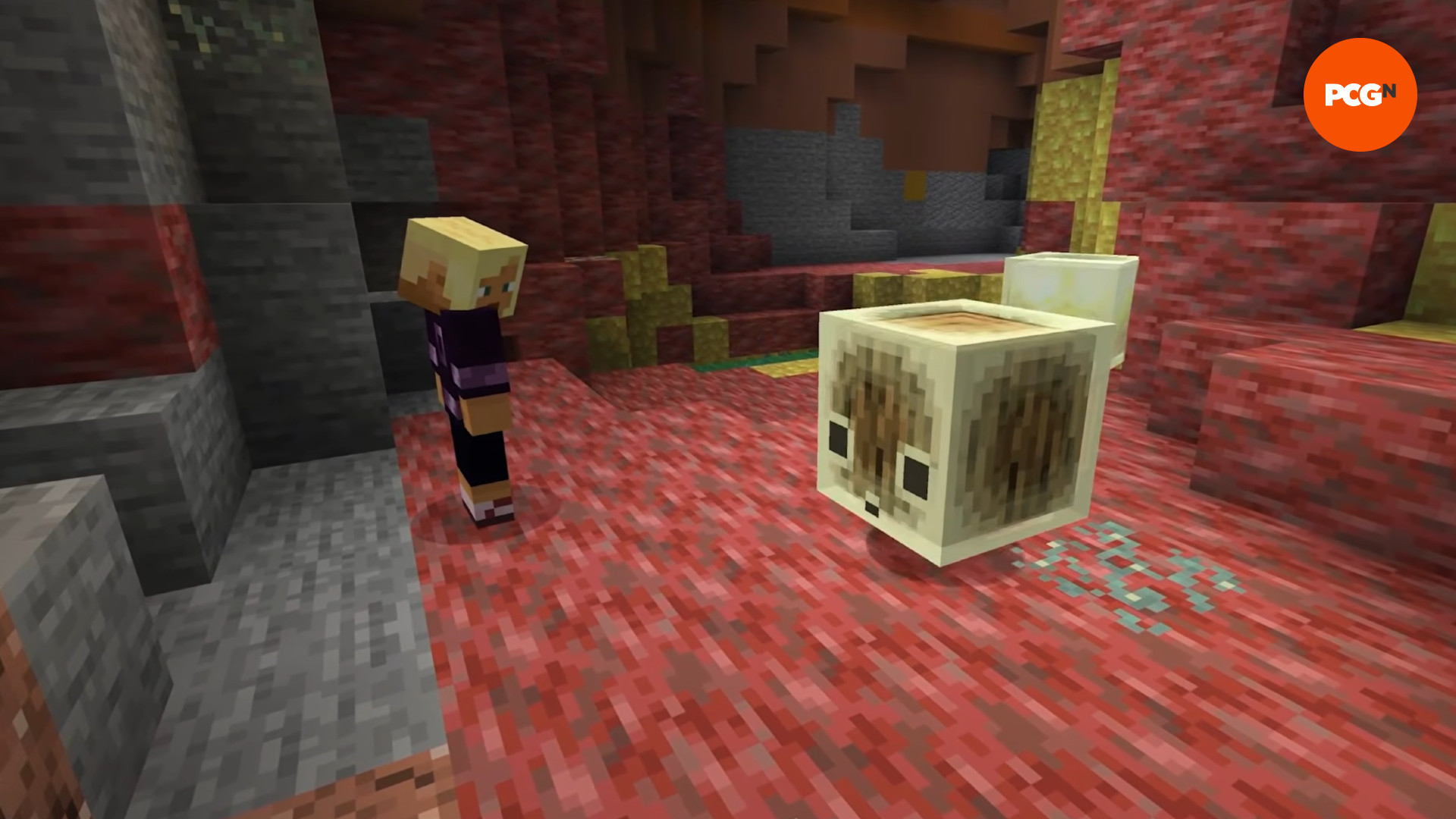
Redstone dust is your wire. It transmits power and looks like little red particles on blocks. Place it on top of blocks or on the sides of them. It's simple.
Repeaters do three things: they extend signal distance (pushing it another 15 blocks), they lock signals (using the side input), and they add delay. A single repeater on its shortest setting adds just one tick of delay. Crank it to max and you get four. You'll use these constantly.
Comparators are weirder and more powerful. They compare signal strength, subtract signals, or just repeat them depending on how you set them. Honestly, you don't need comparators for 90% of builds. But when you do need them, they're the right tool. They're especially useful for detecting container fullness and crafting systems.
Pistons and sticky pistons are your output devices. Regular pistons push blocks one space. Sticky pistons push and pull. Both are essential for doors, bridges, flying machines, and farm automation.
Observers watch a block in front of them. When that block changes (water flows in it, a furnace turns on, whatever), they emit a pulse. They're deceptively powerful for automation.
Building Your First Real Machine
Alright, forget the theory for a minute. Let's build something that actually does something useful: an automatic chicken farm. It's simple enough that you can finish it in an hour but complex enough that it teaches real concepts.
You'll need: some hopper (item funnel), a redstone repeater, a few redstone dust trails, and a powered rail or hopper to push cooked meat into a chest. Here's the flow: chickens lay eggs, eggs land on a conveyor (sloped blocks), a hopper catches them, the hopper pulses a repeater set to four ticks, and that pulse triggers a dispenser that shoots eggs back at the farm.
Actually, that's getting complicated. Let me back up.
Start with this instead: dig a pit, throw chickens in it, put a hopper below them, connect a redstone dust trail from the hopper, place a repeater, and run that to a dispenser. Set the repeater to maximum delay (four ticks). Put eggs in the dispenser. When chickens grow up and die, the hopper detects items, sends a signal, and the dispenser shoots more eggs. Chickens breed when hit with eggs.
That's a functional farm. It'll keep itself running forever. And if you understand that system, you understand how to build basically any simple redstone contraption.
Wiring Techniques That Matter
Redstone can be messy. Your first instinct will be to run redstone dust everywhere, and your contraptions will look like a bird's nest of wires. There's nothing wrong with that, but organized wiring makes debugging easier.

Two big patterns: vertical runs (redstone on the sides of blocks stacked on top of each other) and hidden runs (redstone inside walls or underneath floors). If you're building something visible, hiding the wiring makes it look less janky. If you're building a machine in your base, nobody cares if it looks ugly as long as it works.
Mixing repeaters with observers speeds things up. A repeater-heavy system might lag on large servers. Observers trigger faster and are more efficient, actually. Trade-off: repeaters give you predictable timing, observers give you responsiveness.
And here's something nobody tells beginners: sometimes you want a delay. Sometimes you want something to happen a few ticks after something else. Repeaters exist for this reason. A four-tick repeater means the signal waits four game ticks before passing through. Useful more often than you'd think.
Advancing Beyond the Basics
Once you're comfortable with simple mechanisms, redstone gets genuinely interesting. This is where logic gates, clock circuits, and state machines live. But honestly? Most players never need to go here.
Logic gates (AND, OR, NOT) let you create conditional behavior. "Turn on if both levers are pulled" or "turn off only when this switch is pressed." If you're building a door that requires two people to open simultaneously, you need an AND gate. Most AND gates are just two inputs going into a single repeater.
Clock circuits pulse continuously, like an oscillator. You see these in mob grinders and crop farms. The simplest clock is just a repeater feeding back into itself, creating an endless loop of on-off-on-off. Control the repeater delay and you control the pulse speed.
For inspiration, check out skins like SlimyRedstone's Minecraft Skin and redstonened's skin if you're looking to represent the redstone community in your own character. Players obsessed with this stuff often represent it visually.
Honestly, if you understand repeaters, observers, and pistons, you can build 95% of what Minecraft offers. Everything else is just more efficient versions of the same concepts.
Common Redstone Mistakes and How to Avoid Them
Signal strength matters. Redstone dust at full power is bright red. Half-powered is dimmer. A repeater restores full power when it passes a signal through. If you're seeing dim redstone, your signal is dying, and you need another repeater.
Update order is weird sometimes. If redstone updates aren't happening when you expect, remember that blocks update in a specific order. Generally: don't overthink it. If something feels broken, add a repeater with a one-tick delay. Magic.
Sticky pistons can get confused. If a sticky piston is pulling a block but seems to fail randomly, it's because the block behind the thing being pulled isn't solid enough. Use solid blocks, not carpet or torches.
And remember: there's almost always a simpler solution than what you're thinking. If your redstone build is five screens tall and uses 200 comparators, you probably overcomplicated it.
Taking It Further
Once you're comfortable, look into flying machines (pistons pushing a platform with a specific timing), chunk loaders (keeping areas loaded while you're away), and automatic crop farms. These are the intermediate builds that feel like magic the first time they work.
Community figures like Redstoneboss, theredstoneprofi, and RedstoneFireLord have built some ridiculous contraptions over the years. The point is: redstone skill comes from experimentation and watching what works. YouTube is full of tutorials, Reddit's got massive communities, and the Minecraft Wiki lists every redstone component's behavior.
Start simple. Build something that does one thing well. Then build something that does two things. Before long, you'll be designing systems you haven't seen before, which is honestly when redstone gets fun. Because at that point, you're not just following a tutorial. You're actually inventing.