How to Build a Greenhouse in Minecraft Step by Step

Building a greenhouse in Minecraft comes down to three things: a glass roof and walls, a light source so crops grow at night, and water or farmland inside. Frame it with any block you like, fill the walls with glass panes, light it up, and plant away. That's the whole idea.
What You'll Need to Build a Minecraft Greenhouse
The shopping list is short, which is honestly half the appeal. You don't need diamonds or rare loot for this, just glass and a handful of blocks for the frame.
Here's what I keep ready before I start digging:
- Glass blocks or glass panes (panes use less sand per wall, so smelt with that in mind)
- A frame block you like the look of: stripped logs, deepslate brick, or quartz all work
- Light sources: glowstone, lanterns, or sea lanterns
- Farmland and a water bucket or two for the growing beds
- Seeds, saplings, or whatever you actually want to grow
- Bone meal if you're impatient (guilty)
Sand is the real bottleneck. Look, one block of glass costs one sand, and a full greenhouse chews through it faster than you'd expect. Grab a couple extra stacks before you commit, because nothing kills the momentum like running back to a beach mid-build.
Panes versus full blocks is a genuine choice, not just looks. Panes are cheaper and give you that thin, framed-window feel. Solid blocks read as cleaner glass walls. I lean panes for the classic greenhouse look, but it's your call.
Picking the Right Spot
Flat ground near your base is the easy answer. But a greenhouse looks fantastic built against a hillside, perched over water, or even half-sunk into a snowy slope, so don't feel stuck with a boring plains square.
Sunlight is the thing to think about. Glass lets daylight pass straight through, so open sky above your roof means free light through most of the day. Build it underground or under a big overhang and you're leaning entirely on lamps to keep crops alive.
Biome matters for the vibe, too. A glass build glows beautifully in a cherry grove, pops against dark spruce taiga, and looks almost magical sitting on the edge of a lush cave opening.
Playing with other people? If you're hopping onto a friend's world, drop the address into our Minecraft Server Status Checker before you haul all that glass over, just to confirm it's actually online. And if the server's yours, locking it down with our Minecraft Whitelist Creator stops random visitors from trampling your beds while you're logged off.
Nothing stings quite like loading back in to a greenhouse full of snapped stems.
Raising the Glass Walls and Roof
This is where the build takes shape. I'll walk through a simple rectangular design, and you can bend it however you want once you've got the idea.
- Lay the floor. Mark out your footprint, say 9x7 blocks, using your frame material. This doubles as the foundation and the border for your beds.
- Raise corner pillars. Three or four blocks high at each corner. Three feels cozy; four gives headroom for taller plants like bamboo or a small tree.
- Fill in the glass. Connect the pillars and pack everything between them with glass panes. Leave a one-block gap for a door.
- Cap it with a roof. A flat glass ceiling works fine. A pitched roof built from stairs and glass looks far better, though, and ditches that generic box look.
One mistake I made early on: I roofed the whole thing in solid glass blocks and it felt heavy and dark somehow. Swapping to a frame of trapdoors and stairs with glass panes between them reads way more like a real greenhouse. Small change, big difference.
Add your frame block as trim along the base, the corners, and the roofline. That contrast between solid trim and clear glass is what separates a greenhouse from a plain glass cube.
For the entrance, a simple wooden or iron door works, but a pair of fence gates or a trapdoor airlock looks tidier and keeps mobs from wandering in. If your greenhouse sits away from your base lighting, drop a lantern by the door so nothing spawns on the path at night.
Keeping Your Crops Growing
A greenhouse that can't grow anything is just a pricey glass box. Light and water do the heavy lifting here, so get those two right and you're basically done.
Crops need a light level of 9 or higher to grow; the Minecraft Wiki lists this for wheat, carrots, potatoes, and the rest. Daylight through the glass covers you until sunset, but growth stalls in the dark. Tuck glowstone under the floor blocks, hang lanterns from the roof beams, or line the walls with sea lanterns so nothing pauses overnight.
Water and Farmland
Farmland only stays hydrated with water within four blocks. I usually run one water channel down the center and surround it with tilled soil. A single source block hydrates a surprisingly wide bed, so you rarely need more than a couple.
Cover open water with a trapdoor or carpet if you don't want to keep falling in. Learned that one the hard way.
Speeding Things Up
Bone meal is your friend. Feed bones or spare crops to a composter, or craft bone meal straight from skeleton drops, and you can rush most plants to full size in seconds. Trees and mushrooms react too, but tall growth needs clearance, so plan your roof height around whatever you're growing.
As for what to plant: wheat, carrots, potatoes, and beetroot are the reliable staples. Pumpkins and melons need a free dirt block beside the stem to grow their fruit, so leave them room. Sugar cane wants water right next to it, and nether wart needs soul sand instead of farmland, so it's more of a side project than a true greenhouse crop.
Going Automatic
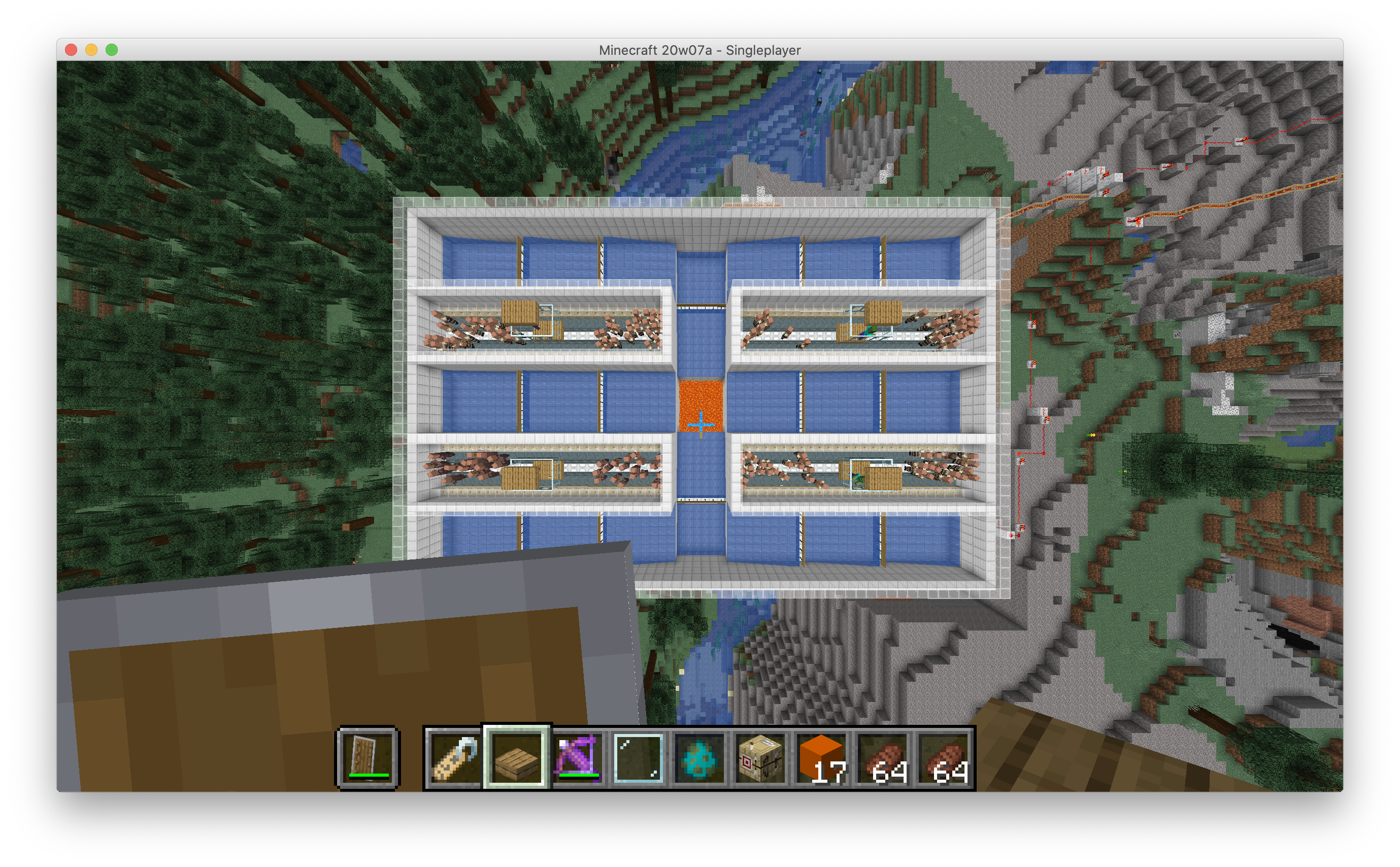
Want it hands-off? A villager farmer parked inside will replant and harvest crops for you, dropping the surplus into a hopper if you set one up. It's not the fastest farm in the game, but for a decorative greenhouse that quietly feeds you on the side, it's perfect. I run one on my survival world and barely think about food anymore.
Greenhouse Ideas Worth Stealing
Vanilla Minecraft, as of version 26.1.2, has way more decorative plants than most people use, and a greenhouse is the perfect excuse to show them off.
- Glow berries trailing from the ceiling double as soft, free lighting
- Azalea and flowering azalea bushes for pops of green and pink
- Big dripleaf and small dripleaf for that layered, tropical look
- Flower pots lined along windowsills with whatever blooms you've gathered
- Bamboo or a single sapling grown into a leafy centerpiece
Mix your textures. A greenhouse that's wall-to-wall wheat just looks like a farm with windows. One with hanging vines, potted flowers, a little pond, and a bench in the corner looks like somewhere you'd genuinely want to hang out.
Pick a style and lean into it. A rustic greenhouse uses oak or spruce frames, mossy accents, and a few cracked pots for that lived-in look. A modern one goes clean: quartz or smooth stone trim, perfectly even glass, maybe some sea lanterns recessed into the floor. Both look great. They just tell different stories.
Quick note for Bedrock players: most of this is identical, though a few light values and growth quirks differ slightly between editions. Actually, the biggest difference you'll notice is how redstone-driven auto-farms behave, not the plants themselves. The greenhouse itself builds the same either way.
And a bench and a lantern in the corner? Sells the whole thing.
My Take
Greenhouses punch way above their effort. A couple stacks of glass, one decent afternoon, and you've got a centerpiece that doubles as a working farm. Hard to argue with that return.
Start with a plain rectangle, nail the lighting and water, then go wild on decoration once the bones are solid. The fancy pitched roof and the dripleaf can wait. A crops, less so.