Craft-Engine: Custom Minecraft Content Without Coding
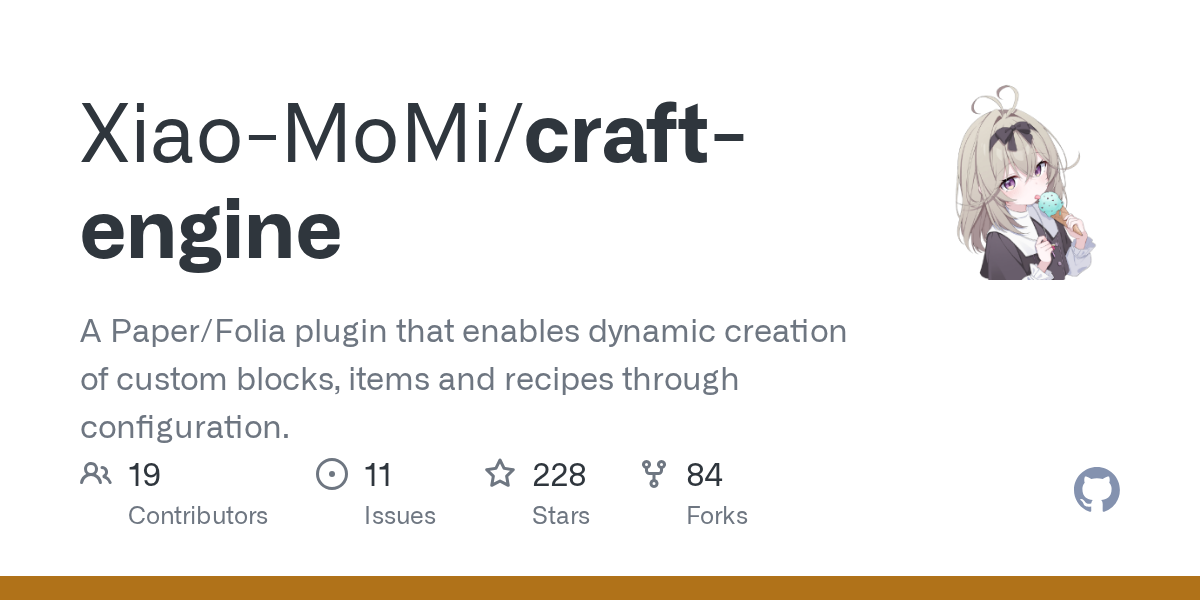
"A Paper/Folia plugin that enables dynamic creation of custom blocks, items and recipes through configuration."
Xiao-MoMi/craft-engine · github.com
Ever wanted to add custom blocks and items to your Minecraft server without touching a single line of Java code? Craft-Engine is a configuration-based Paper/Folia plugin that makes exactly that possible. Whether you're running a survival server with custom ores, a creative world with themed building blocks, or a minigames server with unique mechanics, this plugin handles the heavy lifting through simple configuration files.
What This Plugin Does
Craft-Engine isn't a framework for developers. It's a tool for server administrators. You define custom blocks, items, and recipes in configuration files, and the plugin handles the rest: the textures, the drop rates, the crafting recipes, the placement behavior, everything. Want a glowing block that doesn't require custom models? A pickaxe that mines faster in caves? A decorative item that stacks to 64? You configure it, not code it.
The plugin works by intercepting Minecraft's item and block systems at a low level. Instead of modifying Minecraft's jar or writing Paper plugins in Java, you're telling Craft-Engine how your custom content should behave through YAML or JSON configuration. It's a middle ground between vanilla limitations and the complexity of actual plugin development.
Why Server Owners Use This
Let's be honest: if you're running a survival server, vanilla blocks get boring fast. Most servers eventually want something custom. A custom ore for a progression system. Custom wood types matching a biome theme. Unique crafting recipes that tie into your server's economy. Traditionally, that meant hiring a developer or learning Java yourself.
Craft-Engine removes that barrier. You don't need to know Java. Anyone don't need to understand Paper's event system or packet manipulation. Most players write configuration, reload, and test. It's fast iteration. You can try an idea, see if players enjoy it, adjust it, and have it live within minutes. That's powerful for server creativity.
It also scales. Servers running 237 different custom items and blocks aren't unusual. Performance stays solid because the plugin uses efficient packet-level implementations, not heavier layer-based approaches.
Getting Craft-Engine Running
Installation varies slightly depending on your setup. For the Community Edition (free, on Modrinth), you'll need a Paper or Folia server running version 1.20+.
First, download the plugin jar from Modrinth or the official GitHub releases:
wget https://modrinth.com/plugin/craftengine/versions
# Download the latest release and place it in your plugins/ folder
Then restart your server or run the reload command:
sudo systemctl restart minecraft-server
# or in-game (if you've the permission): /craftengine reload
The plugin generates a config folder on first run. This is where the magic happens: `plugins/CraftEngine/` contains your block definitions, item definitions, and recipe configurations.
For developers wanting to extend Craft-Engine with custom plugins, you'll add it as a dependency. The README shows the Maven setup if you're building on top of the API. Most server owners won't need this step.
Core Features That Matter
Custom blocks are the main draw. You define properties like hardness, blast resistance, whether they drop themselves, what drops when mined with different tools, and special behaviors.
What's genuinely impressive is the behavior system. You can attach stem blocks (think melons or pumpkins), gravity blocks (sand-like falling behavior), plant blocks (crops that grow through stages), and light-emitting blocks with custom brightness values. A recent update added filters for stem blocks (checking what's underneath before they grow), which fixed a lot of melon farm issues servers were seeing. Small detail, huge practical impact.
Custom items are equally flexible. You set material type, durability, enchantability, food properties if it's edible, and armor stats if it's wearable. Most players can create a custom sword with custom attack speed. A pickaxe that never breaks. A food item with unusual saturation values.
Recipes tie it together. Define shaped, shapeless, furnace, or blast furnace recipes using custom items as inputs and outputs. Want a custom alloy that requires your custom ores? You script it through configuration.
If you're running multiple versions or want to support older Minecraft releases, Craft-Engine handles version compatibility internally. (Though version 26.5 made significant API changes, so updating from very old versions means checking the migration guide.)
Practical Setup Tips and Gotchas
The configuration format matters. Reading the official wiki before diving in saves you troubleshooting time. YAML indentation is strict, and typos in block names silently fail rather than throwing obvious errors. Always validate your configs in a test world first.
Custom textures are optional. You can create custom blocks and items without custom textures, using existing Minecraft assets. But if you're building a themed server, you'll probably want custom models eventually. The plugin supports resource packs, so that workflow is straightforward.
One thing that caught me off guard initially: the plugin processes configurations on startup. If you edit configs and reload without restarting the server, some changes stick and others don't depending on what you changed. Always do a full server restart when updating block or item definitions to be safe. Recipe changes sometimes hot-reload fine, but why risk it?
If you're also running custom generators or world-edit plugins, test your custom blocks in actual terrain generation. Sometimes placement rules conflict in unexpected ways.
Who Should Use This
Survival server owners, first. Especially if you're adding a progression system and need custom resources. Anarchy servers sometimes use it for novelty items. Creative servers might add decorator blocks. Minigame servers can create unique items for their games. If you're running anything other than vanilla, Craft-Engine probably has a use case for you.
If you're a solo player running a personal server, it's overkill unless you're really committed to custom content. But if you're managing a community server with regular players, it's practically essential for keeping things fresh.
Developers might also grab it as a dependency if they're building plugins that need to interact with custom items or blocks. The API is documented, and the project's actively maintained with open-source contributions welcome on GitHub.
Alternatives in This Space
ItemsAdder is probably the most direct competitor, offering a similar configuration-based approach with a stronger focus on cosmetic items and textures. If your priority is appearance over gameplay mechanics, ItemsAdder's workflow might feel smoother.
If you need even more control, writing custom Paper plugins is the nuclear option. You get unlimited flexibility but lose the quick iteration and accessibility that configuration files provide. Craft-Engine sits in the sweet spot: more powerful than pure cosmetic tools, less complex than full plugin development.
For simple use cases (just adding a couple items), Vanilla+ resource packs can sometimes do the job. Here's the thing, but once you need actual mechanical custom blocks or items with properties, you'll outgrow that approach quickly.
If you're building something more ambitious and want a complete server customization framework, Skript or similar scripting languages offer broader possibilities. They're just steeper learning curves.
Before You Install
Check your server's version compatibility. The plugin needs Paper or Folia running 1.20 or later. If you're stuck on an older version, you won't be able to use it.
Budget time for configuration. A single custom item takes minutes. A full content system takes planning. Document what you're adding, because you'll want to remember why that ore has those specific stats six months from now.
The Community Edition is free under GPL-3.0 license. If you need professional support or exclusive features, the Premium Edition on Polymart and BuiltByBit offers official support and development builds. For most servers, Community Edition is more than sufficient.
One last practical note: if you're also using other configuration-based plugins (like a custom enchantment plugin or mythic mobs), test the interaction in a staging environment first. Sometimes naming conflicts or priority issues surface in production that you'd catch early with testing.
For generating config templates or testing ideas quickly, tools like the Minecraft Text Generator can help you prototype display names and lore strings before you finalize them in your item configs. It's a small thing, but consistent formatting across items makes your server feel more polished.
If you're also managing server configuration more broadly, the Server Properties Generator helps keep your baseline settings organized while you layer custom content on top.
Visit Xiao-MoMi/craft-engine on GitHub ↗
Lead writer at minecraft.how. Long-time Minecraft player running a small SMP server, testing every build, mod, and seed before writing about it.