Minecraft Frog Guide: Spawning, Drops and Farming
Frogs are amphibians that spawn exclusively in Mangrove Swamps and can be farmed for slimeballs. They come in three distinct colors based on where their tadpoles grow, and they breed when fed the right items. Here's everything you need to know about finding, farming, and maximizing your frog operation.
Where Frogs Spawn
Frogs aren't randomly scattered across your world. They spawn exclusively in Mangrove Swamps, and honestly, that's the only place you'll find them naturally. If you haven't located one of these biomes yet, it's worth the exploration time - a single swamp can support an entire frog farming operation once you understand how they work.
When you wander into a Mangrove Swamp, you'll see frogs hopping around on lily pads and solid ground blocks. They spawn during both day and night, though they're more active when it's light out. The spawn rate is reasonable but not overwhelming - expect to find a handful of frogs if you spend ten minutes exploring a decent-sized swamp.
Frogs only spawn on leaves, logs, roots, and certain ground blocks within the biome boundaries.
If you're playing on a multiplayer server and want to hunt for swamp coordinates, check out the Minecraft servers list to join communities where resource locations are often shared freely. Other players have probably already found the best swamps and documented them, which saves you from wandering aimlessly for hours.
Understanding Frog Colors and Types
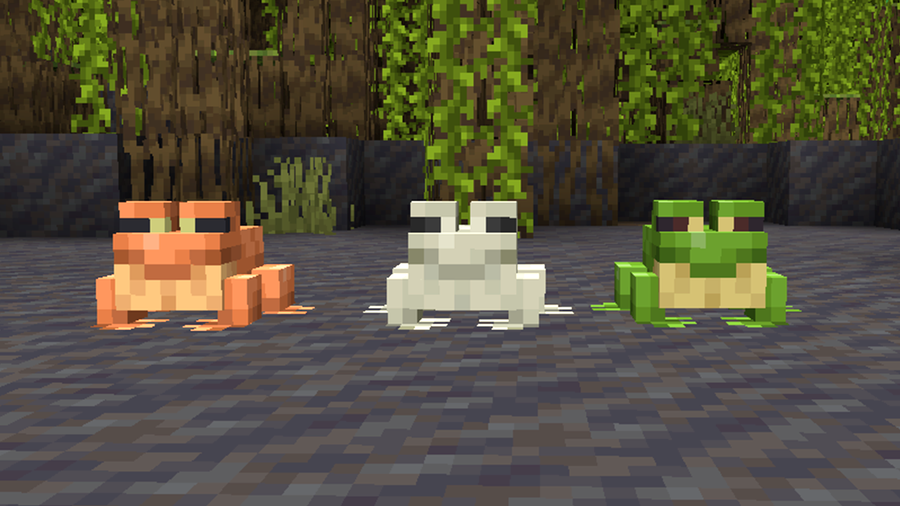
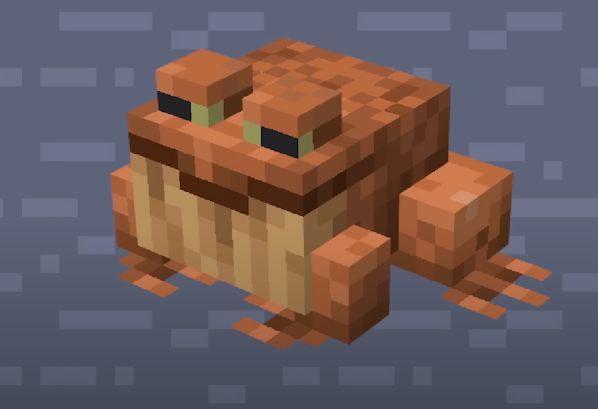
Frogs come in three distinct colors: orange, brown, and green. Here's the thing though - the color isn't determined by where the adult frog spawned. So it depends on where the tadpole grew up. Breed frogs in a Mangrove Swamp and the tadpoles mature into brown frogs. Transport those tadpoles to a warm biome and they become orange. Move them to a cold taiga and they turn green.
This mechanic opens up interesting possibilities for multibiome collections. You can create separate frog farms in different biomes and develop a diverse population without having to find them naturally in each location. For creative builders, having multiple colors available is genuinely useful for aesthetic projects.
Aesthetics aside, the colors don't matter.
Orange, brown, and green frogs behave identically, produce the same drops, and breed the same way. The color difference is pure visual flavor. Some players collect all three colors just because it looks cool in a tank or enclosure.
What Frogs Drop and How to Farm Them
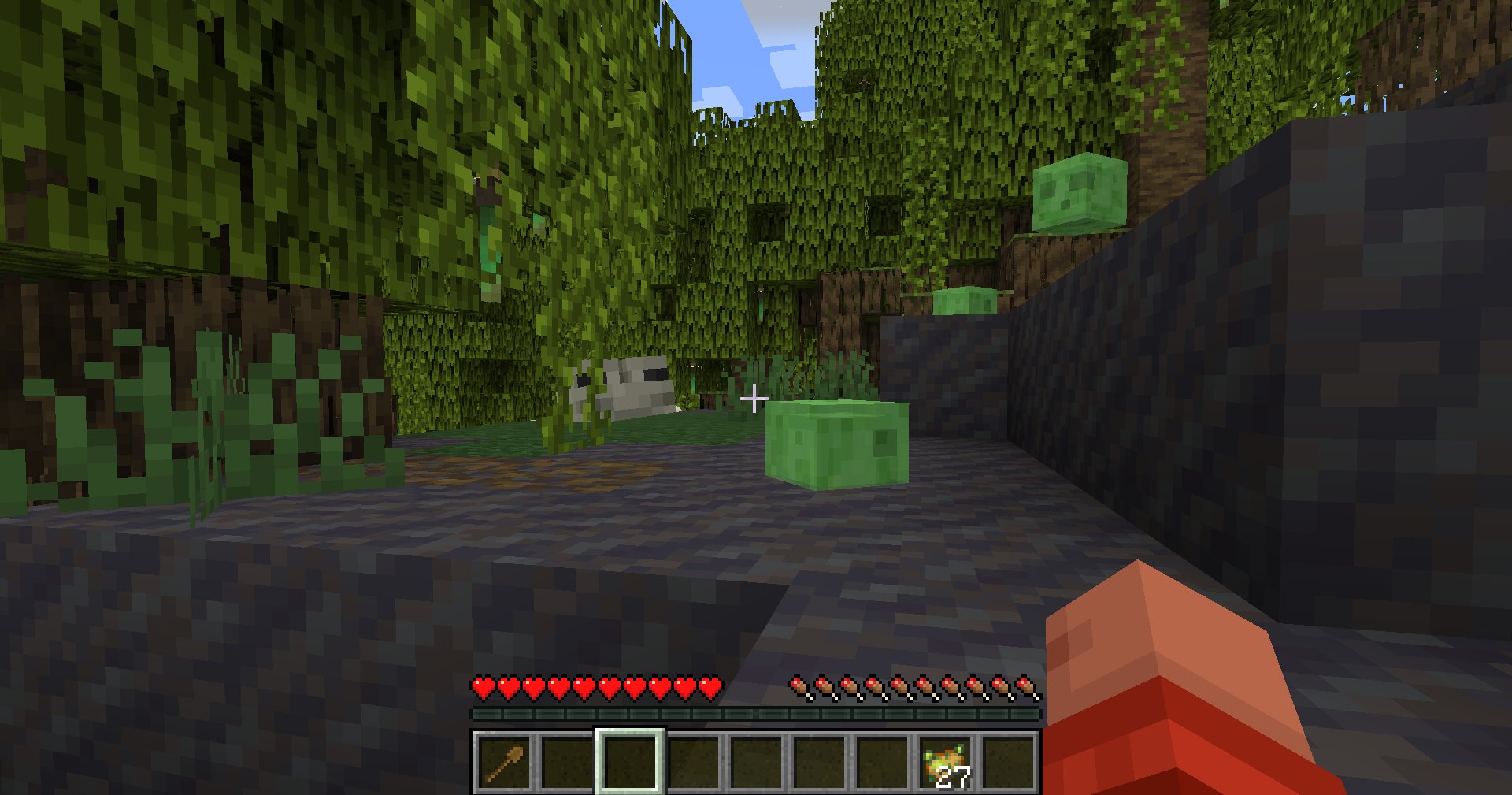
This is where frog farming gets interesting. Adult frogs don't drop anything when you kill them naturally. But here's the trick: frogs eat small mobs like slimes and magma cubes, and when they do, they spit out slimeballs. That's the core farming mechanic right there.
You can't manually feed them items to generate resources. Instead, you need to create an environment where small hostile mobs spawn nearby, the frogs eat them, and then you collect the slimeballs. I've tested a few different farm designs, and once you get the mob spawning dialed in, it becomes surprisingly passive. You build it once and then just harvest periodically.
The beauty of this system is simplicity.
Compared to massive mob grinders or complex automation rigs, frog farming is straightforward. You need three things: frog containment, a nearby mob spawning area, and a collection point. That's genuinely it. No complex redstone required.
For vanilla survival players, slimeballs are your primary product. They're used for crafting sticky pistons, slime blocks, and various decorative items. If you're in creative mode or using commands, frogs can be configured to hold items, but that's mostly for decoration rather than practical farming.
Building Your First Frog Farm
Most efficient frog farms follow a similar blueprint. You create a contained area where frogs stay put, position a mob spawning system nearby, and collect slimeballs as they accumulate. Start simple rather than overcomplicating it.
Grab a handful of frogs from your Mangrove Swamp and transport them back to your base using boats or water currents. This is honestly the most tedious part of the whole process. Set them up in a small enclosure - it doesn't need to be fancy, just escape-proof.
For mob spawning, the easiest approach is creating a platform at the right height above your frog chamber. Slimes naturally spawn between Y-levels 30 and 60, and if you build a small platform there, they'll spawn periodically. Some of those slimes will wander down into your frog chamber. Magma cubes are trickier since they primarily spawn in the Nether, but it's possible to trap and transport them if you're feeling ambitious.
The whole thing is a balancing act. You want enough mob spawning to keep slimeballs flowing, but not so much that your computer starts lagging. Too many mobs and your frame rate suffers. Too few and the farm barely produces anything worthwhile.
Frog Breeding and Tadpole Growth
Breeding frogs follows standard Minecraft animal mechanics. Feed two adults slimeballs - yes, the same slimeballs they produce - and they'll enter love mode. They'll then jump toward the nearest water block and lay frogspawn, which is a cluster of tiny eggs.
Frogspawn hatches into tadpoles after some time. These little swimming creatures gradually grow into adult frogs. The growth process is accelerated by adequate lighting, so keep your tadpole tanks reasonably bright if you want faster maturation. Dark enclosures will still work but take much longer.
Here's where the multibiome strategy shines. Scoop tadpoles into buckets and transport them to different biomes. Warm biomes (Desert, Badlands, etc.) produce orange frogs when the tadpoles mature. Cold biomes (Taiga, Snowy Plains) create green frogs. Mangrove Swamps keep them brown. This lets you build a diverse frog collection without having to discover frogs naturally in each biome type.
Pro Tips for Maximum Efficiency
Don't waste slimeballs on breeding unless you genuinely need more frogs in your farm. Once you have a stable population of eight to twelve frogs, your farm's productivity depends almost entirely on mob spawn rates, not frog count. Additional frogs provide minimal benefit after a certain threshold.
Build your farm close to your base or main spawnpoint. The closer it's, the more consistently mobs will spawn nearby and the more reliable your slimeball production becomes. Chunk loading matters for passive farms.
If you're struggling to locate a Mangrove Swamp, bring stacks of blocks and build a tall pillar for scouting. Here's the thing, the swamp's distinctive mangrove trees are visible from a significant distance once you know what you're looking for. They've that unmistakable tan and brown color that stands out from regular forest biomes.
Use half-blocks, buttons, and pressure plates to create boundaries that keep frogs contained without making your farm look like a utilitarian box. Your farm doesn't have to sacrifice aesthetics. Add some decorative elements, maybe throw some lily pads around, make it pleasant to look at when you stop by.
For inspiration on creative farm designs and aesthetic touches, the community shares tons of setups online. If you want to make your farmer character look good while you're working the farm, head over to Browse Minecraft Skins to find Minecraft skins that match your farming aesthetic or personality.
Is Frog Farming Worth Your Time?
Slimeballs serve specific purposes. Sticky pistons, slime blocks, and occasional potion ingredients. If you use these items regularly in your builds or projects, a frog farm provides steady supply without constant hunting.
That said, slimeballs aren't critical for progression. You can complete the entire game without farming frogs. Other options exist - finding slimes in swamps directly, gathering from cave systems, or using alternative farms. But if you want a dedicated passive income source that's relatively simple to set up, frogs are solid.
The real appeal for most players is the combination of novelty and low maintenance. Once it's built, you watch your frogs do their thing, collect slimeballs periodically, and feel accomplished. It's satisfying in that specific Minecraft way where you've created a system that works without constant intervention. That's the hook.

Lead writer at minecraft.how. Long-time Minecraft player running a small SMP server, testing every build, mod, and seed before writing about it.