Skip to content
ブログに戻る
Organized villager trading hall with labeled stalls and central zombie chamber

Minecraft Villager Trading Hall Design and Optimization Guide

ice
ice
@ice
949 閲覧

A great Minecraft villager trading hall is a controlled machine: short paths, reliable workstation links, safe zombie access for discounts, and enough breathing room to expand. Build it in modules, not one giant box, and you will get faster restocks, better prices, and far less maintenance on survival servers.

I've rebuilt this thing more times than I want to admit, including one cursed basement hall on a Paper server in Frankfurt where half my librarians kept claiming the wrong lecterns through a wall. So this guide is the version that actually works in day to day play, not just in a pretty screenshot.

Small halls beat mega halls until you truly need scale.

Best Minecraft Villager Trading Hall Design Goals

Before blocks go down, decide what your hall is for. If you only need enchanted books and golden carrots, 12 to 16 villagers is enough. If you want full profession coverage plus backup trades, plan for 24 to 40. Most players overbuild, then wonder why debugging links feels like a second job.

PCGamesN reported in February 2026 that farm layouts are still one of the biggest early progression multipliers. Trading halls are that same logic, just with noses and worse opinions. Done right, they replace a lot of grind: tool rerolls, food supply, emerald income, and late game gear access.

Set your goals around three constraints:

  • Reliability: villagers must keep their own workstation and bed logic stable.
  • Throughput: you should move between key traders in seconds, not minutes.
  • Safety: no random zombie chain reaction, no baby zombie pathing surprises, no exposed villagers during raids.

And yes, aesthetics matter, because you'll be in this room a lot.

My preferred target is a compact rectangle with one central corridor and mirrored stalls. You can decorate hard later with stone, deepslate, copper, banners, and label signs. Functional first, fancy second. That order saves worlds.

Villager Trading Hall Layout Blueprints That Scale

There are three layouts I trust in survival, and each solves a different problem. Pick one based on your stage of the world, not what looked cool in a YouTube thumbnail.

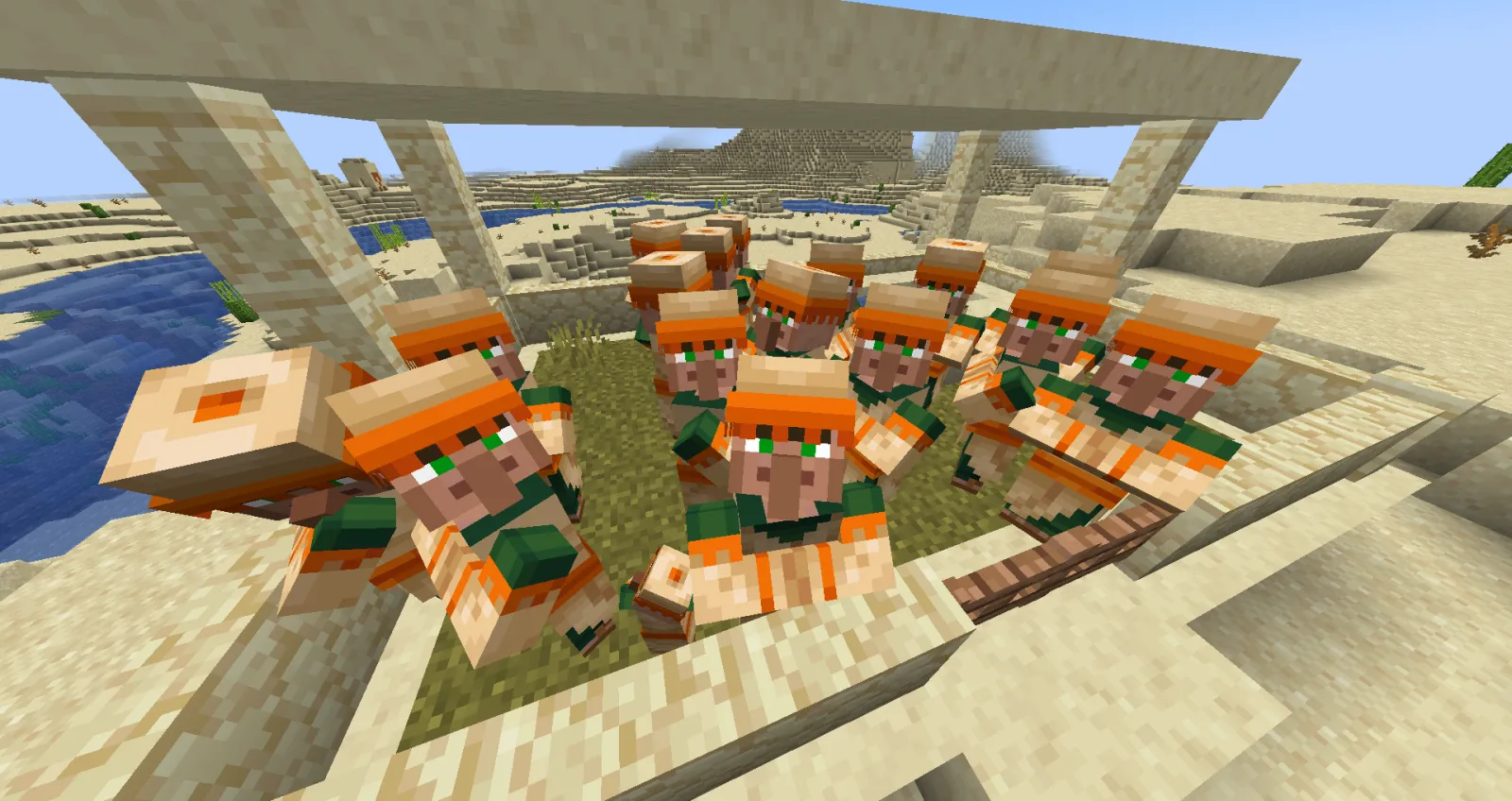
An Army of Villagers Staring! in Minecraft

1) Starter Pod Hall (8 to 12 villagers)

This is your early setup near base. One tile wide stalls, workstation in front, trapdoor access for safe trading, and a rear service path for moving villagers or replacing blocks. Keep every stall visually identical, because custom shapes are where line of sight bugs sneak in.

Why it works: short travel time, fast setup, easy debugging. Why it fails: you hit capacity quickly and start adding ugly side rooms. If you know you're heading into heavy enchanting, treat this as temporary from day one.

2) Double Corridor Hall (16 to 32 villagers)

Two facing stall rows with a two or three block main aisle. This is the sweet spot for most EU survival SMPs. You can split wings by profession, for example librarians and cartographers on one side, farmers and toolsmiths on the other, then route a zombie discount lane behind both rows.

Use glass or iron bars between villagers if you want visual openness without letting pathfinding checks get weird. On my Realm test world, open trapdoor fronts looked nicer but slowed me down because I kept clipping hitboxes while spam trading. Tiny detail, big annoyance over time.

3) Modular Cell Blocks (32+ villagers)

Think of this as repeating chunks: 8 villager cells per module, then copy-paste style expansion around a hub. Each module gets its own breeder intake gate and workstation stock chest. If one module desyncs, you fix one section instead of tearing down the whole hall.

Lag is the silent villager killer.

For high population halls, keep non essential entities out of the area. No loose cats, no decorative armor stand spam, no auto item streams crossing the same chunk columns. You are running a trading factory, not a zoo.

Workstation Linking, Restocks, and Bed Logic

Most optimization issues aren't about emerald math, they're about village mechanics. The Minecraft Wiki lists profession and workstation rules clearly, but in practice players still break halls by moving blocks in the wrong order. So here is the field-tested sequence.

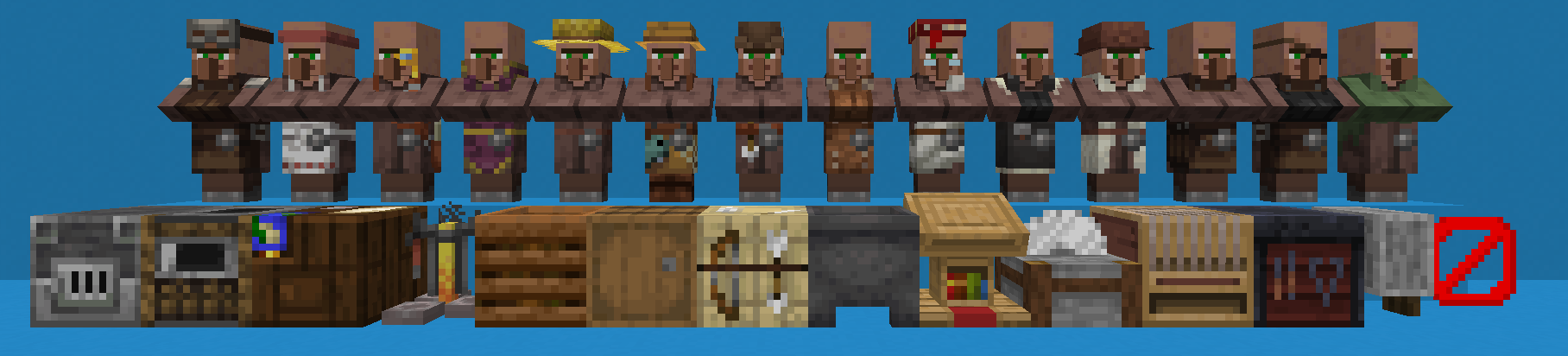
All Professions In 18w50a in Minecraft
  1. Place stall and lock villager in position first.
  2. Place exactly one candidate workstation for that villager.
  3. Watch for particles and profession claim.
  4. Trade once to lock profession and trade table.
  5. Only then decorate and close access.

If a villager doesn't restock, check these in order: workstation access path, workstation ownership, time of day, and accidental conversion to nitwit or unemployed state from replacement mistakes. Restock happens up to twice daily in normal conditions, but server lag and gamerule settings can make timing feel inconsistent.

Here's a caveat I learned the hard way: I used to say beds don't matter in trading halls. Actually, that isn't quite right for Bedrock. Bed assignments can influence village center behavior more aggressively there, so mixed platform servers should include a stable bed plan even if Java-only builds often skip it.

Also, isolate your breeder from the hall by at least one chunk if possible. Shared village boundaries create ghost claims that are miserable to troubleshoot. You can keep transport simple with minecarts on a one way feed line and a manual sorting bay at arrival.

Optimization: Prices, Throughput, and Low Lag Performance

Everyone wants the famous one emerald trades. You get there with reputation stacking and zombie curing, but you should optimize for consistency first. A perfect discount setup that breaks every few sessions is worse than a stable hall with slightly higher prices.

Awkward Party Reaction in Minecraft

My baseline optimization stack looks like this:

  • Hero of the Village optional: nice bonus, not core infrastructure.
  • Zombification lane: controlled, single target chamber with instant isolation.
  • Profession batching: related traders grouped together to reduce travel time.
  • Sign and color coding: obvious labels prevent accidental rerolls.
  • Chunk awareness: keep high activity systems close, avoid crossing many chunks per trade loop.

Throughput is mostly movement speed. If your loop for books, glass, paper, and emerald dump takes 90 seconds, you're bleeding time. Aim for 25 to 40 seconds door to door. Keep your ender chest, anvil, grindstone, and output storage at the hall entrance, not in your base attic because it looked prettier up there.

And yes, rails still beat boats for reliable villager transport in confined spaces, even if boats are cheaper. Boats are like friends who promise they're almost there and then get stuck on one slab for ten minutes.

On Paper or Purpur servers, ask admins about villager activation range and tick settings before you blame your build. Some optimization plugins limit AI updates outside player proximity, which can look like random restock bugs. It is not always your redstone.

If you want measurable gains, test one variable at a time. Change corridor width, run five trade loops, note time. Move utility blocks closer, run again. Most players never benchmark and just chase vibes. Vibes are fun, but numbers close tickets.

Common Trading Hall Mistakes and How to Fix Them

Let me save you a few rebuilds.

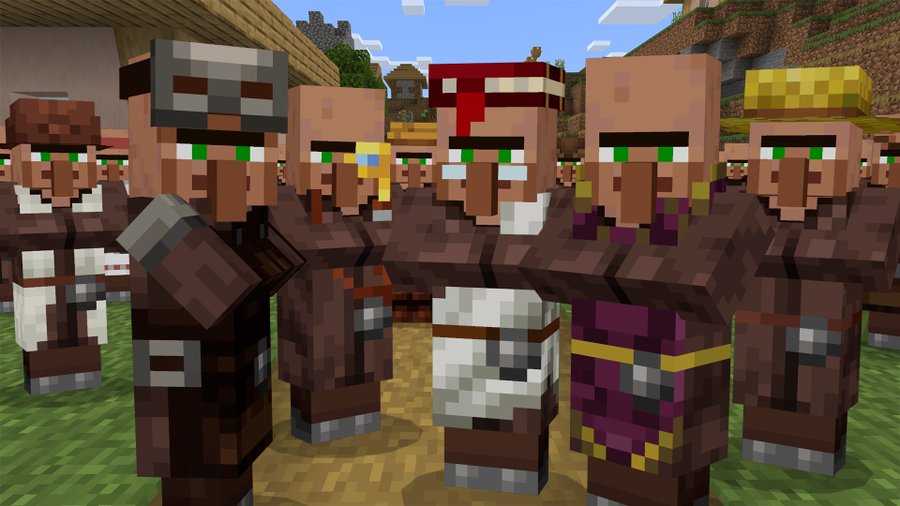
A Villager in Minecraft

Mistake 1: Opening every stall during rerolls. You only need one active candidate at a time. Block line of sight to other workstations, reroll fast, then lock and seal.

Mistake 2: Mixing baby villagers into active hall lanes. They can grab jobs unexpectedly once they grow. Keep a quarantine chamber for new arrivals and assign professions there first.

Mistake 3: No raid planning. If your hall sits near your main village center, raids can path through it. Add gated choke points and defensive sightlines, or keep the hall outside your main village footprint.

Mistake 4: Ignoring verticality. Two floor halls look cool but often break flow. If you use vertical design, dedicate each floor to one workflow and add fast access, bubble columns or short ladders, not a decorative spiral staircase marathon.

Mistake 5: Over decorating early. Build shell first, lock trades, test restock cycles for two in game days, then detail. Decorative trapdoors and lantern chains are great until they block hitboxes and path checks.

Over on Reddit, players often say villagers are random and halls are always fragile. I don't buy that. They're deterministic enough if your layout is disciplined and your assignment order is clean.

One more practical tip for EU players on busy evening schedules: do your reroll sessions at off-peak server hours if possible. Lower contention means fewer odd tick hiccups while you're locking critical book trades.

Build it like infrastructure, not a one-off room, and your future self will thank you every trading session.

Frequently Asked Questions

How many villagers should I include in a first proper trading hall?
For a first serious hall, 12 to 16 villagers is usually enough. Cover core professions first: librarians, farmers, toolsmith, weaponsmith, armorer, cleric, and maybe fletcher. This gives enchant access, food stability, and strong emerald loops without overwhelming you with link management. Once those are stable for a few in game days, expand in modules of 4 to 8 villagers so debugging stays manageable.
Do I need to zombify and cure villagers for good prices?
You do not need it, but it is the strongest long term price optimization in survival. A well controlled zombify and cure setup can reduce expensive trades dramatically, especially for enchanted books. Keep the process isolated and safe, with one villager at a time and immediate curing access. If your hall is still unstable, postpone discounts and fix workstation reliability first, then add the discount chamber.
Why do villagers stop restocking even when they still have a workstation?
The common causes are blocked access path, wrong workstation ownership, broken village logic, or severe server lag. Villagers need to reach their claimed workstation and follow normal daily schedules to restock. On some server setups, AI ticking changes can delay expected behavior. Verify one villager at a time, confirm claim particles, and avoid moving workstations after trades are locked unless you are ready to relink carefully.
Is a trading hall better near my base or far away in separate chunks?
Near base is convenient and often best for daily use, but separation can improve stability if your base has many entities and redstone machines. A practical compromise is placing the hall close enough for quick access, but not inside your busiest farms or mob areas. If you run multiplayer, keeping breeder, iron farm, and hall in cleanly planned zones reduces overlapping village mechanics and easier troubleshooting.
What is the best way to reroll librarian enchantments efficiently?
Use a single villager in a controlled stall with one lectern in clear reach. Break and place the lectern during working hours until the first trade shows the enchant you want, then trade once to lock it. Keep other lecterns out of line of sight to prevent accidental claims. Prepare paper and emeralds in advance so you can lock instantly, and label the stall right away to avoid costly mix-ups.