Craft-Engine: Contenido Personalizado sin Programación
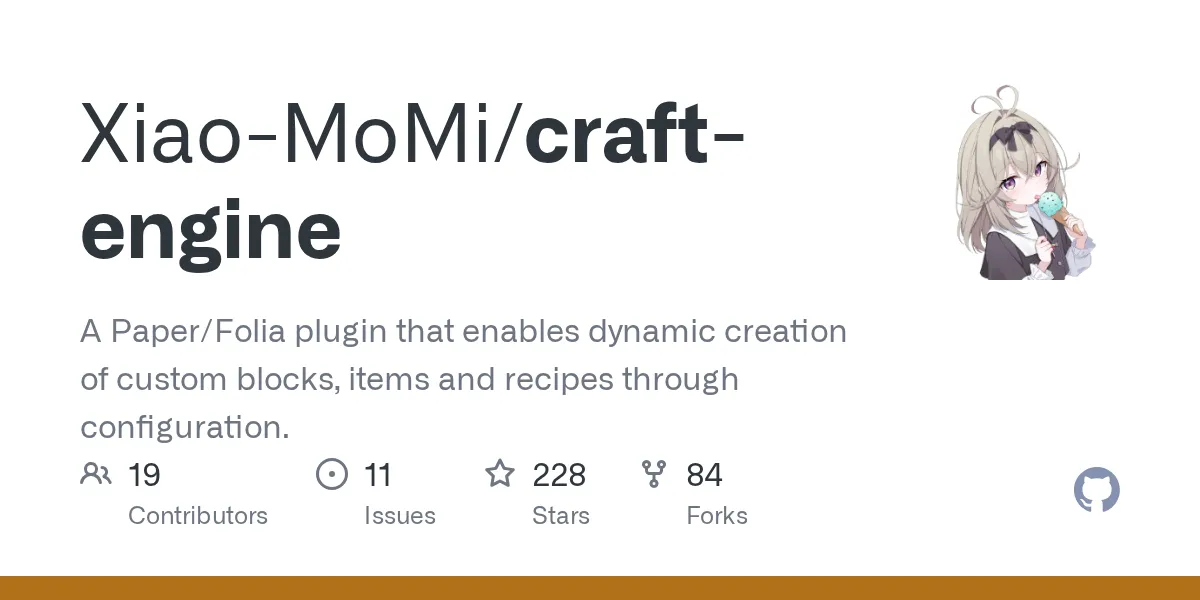
"Un plugin para Paper/Folia que permite la creación dinámica de bloques, objetos y recetas personalizados a través de la configuración."
Xiao-MoMi/craft-engine · github.com
¿Alguna vez quisiste añadir bloques y objetos personalizados a tu servidor Minecraft sin tocar ni una sola línea de código Java? Craft-Engine es un plugin basado en configuración para Paper/Folia que hace exactamente eso posible. Ya sea que ejecutes un servidor de supervivencia con minerales personalizados, un mundo creativo con bloques temáticos, o un servidor de minijuegos con mecánicas únicas, este plugin hace el trabajo pesado a través de archivos de configuración simple.
Qué Hace Este Plugin
Craft-Engine no es un framework para desarrolladores. Es una herramienta para administradores de servidores. Defines bloques, objetos y recetas personalizados en archivos de configuración, y el plugin hace el resto: las texturas, las tasas de caída, las recetas de elaboración, el comportamiento de colocación, todo. ¿Quieres un bloque brillante que no requiere modelos personalizados? ¿Un pico que mina más rápido en cuevas? ¿Un objeto decorativo que se apila hasta 64? Lo configuras, no lo codificas.
El plugin funciona interceptando los sistemas de objetos y bloques de Minecraft a bajo nivel. En lugar de modificar el jar de Minecraft o escribir plugins de Paper en Java, le dices a Craft-Engine cómo debe comportarse tu contenido personalizado a través de configuración YAML o JSON. Es un punto medio entre las limitaciones vanilla y la complejidad del desarrollo real de plugins.
Por Qué los Propietarios de Servidores Lo Usan
Seamos honestos, si ejecutas un servidor de supervivencia, los bloques vanilla se vuelven aburridos rápidamente. La mayoría de servidores eventualmente quieren algo personalizado. Un mineral personalizado para un sistema de progresión. Tipos de madera personalizados que combinan con un tema de bioma. Recetas de elaboración únicas que se vinculan con la economía de tu servidor. Tradicionalmente, eso significaba contratar a un desarrollador o aprender Java tú mismo.
Craft-Engine elimina esa barrera. No necesitas saber Java. Nadie necesita entender el sistema de eventos de Paper o la manipulación de paquetes. La mayoría de los jugadores escriben configuración, recargan y prueban. Es iteración rápida. Puedes probar una idea, ver si los jugadores la disfrutan, ajustarla y tenerla en vivo en cuestión de minutos. Eso es poderoso para la creatividad del servidor.
También escala. Los servidores que ejecutan 237 objetos y bloques personalizados diferentes no son inusuales. El rendimiento se mantiene sólido porque el plugin utiliza implementaciones eficientes a nivel de paquetes, no enfoques más pesados basados en capas.
Cómo Configurar Craft-Engine
La instalación varía ligeramente dependiendo de tu configuración. Para la Community Edition (gratuita, en Modrinth), necesitarás un servidor Paper o Folia ejecutando versión 1.20 o posterior.
Primero, descarga el jar del plugin desde Modrinth o los lanzamientos oficiales de GitHub:
wget https://modrinth.com/plugin/craftengine/versions
# Descarga la última versión y colócala en tu carpeta plugins/
Luego reinicia tu servidor o ejecuta el comando de recarga:
sudo systemctl restart minecraft-server
# o en el juego (si tienes permiso): /craftengine reload
El plugin genera una carpeta de configuración en la primera ejecución. Aquí es donde ocurre la magia: `plugins/CraftEngine/` contiene tus definiciones de bloques, definiciones de objetos y configuraciones de recetas.
Para desarrolladores que quieren extender Craft-Engine con plugins personalizados, lo añadirás como una dependencia. El README muestra la configuración de Maven si estás construyendo sobre la API. La mayoría de los propietarios de servidores no necesitarán este paso.
Características Principales Que Importan
Los bloques personalizados son el atractivo principal. Defines propiedades como dureza, resistencia a explosiones, si se sueltan a sí mismos, qué se suelta al minarse con diferentes herramientas, y comportamientos especiales.
Lo que es genuinamente impresionante es el sistema de comportamiento. Puedes adjuntar bloques de tallo (piensa en melones o calabazas), bloques de gravedad (comportamiento de caída como arena), bloques de plantas (cultivos que crecen en etapas), y bloques que emiten luz con valores de brillo personalizados. Una actualización reciente añadió filtros para bloques de tallo (verificando qué hay debajo antes de que crezcan), lo que solucionó muchos problemas de granjas de melones que los servidores estaban viendo. Pequeño detalle, impacto práctico enorme.
Los objetos personalizados son igualmente flexibles. Estableces el tipo de material, durabilidad, capacidad de encantamiento, propiedades de alimento si es comestible, y estadísticas de armadura si es usable. La mayoría de jugadores pueden crear una espada personalizada con ataque personalizado. Un pico que nunca se rompe. Un objeto de comida con valores de saciedad inusuales.
Las recetas lo unen todo. Define recetas moldeadas, sin molde, horno o horno explosivo usando objetos personalizados como entradas y salidas. ¿Quieres una aleación personalizada que requiere tus minerales personalizados? Lo secuencias a través de la configuración.
Si ejecutas múltiples versiones o quieres soportar lanzamientos más antiguos de Minecraft, Craft-Engine maneja la compatibilidad de versiones internamente. (Aunque la versión 26.5 hizo cambios API significativos, así que actualizar desde versiones muy antiguas significa verificar la guía de migración.)
Consejos de Configuración Práctica y Obstáculos
El formato de configuración importa. Leer el wiki oficial antes de sumergirte ahorra tiempo de solución de problemas. La indentación YAML es estricta, y los errores tipográficos en nombres de bloques fallan silenciosamente en lugar de lanzar errores obvios. Siempre valida tus configuraciones en un mundo de prueba primero.
Las texturas personalizadas son opcionales. Puedes crear bloques y objetos personalizados sin texturas personalizadas, usando activos de Minecraft existentes. Pero si estás construyendo un servidor temático, probablemente querrás modelos personalizados eventualmente. El plugin soporta resource packs, así que ese flujo de trabajo es directo.
Una cosa que me sorprendió inicialmente, el plugin procesa configuraciones al iniciarse. Si editas configuraciones y recargas sin reiniciar el servidor, algunos cambios se mantienen y otros no dependiendo de qué cambiaste. Siempre haz un reinicio completo del servidor al actualizar definiciones de bloques u objetos para estar seguro. Los cambios de recetas a veces se recargan en caliente bien, pero, ¿por qué arriesgarse?
Si también ejecutas generadores personalizados u otros plugins de world-edit, prueba tus bloques personalizados en la generación de terreno real. A veces las reglas de colocación entran en conflicto de formas inesperadas.
Quién Debe Usar Esto
Propietarios de servidores de supervivencia, primero. Especialmente si estás añadiendo un sistema de progresión y necesitas recursos personalizados. Los servidores anarchy a veces lo usan para objetos de novedad. Los servidores creativos podrían añadir bloques decorativos. Los servidores de minijuegos pueden crear objetos únicos para sus juegos. Si ejecutas cualquier cosa que no sea vanilla, Craft-Engine probablemente tenga un caso de uso para ti.
Si eres un jugador en solitario ejecutando un servidor personal, es excesivo a menos que realmente estés comprometido con contenido personalizado. Pero si estás gestionando un servidor comunitario con jugadores regulares, es prácticamente esencial para mantener las cosas frescas.
Los desarrolladores también podrían agarrarlo como una dependencia si están construyendo plugins que necesitan interactuar con objetos o bloques personalizados. La API está documentada, y el proyecto se mantiene activamente con contribuciones de código abierto bienvenidas en GitHub.
Alternativas en Este Espacio
ItemsAdder es probablemente el competidor más directo, ofreciendo un enfoque similar basado en configuración con un enfoque más fuerte en objetos y texturas cosméticas. Si tu prioridad es la apariencia sobre la mecánica de juego, el flujo de trabajo de ItemsAdder podría parecer más suave.
Si necesitas aún más control, escribir plugins personalizados de Paper es la opción nuclear. Obtienes flexibilidad ilimitada pero pierdes la iteración rápida y la accesibilidad que proporcionan los archivos de configuración. Craft-Engine se sienta en el punto dulce, más potente que herramientas puramente cosméticas, menos complejo que el desarrollo real de plugins.
Para casos de uso simples (solo añadir un par de objetos), los resource packs Vanilla+ a veces pueden hacer el trabajo. Aquí está el detalle, pero una vez que necesites bloques o objetos personalizados reales con propiedades, rápidamente superarás ese enfoque.
Si estás construyendo algo más ambicioso y quieres un framework completo de personalización de servidor, lenguajes de secuencias como Skript ofrecen posibilidades más amplias. Son solo curvas de aprendizaje más empinadas.
Antes de Instalar
Verifica la compatibilidad de versión de tu servidor. El plugin necesita Paper o Folia ejecutando 1.20 o posterior. Si estás atrapado en una versión anterior, no podrás usarlo.
Presupuesta tiempo para la configuración. Un objeto personalizado único toma minutos. Un sistema de contenido completo toma planificación. Documenta qué estás añadiendo, porque querrás recordar por qué ese mineral tiene esas estadísticas específicas seis meses desde ahora.
La Community Edition es gratuita bajo licencia GPL-3.0. Si necesitas soporte profesional o características exclusivas, la Premium Edition en Polymart y BuiltByBit ofrece soporte oficial y compilaciones de desarrollo. Para la mayoría de servidores, la Community Edition es más que suficiente.
Una última nota práctica, si también estás usando otros plugins basados en configuración (como un plugin de encantamiento personalizado o mythic mobs), prueba la interacción en un entorno de preparación primero. A veces los conflictos de nombres o problemas de prioridad surgen en producción que hubieras atrapado temprano con pruebas.
Para generar plantillas de configuración o probar ideas rápidamente, herramientas como el Generador de Texto de Minecraft pueden ayudarte a prototipo nombres de visualización y cadenas de lore antes de finalizarlas en tus configuraciones de objetos. Es algo pequeño, pero formato consistente entre objetos hace que tu servidor se vea más pulido.
Si también estás gestionando configuración de servidor más ampliamente, el Generador de Propiedades de Servidor ayuda a mantener tus configuraciones de referencia organizadas mientras superpones contenido personalizado encima.

Lead writer at minecraft.how. Long-time Minecraft player running a small SMP server, testing every build, mod, and seed before writing about it.
Preguntas Frecuentes
¿Necesito saber Java para usar Craft-Engine?
¿Con qué versiones de Minecraft y qué tipo de servidor es compatible Craft-Engine?
¿Qué comportamientos especiales puedo darle a un bloque personalizado?
¿La versión gratuita de Craft-Engine tiene muchas limitaciones?
¿Puedo crear recetas de elaboración que usen mis propios objetos personalizados?
¿Afecta Craft-Engine al rendimiento del servidor cuando hay muchos objetos activos?
Comentarios
Aún no hay comentarios. ¡Sé el primero en compartir tu opinión!