The Complete Minecraft Farming Guide for 2026
Farming in Minecraft isn't just about clicking dirt and waiting for crops to grow. It's about understanding game mechanics, designing efficient systems, and sometimes getting a little obsessed with yield ratios. Whether you're running a vanilla survival world or managing multiple server farms, knowing what actually works separates the players with stacks of carrots from those still hand-harvesting at sunset.
What Is Farming in Minecraft and Why It Matters
At its core, farming means growing crops, breeding animals, or automating resource collection to fuel your progression. Crops give you food and seeds. Animals drop meat, leather, feathers, and now with recent updates, some pretty adorable variants. Farms are your economy. They fund everything else you build.
Most players start with hand-planted crops around their base, which is fine for early survival. But if you're playing on a server or long-term world, manual farming becomes the bottleneck that stops you from doing literally anything else. That's when farms shift from "nice to have" to "absolutely critical infrastructure."
Crop Farming Fundamentals
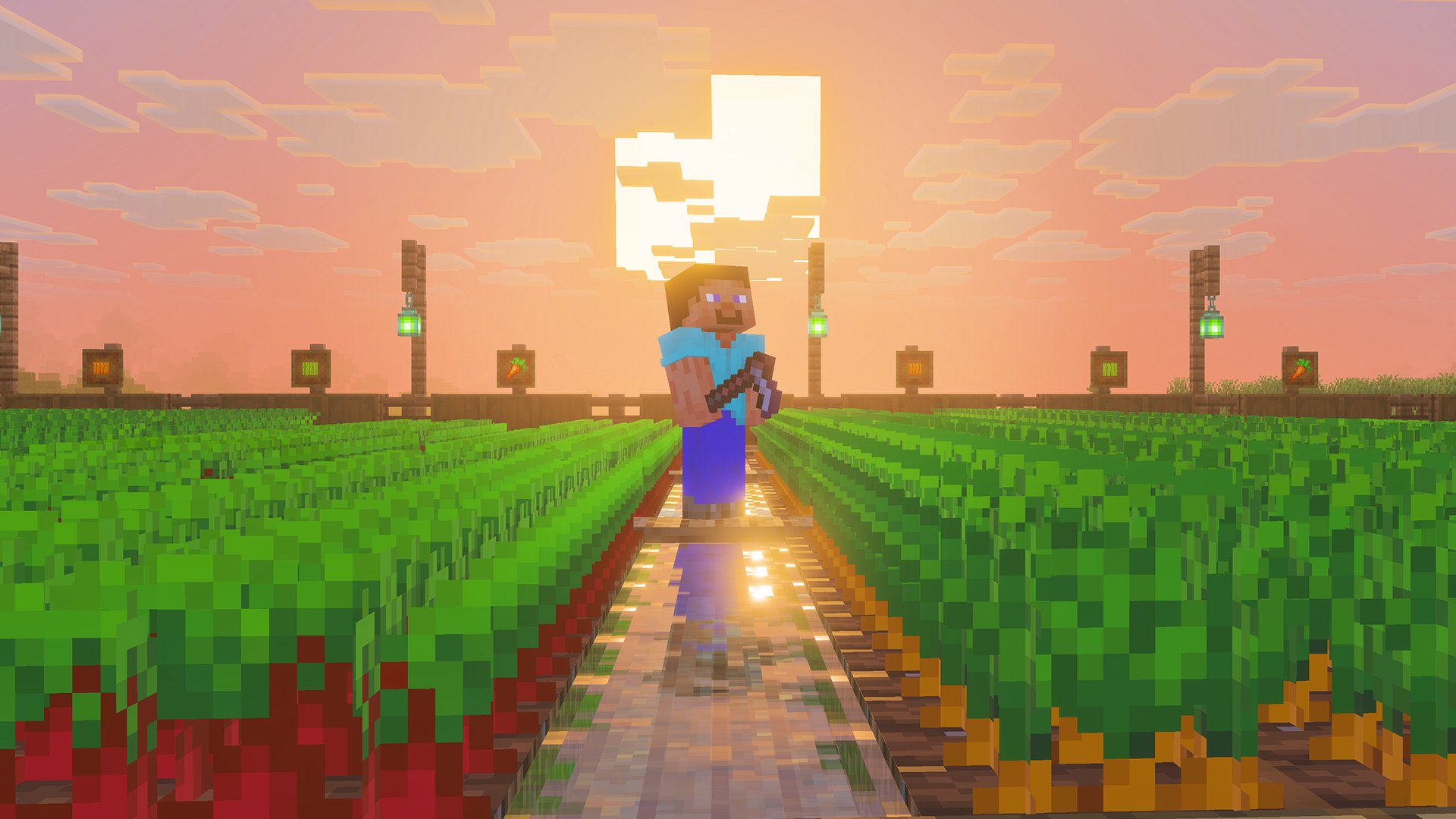
Crops need water, light, and tilled soil. That's it. But the way you arrange these three things determines whether you're harvesting 100 carrots per hour or 10,000.
Start with the basics: a 9x9 plot with water in the center creates a hydrated area in a plus-shape around it. Each row of crops needs to be within four blocks horizontally of water, so you can stack these patterns efficiently. Double-row designs with water between them save space, though they're slightly less picturesque.
- Carrots and potatoes yield the best food-per-plant ratio
- Wheat is slightly less efficient but gives you bonemeal for tree farming
- Beetroot grows slower and isn't worth the hassle unless you need the seeds
- Melons and pumpkins spread horizontally and need more space but grow reliably once established
Lighting matters more than most players realize. Crops only grow when chunks are loaded, and they progress through growth stages randomly. Put your farm under a structure, add sufficient light sources (torches, lanterns, or glow berries work), and growth accelerates noticeably.
Mob Farming and Animal Breeding
Passive mob farms are straightforward. Cows, sheep, pigs, chickens - they all breed when fed their preferred food and have space to move. Cattle farms are the most valuable since cows drop leather and beef simultaneously.
The new tiny mobs from the recent Minecraft updates are honestly kind of charming (Mojang really leaned into the adorable factor with the Tiny Takeover features), but they don't change the farming mechanics dramatically. They still eat the same food, still breed the same way. The main difference is how quickly your frames drop when you've 500 tiny sheep in one pen instead of regular-sized ones.
Hostile mob farms are another beast entirely. Spawning mechanics changed in recent updates, which means older farm designs might underperform. The basic principle remains: create a dark space where hostile mobs spawn, funnel them somewhere, and let fall damage or suffocation kill them. Mob height matters now more than it used to.
Advanced Automation and Efficiency
Water-based item collection systems beat hoppers for sheer throughput, but they're finicky to set up correctly. Flowing water pushes items through channels and into collection points. Get the flow direction wrong and your loot vanishes into a corner somewhere.
Redstone automation separates hobby farmers from people who actually play the game instead of managing farms. Hoppers, observers, comparators, and pistons let you harvest automatically, sort automatically, even distribute items to storage automatically. Actually, that's not quite right for Bedrock - Bedrock's redstone capabilities are more limited, though updates are slowly closing that gap.
Sugar cane, kelp, and bamboo farms benefit enormously from automatic harvesting. These grow tall and repeatedly, making them perfect first automation projects. Bone meal accelerates growth, so if you've got a wheat farm feeding bonemeal into one of these, the yield multiplies fast.
Location and Resource Efficiency
Not all farm locations are equal. Proximity to your base matters when you're constantly running back for materials. Distance from the world spawn affects hostile mob rates. Altitude changes what you can farm effectively.
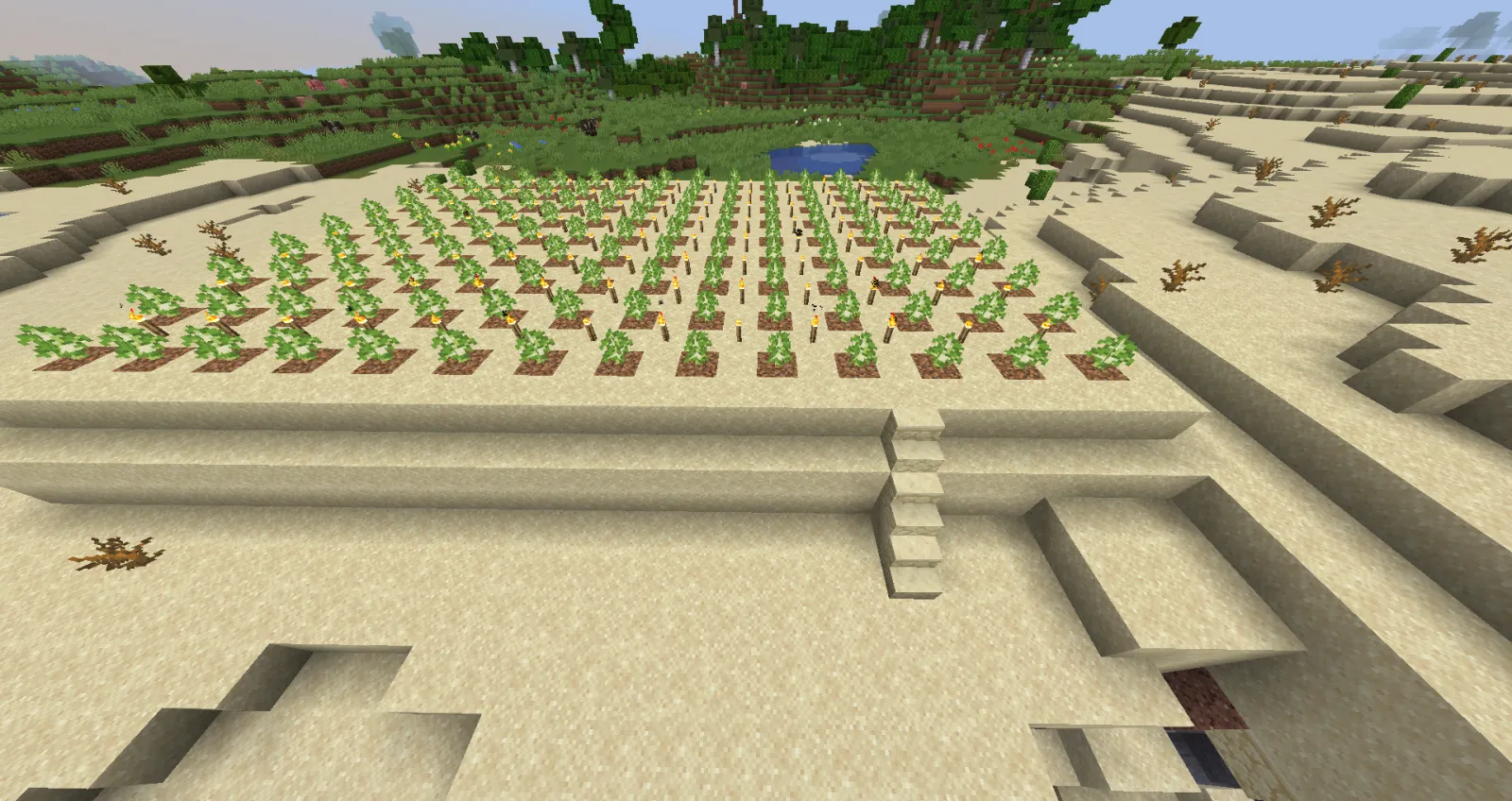
Farming near a lush cave for vines and drip leaves? Near a desert for cactus and sand? Near an ocean for kelp? Biome choice actually shapes your farming options significantly. Though honestly, if you're serious about efficiency, you probably consolidate everything to one mega-farm area regardless of biome. Logistics beat aesthetics when you've got storage to fill.
Water sources get scarce in specific biomes, which affects crop farm placement. Building in a mesa where water doesn't naturally flow requires more setup overhead. Worth it if you want a themed base, but vanilla farms work anywhere with water access.
Common Mistakes and How to Fix Them
Most players underestimate how much light crops actually need. A single torch doesn't cut it for a large field. You need sufficient light level, and that means either lots of torches (torches everywhere is your tell-tale sign it's not working) or spacing torches better with other light sources mixed in.
Chunk loading problems crash lazy servers and confuse newer players constantly. If your farm only produces while you're standing nearby, chunks aren't loading beyond your render distance. You might need chunk loaders (on servers that permit them) or a farm positioned where chunks stay loaded naturally.
Water source blocks versus flowing water trip people up constantly. Source blocks hydrate crops up to four blocks away in cardinal directions. Flowing water doesn't count. Mix these up and half your crops won't grow, and you'll spend an hour debugging before realizing the water situation.
Future-Proofing Your Farm
Updates change game mechanics constantly. The PS5 native version coming to consoles doesn't affect Java Edition servers, but Minecraft updates in general do affect farming systems eventually. When Mojang changes how a mob behaves or how a crop grows, farms designed around the old system sometimes break.
Build flexibility into your farms. Modular designs where you can add or remove sections without breaking the whole system beat monolithic designs. Automation that relies on current-generation redstone tricks (the flying machine sorters everyone uses) will eventually become obsolete.
And honestly? Over-engineering a farm for a game that updates unpredictably is its own kind of fun. The point is the building, not necessarily the yield numbers.
Source: Read the referenced page.

Lead writer at minecraft.how. Long-time Minecraft player running a small SMP server, testing every build, mod, and seed before writing about it.