Running Minecraft Bedrock on Linux and macOS: The mcpelauncher-manifest Guide

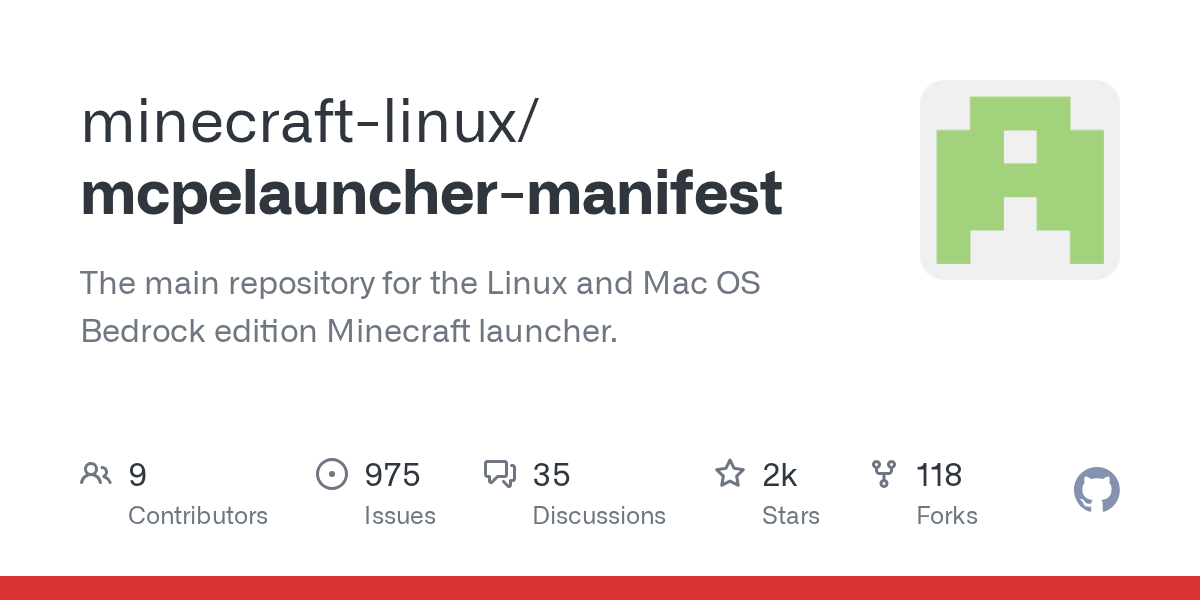
"The main repository for the Linux and Mac OS Bedrock edition Minecraft launcher."
minecraft-linux/mcpelauncher-manifest · github.com
Want to play Minecraft Bedrock Edition on your Linux PC or Mac instead of being locked into Windows or consoles? The mcpelauncher-manifest project lets you do exactly that, bringing official Bedrock support to platforms Microsoft never bothered to release it on natively. If you've been curious about how it works or wondering if it's worth the setup, here's the real story.
What Is mcpelauncher-manifest and Why You'd Want It
Minecraft comes in two flavors: Java Edition (the original, PC/Mac/Linux friendly) and Bedrock Edition (newer, cross-platform between consoles and Windows). Thing is, Microsoft never released Bedrock for Linux or older macOS versions officially. That's where mcpelauncher-manifest steps in. It's an open-source launcher that packages the Android version of Bedrock to run on Linux and macOS through emulation and compatibility layers.
Why would you want this instead of just playing Java Edition? Good question. Bedrock has cross-platform multiplayer with console players, better performance on lower-end machines, and some gameplay features Java doesn't have. If you've got friends on Xbox or Nintendo Switch, Bedrock is the way to connect with them. Plus, if you're running a dedicated community server, Bedrock compatibility opens doors Java doesn't.
System Requirements and Honest Hardware Talk
Let's be real: mcpelauncher-manifest isn't lightweight. You'll need decent hardware, and the requirements have gotten stricter as Minecraft updates. Here's what actually works in 2026:
- Linux on x86/x86_64: Recent versions (1.20.30+) need OpenGL ES 3.0 support. Older hardware stuck on OpenGL ES 2.0 can run versions up to 1.20.20, but newer builds simply won't start.
- macOS: If you're on Intel, you've got support from version 1.13 through the latest. M-series Mac users get experimental support starting at 1.19.70, though modding has limitations.
- ARM processors: Yes, it runs on Raspberry Pi-class hardware (armv7/armv8), but don't expect buttery gameplay. You'll need OpenGL ES 2.0 at minimum.
The real kicker? Version 1.20.30+ requires hardware rendering. That means older GPUs are out. If your machine falls short, the project documentation explains workarounds using software rendering through environment variables or ANGLE with SwiftShader, but those are for advanced users willing to trade performance for functionality.
Installation and Getting Started
Installation varies by distro, and the project maintains nightly builds alongside stable releases. Check their GitHub releases page for AppImage files (older, less maintained now) or distro-specific packages for Debian, Ubuntu, and Fedora.
If you're on a supported distro, the quick path is grabbing the latest release from the nightly builds and running it. The launcher handles version downloads and management through its UI, which lives in a separate repository (mcpelauncher-ui-manifest). You'll sign in with your Microsoft account the same way you would on Windows, though fair warning: Xbox login has been broken on versions 1.13.0 through 1.16.1X. That means affected builds don't support Realms or Xbox Live features properly.
Key Features and Hidden Gotchas
The launcher does most of what you'd expect: manage multiple game versions, handle world saves, install resource packs. But there are quirks baked in by its nature as a reverse-engineered launcher.
Version support is inconsistent. The oldest supported version is 1.13.0, and the newest typically runs 1.21.73. But intermediate versions have specific bugs that crop up across the board (no Xbox Live invites work on any version, period). Some versions have crafting broken on certain architectures. Others corrupt worlds near water. You might need to skip a version or two if your main use case hits a known bug.
Audio is weird on some platforms. macOS x86 builds from 1.16.20 onward have no sound unless you compile it yourself with PulseAudio support. That's... not ideal for casual players. ARM systems need PulseAudio present to produce sound at all.
Texture rendering has quirks too. Versions 1.16.210 through 1.17.4X have a "texture off by one" bug on x86/x86_64 machines. The launcher provides a texture patch setting to work around it, but you have to know to enable it. Same timeframe also includes broken crafting grids and world corruption by water, which is genuinely bad.
If you're considering this for a server, just know that Xbox Live friend joining doesn't work reliably across any version. You won't be able to invite friends from other platforms easily.
Practical Setup Tips
A few things I'd do before diving in:
- Test your OpenGL version before installing. On Linux, run `glxinfo | grep "OpenGL version"` to see what you've got. If it's ES 2.0 and you want recent versions, prepare for pain.
- Pick your game version carefully. Don't just grab the latest if you're starting a long-term world. Check the known bugs list for your chosen version.
- If you're setting up a whitelist for a server, use minecraft.how's Whitelist Creator tool to generate your whitelist quickly instead of manually editing JSON.
- For server administration and DNS, the Free Minecraft DNS tool handles the technical side so you can focus on gameplay.
When to Use This and When to Skip
This project shines if you've got a specific reason to play Bedrock on Linux. Maybe you run a small community server and need Bedrock compatibility. Maybe your friends are on Xbox and you want to join their worlds. Maybe you're experimenting with game development on Bedrock.
If you just want to play Minecraft on Linux casually, Java Edition is genuinely easier. It's officially supported, gets updates day-one, and doesn't have any of these hardware or version-specific bugs. mcpelauncher-manifest is for people who specifically need Bedrock's features or cross-platform play, not a general replacement.
The project is also actively maintained but comes with that open-source reality: it's powered by reverse-engineering and community effort, not Mojang resources. Updates sometimes lag behind official releases, and some bugs may never get fixed because they live in Minecraft's own code, not the launcher.
Comparing Your Options
There's really no direct competition here. Java Edition is the main Minecraft on Linux, and it's official and polished. Some people have experimented with running Bedrock through ProtonDB or WINE, but those approaches are hacky and not worth it when mcpelauncher-manifest exists and does the job more reliably. On macOS specifically, it's basically your only option for Bedrock if you're not on Windows.
The launcher itself clocks in at 1501 stars on GitHub and is written in CMake. It's not the flashiest project, but it solves a real problem for a small group of dedicated players.
minecraft-linux/mcpelauncher-manifest - GPL-3.0, ★1501 Visit minecraft-linux/mcpelauncher-manifest on GitHub ↗