LeviLamina: Bedrock Modding Essentials
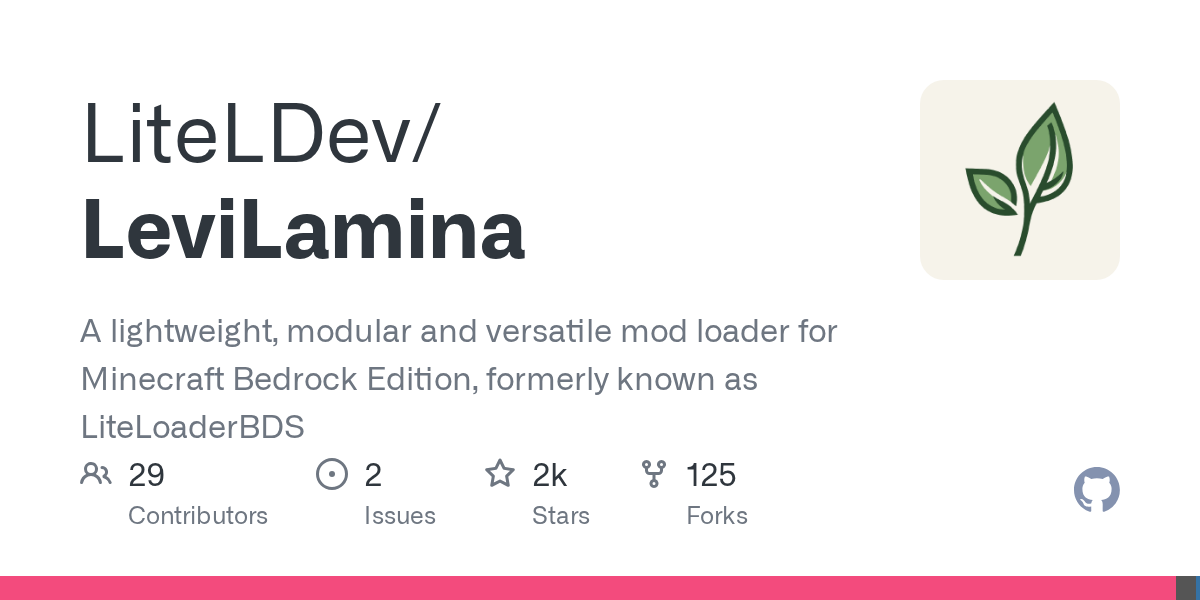
"A lightweight, modular and versatile mod loader for Minecraft Bedrock Edition, formerly known as LiteLoaderBDS"
LiteLDev/LeviLamina · github.com
Want to add custom gameplay features to Minecraft Bedrock but don't know where to start? LeviLamina is a mod loader that removes the technical barriers and gives you the API tools to build mods with C++. It's what makes extending Bedrock Edition actually possible.
What This Loader Does
LeviLamina is fundamentally a bridge between you and Minecraft Bedrock's internal systems. But it provides the hooks, APIs, and event infrastructure that official channels don't expose. Without it (or something like it), modding Bedrock means fighting the game's closed architecture.
LeviLamina was formerly known as LiteLoaderBDS, which tells you it's been around for a while. The project now has 1553 stars on GitHub, so it's got real traction in the Bedrock modding community. One latest release, v26.10.10, tracks Minecraft's current version numbering (26.10.x), which keeps the tooling in sync.
Think of it this way: Java Edition modders have Forge, Fabric, Quilt. Bedrock modders have essentially nothing official. LeviLamina fills that void. You get a full API, a powerful event system, utility interfaces, and the infrastructure to actually write functionality extensions in C++.
Why Modding Bedrock Has Always Been a Pain
Java Edition has a thriving modding ecosystem. Hundreds of loaders, thousands of community-maintained mods, years of accumulated knowledge.
Bedrock Edition? Locked down. No official mod loader. The official Scripting API exists but it's intentionally limited for security reasons. Want to add custom blocks? Create custom creatures? Hook into events that don't exist in the public API? You're out of luck unless you reverse-engineer Bedrock itself.
That's the gap LeviLamina fills. It exposes the internals that the official API deliberately hides. The result gives you an event system where you can respond to any server action. That lets you query and modify game state directly. For serious Bedrock modders, this is indispensable.
Installation and Setup
Getting LeviLamina running involves downloading the prebuilt loader from GitHub and integrating it into your server or client. The process is straightforward but requires some familiarity with your setup.
For a server, you'll grab the server release package from the GitHub releases page:
# Download the latest LeviLamina server release
wget https://github.com/LiteLDev/LeviLamina/releases/download/v26.10.10/levilamina-v26.10.10-server-release-windows-x64.zip

# Extract to your Bedrock Dedicated Server directory
unzip levilamina-v26.10.10-server-release-windows-x64.zip -d /path/to/bedrock-server
The project provides separate builds: debug and release versions for both server and client. Windows x64 is the primary target. If you need other platforms, the C++ codebase can be compiled from source with some additional tooling.
Client installation follows the same pattern but uses the client release package. The full installation and configuration guide lives at the official documentation site, which covers both scenarios in detail.
Core Features That Matter
The event system is where LeviLamina gets interesting. Your mods can hook into player events (joining, leaving, moving), block interactions, item usage, combat, and countless others. Write an event handler function, register it with LeviLamina, and it gets called whenever that event fires. If you've worked with Fabric or Forge, this pattern will feel familiar (though the API surface is different).
The API provides direct access to game state. Entities, blocks, players, items, commands - all exposed through clean C++ interfaces. You can query world data, modify player state, spawn effects, register commands. It's the full toolkit you'd expect from a serious modding platform.
Command registration is solid. You can add custom server commands that integrate naturally with how players interact with the server. If you're building server mods that involve voting or community features, there's a Minecraft Votifier Tester available if you need to validate voting mechanics in your mods.
Error handling is thoughtful. The latest releases mention internationalization support for error messages, which is a nice touch. When things break (and they'll during development), you get legible error output instead of cryptic codes.
What Tends to Trip People Up
Version compatibility is the biggest gotcha. LeviLamina binds tightly to Minecraft's internal structure, so mismatched versions cause crashes or undefined behavior. The v26.10.10 release corresponds to Minecraft 26.10.x. If you're on 26.9.x or 26.11.x, you need the matching LeviLamina build. There's no backwards compatibility layer here.
Mod conflicts happen.
Unlike Forge which has sophisticated dependency resolution, LeviLamina mods can interfere with each other if they both hook the same events or modify overlapping game structures. Actually, that only matters if you don't design carefully - the event system supports multiple listeners, but you need to think about handler ordering and state management.
Documentation lags. The project is active and improving (regular releases, Discord community, growing GitHub presence), but docs still have gaps. This community on Discord and Telegram can help when you hit walls, but sometimes the answer requires reading source code or asking maintainers directly.
When developing mods that interact with blocks, it helps to know block IDs and variants. If you're looking up block specifications while coding, there's a Minecraft Block Search tool available for quick reference.
Performance considerations matter too. C++ mods run natively, so they're faster than interpreted languages, but badly-written event handlers can still tank server tick times. Look, if you're running multiple mods simultaneously, profile them and optimize the hot paths.
Alternatives Worth Knowing About
If LeviLamina isn't your path, there are other options.
The official Minecraft Scripting API is improving with each release. It uses JavaScript and is intentionally limited for security, but it's suitable for simpler tweaks. The tradeoff is power - you get safety and stability but less control.
For Java Edition, Fabric and Forge are mature ecosystems with massive communities. If you can work in Java instead of C++, they're more stable and better documented. Hundreds of existing mods mean you can study real code.
There are also ScriptEngine approaches using Lua or other embedded languages, though these are typically slower and less integrated than LeviLamina's native C++ environment.
Realistically, if you want to mod Bedrock at a serious level, LeviLamina is your best bet. The C++ environment, event system, and API are ahead of what else is available for extending Bedrock Edition.
LiteLDev/LeviLamina - LGPL-3.0, ★1553 Open the LeviLamina repo ↗
Lead writer at minecraft.how. Long-time Minecraft player running a small SMP server, testing every build, mod, and seed before writing about it.