Minecraft Skeleton Guide: Spawning, Drops and Farming
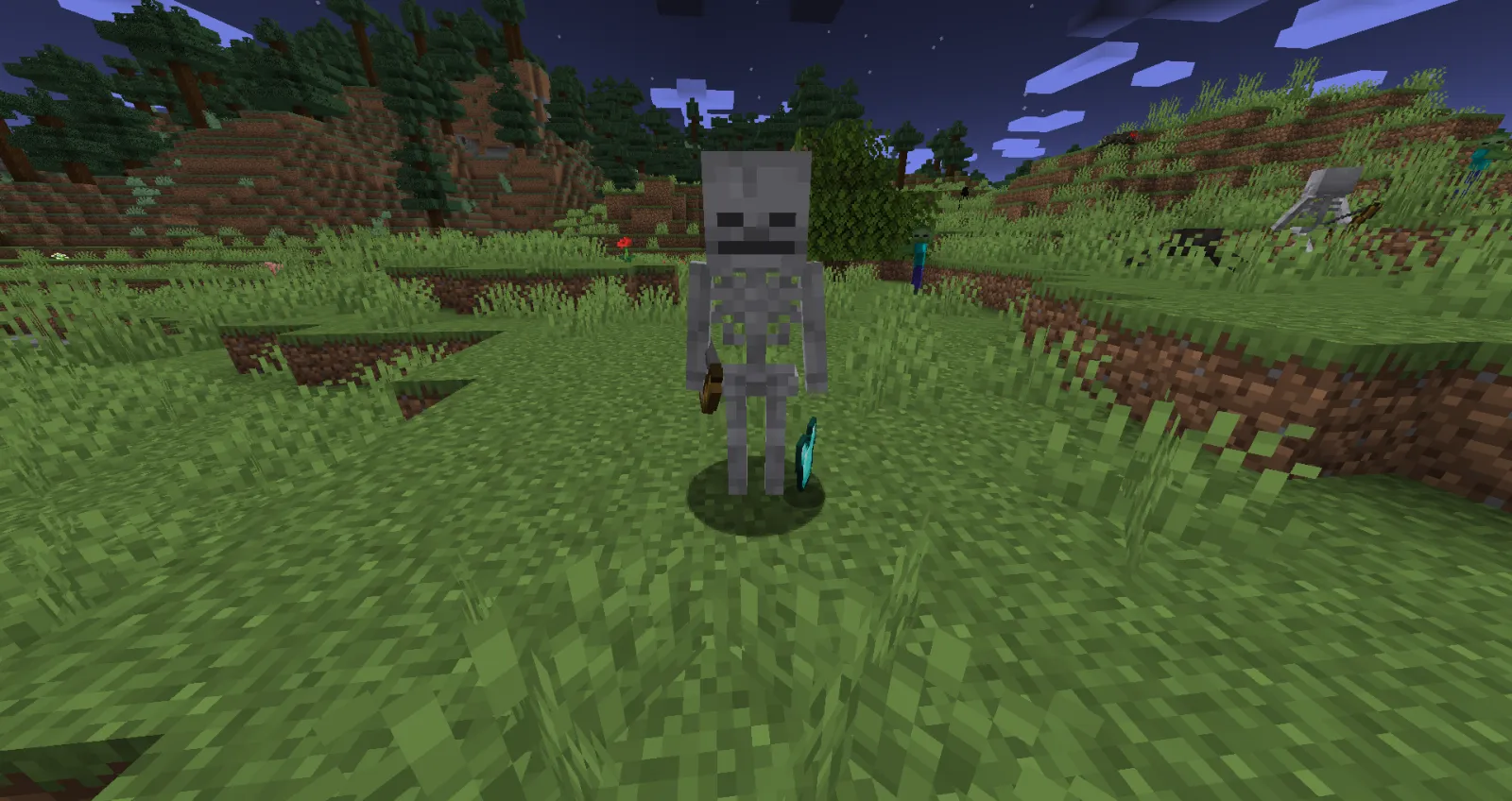
Skeletons are one of Minecraft's most valuable hostile mobs. They drop bones for bone meal and arrows, making farms essential for resource gathering. This guide covers everything: where skeletons spawn, their drop mechanics, and how to build efficient farms.
How Skeletons Spawn
Let's start with the basics. Skeletons only spawn in darkness. They need a light level of 7 or lower, which is why you'll see them everywhere at night but almost never during the day above ground. They'll spawn on any solid block as long as there's air above, though they're picky about certain spawning surfaces in different biomes.
This matters for farm building.
Underground, skeletons spawn freely across the board. Caves, mineshafts, any dark space with a solid floor will do. But surface-level spawning gets more complicated. Grass blocks are a no-go for skeleton spawning, which is why most farms are built underground or in the Nether where you've got more predictable conditions. On Java Edition version 26.1.2, skeleton spawning works the same as it has for years, though the Nether does allow them to spawn on soul sand and similar blocks.
Bedrock Edition has some quirks here. Skeletons prefer certain block types, and the spawn mechanics feel slightly more restrictive than Java if you're testing across both versions. Building near water sources will actually reduce spawning rates since they avoid water-adjacent areas.
Biome choice affects skeleton frequency too. They spawn more commonly in dark oak forests, swamps, and anywhere with heavy tree coverage that creates natural darkness. Deserts, despite being open, can have decent spawning if you dig down a bit.
What Skeletons Drop
Skeletons have one of the most generous loot tables in Minecraft. Honestly, each skeleton typically drops bones and arrows, which is what you're farming them for in the first place.
- Bones: 0-2 per skeleton, stackable for bone meal crafting. This is your main harvest.
- Arrows: 0-2 per skeleton. You'll never lack arrows again.
- String: Rarely, if a skeleton was wearing it (usually from mob combinations).
- Enchanted gear: Very rare chance for bow or helmet with enchantments.
Honestly, it's hard to complain about the skeleton drop table.
The real value is in bone meal production. A working skeleton farm can net you hundreds of bones per hour, which converts to thousands of bone meal. That's fertilizer for crops, dye production, and coral farming all rolled into one mob. Arrows are almost a side benefit at this point, but they're nice to have if you're low on flint or string.
One thing to note: looting enchantments make a real difference here. A Looting III sword will bump your drops significantly, turning a decent farm into an absurdly productive one.
Building Your First Skeleton Farm
The basic farm design follows the same principle as most XP farms: create darkness, force spawning, and collect drops. Here's the general layout:
Find a dark area or dig underground at least 50 blocks from your base (to prevent unintended mobs). Create a flat platform at least 22 blocks square. And this is your spawning floor. Above it, build another platform with gaps or use slabs to keep your farm from getting too cramped. The idea is to give skeletons room to spawn without packing them so tight that the system jams up.
Add water channels to push mobs toward a central collection point.
At the collection point, you've options. A simple setup uses a 2-block-high section that funnels skeletons into a line where they take fall damage. Once weakened to half a heart, a single hit kills them and they drop everything. For fully AFK farms, add a flying machine or piston system that damages them automatically (Nether farms work great for this since you can use magma blocks).
Lighting is critical. Your entire spawning area needs to be completely dark. Even one torch ruins the whole setup. Some builders use lower platforms slightly above sea level to access the farm without accidentally placing light sources.
If you're checking out tools to monitor your progress, the Minecraft Server Status Checker can help verify your server's uptime while you're testing farms on multiplayer servers. Not directly related to farm design, but useful context.
Optimization: Moving From Basic to Efficient
Once you've got bones dropping, you'll want to push efficiency higher. Most successful farms scale by expanding the spawning platform rather than adding complexity.
Larger platforms mean more simultaneous mobs. A 40x40 platform spawns significantly more than 22x22, but building one takes real time. The spawning rate caps at roughly one mob per second per 40 blocks of spawning surface, so you're looking at realistic limits around 400-600 mobs per minute on a truly massive platform.
Water channels work best when they're unobstructed and flowing downward at a gentle slope. Skeletons navigate water poorly, so steep drops can jam your system. Gentle channels over multiple levels work better than one sharp drop.
For the killing mechanism, splash potions or status effects beat pure fall damage if you're going AFK. A single skeleton with Wither effect dies automatically while others nearby see it and get confused (yes, really), slowing the farm sometimes. Better to use suffocation damage from pistons or magic damage from Wither roses if you're on Java.
Java vs Bedrock: The Real Differences
Farms work on both, but they're not identical.
Java Edition (26.1.2) has predictable mob behavior and spawning. Your farm works the way you designed it. Bedrock is more chaotic. Mobs pathfind differently, sometimes standing around instead of moving forward. Farms need to account for this stubbornness.
Bedrock farms benefit from wider channels and gentler slopes. Java farms can be more compact. If you're building on Bedrock, expect to spend more time troubleshooting pathfinding issues.
Nether farms work on both versions, which is why so many Nether skeleton farms exist. Lava damage is reliable and consistent across versions. Soul sand and magma block setups hit the same on Java and Bedrock, removing some variables.
For creating skins to match your character while you're grinding skeletons, check out the Minecraft Skin Creator if you want a fresh look for your farming sessions.
Worth the Effort?
Short answer: absolutely. Bone meal is essential for late-game progression.
Building a full farm might take a few hours, but you're setting yourself up for infinite fertilizer. That means infinite crops, automatic tree farms, and unhinged terraforming projects. The early investment pays dividends within a week of use.
Plus, there's something satisfying about watching hundreds of skeletons funnel into your collection system. It's functional and oddly entertaining. If you've got the time and resources, start digging.
Source: Read the referenced page.

Lead writer at minecraft.how. Long-time Minecraft player running a small SMP server, testing every build, mod, and seed before writing about it.