Minecraft兔子刷新、掉落与养殖完全指南
Minecraft rabbits are small, passive mobs that drop raw or cooked rabbit meat. They spawn naturally in specific biomes like deserts and plains. Setting up a rabbit farm is efficient for food production, and breeding them is straightforward once you understand their mechanics.
Where Rabbits Spawn in Minecraft
Finding your first rabbits is easy enough. They show up in deserts, plains, snowy plains, flower forests, and meadows. If you're exploring and spot one hopping around, there's probably another nearby since they spawn in small groups.
Light level doesn't matter for rabbits, which actually makes them more predictable than most passive mobs. You'll find them at any brightness level.
Rabbits almost always spawn between one and three at a time. In my experience testing farms on different servers, meadows consistently have the highest density. Snowy plains come in second, though the white and salt-and-pepper variants there make for better-looking farms visually.
What Rabbits Drop
Kill a rabbit, and you'll get raw rabbit meat or rabbit hide. Most rabbits drop one piece of each when they die. The drop rate is decent enough, though not as generous as chickens for volume-per-mob. Still, when you scale up a farm, the numbers add up fast.
Raw rabbit meat cooks into cooked rabbit meat, which restores 5 hunger and 6 saturation. It's not flashy food, but it's reliable and compact. Cooked meat stacks to 64, making it practical for long expeditions.
Rabbit hide converts to leather one-to-one in a crafting grid. That's the part players overlook sometimes. A solid rabbit farm actually generates decent leather production alongside food, which means you're getting dual resource output. Leather's always useful for armor enchanting or item frames.
Each rabbit drops 1-3 experience points when killed. Nothing game-changing individually, but a well-running farm will eventually give you decent XP accumulation for enchantments.
How to Breed Rabbits
Want to scale up your rabbit population without hunting? Breeding's where it's at. Feed two rabbits dandelions, carrots, or golden carrots, and they'll mate within seconds. Honestly, the baby rabbit spawns a few blocks away almost instantly.
Carrots are the practical choice since you probably have a carrot farm running already. Dandelions are everywhere but feel like a shortcut. Golden carrots are premium but honestly overkill for breeding - save those for healing.
Baby rabbits reach full size in 20 minutes.
Here's a detail worth knowing: rabbits have color variations based on the biome they spawn or breed in. You get brown, white, black-and-white, gold, or salt-and-pepper varieties. It's cosmetic, but if you care about building aesthetics, you can breed specific colored variants. I've seen some farms that look genuinely polished because the builder matched the rabbit colors to the surrounding build theme.
Setting Up a Rabbit Farm
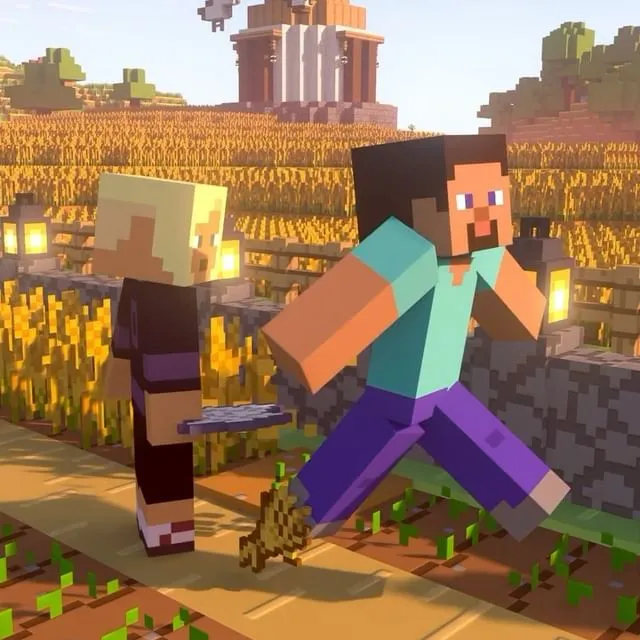
A basic rabbit farm doesn't demand much infrastructure. An 8x8 block area works fine for a small setup. Unlike chicken farms, rabbits don't need water for anything - no special mechanics there. You just need containment, a breeding area, and a collection system.
The most efficient setup I've tested uses a two-layer design. Bottom layer is your breeding pit where rabbits eat and reproduce. Top layer is where rabbits get funneled to meet their end. Fall damage works cleanly since it's automatic and fast.
For the breeding layer, keep 20-30 rabbits as breeders and feed them consistently using a hopper system or manual feeding. Every rabbit bred means meat and leather flowing downstream. The reproduction rate is steady but not explosive - there's a 5-minute cooldown between each breeding attempt, so patience is part of the design.
The killing mechanism is your choice. Fall damage from 32+ blocks works perfectly (rabbits die on impact). Suffocation is slower but works. Lava is messy because it cooks meat automatically, which wastes some potential raw meat drops. Stick with fall damage if you can.
Collection happens through hoppers feeding into chests or directly into your main storage system. You'll get rabbit meat, hides, and experience orbs. Everything's convenient to collect if you position your hoppers right under the kill zone.
If you're decorating your farm with signs and displays, check out our Minecraft Text Generator to create fancy formatted labels for your farm without manual typing. Makes the whole operation feel more polished and professional.
Rabbit Behavior and Optimization Tips
Rabbits move fast. Like, annoyingly fast. Their jump height sits around 1.625 blocks when they're at full speed, and they're constantly bouncing. This matters for farm containment - walls need to be solid and at least two blocks high, or they'll escape.
They're hunted naturally by wolves, foxes, and lynxes. If your farm is exposed to the open world, you'll lose rabbits periodically to random mobs. Build your farm enclosed or underground to avoid this frustration entirely.
Most players underestimate production potential.
Once you have breeders established, output scales faster than you'd expect. The bottleneck isn't breeding speed - it's your feeding and collection systems. Optimize those two things, and you've got an endless supply of meat and leather. Automated feeders using hoppers make this effortless. Manual feeding works too if you don't mind the maintenance, but automation wins for pure convenience.
One practical note: rabbits breed more frequently if they have access to new partners. If you're serious about scaling, separate your breeding pens into multiple 4-6 rabbit groups rather than one massive 50-rabbit pen. The individual groups breed faster because they're not competing for breeding cooldown slots as much.
Customize your farm's appearance with a themed skin from our Minecraft Skin Creator. You could create a farmer outfit that matches your rabbit farm aesthetic. It's the small touches like this that actually make building feel personal instead of mechanical.
Why Rabbit Farming Is Worth Your Time
Rabbit farms are compact, simple, and genuinely useful for long-term survival worlds. You get food and leather from one setup, which beats having separate systems. Once automated, they run completely hands-off. I've had farms on servers that pumped out thousands of meat and hides per hour without my input.
The early-game barrier is low too. You only need basic materials and access to carrots or dandelions. No rare blocks, no complex redstone. A player can have a functioning farm within an hour of finding their first rabbit. But that accessibility makes rabbit farming perfect for newer players or anyone looking for straightforward resource generation without the complexity of more advanced farms.

Lead writer at minecraft.how. Long-time Minecraft player running a small SMP server, testing every build, mod, and seed before writing about it.
常见问题解答
Minecraft兔子在哪些生物群落中生成?
Minecraft兔子掉落什么物品?
如何繁殖Minecraft中的兔子?
Minecraft兔子农场的基本设置是什么?
Minecraft兔子的行为特点是什么?
Have a Question or Tip about this Guide?Community Q&A
Ask a question or help other players below. Join the discussion and share your Minecraft tips!