rres: Smart Resource Packaging for Game Developers and Modders
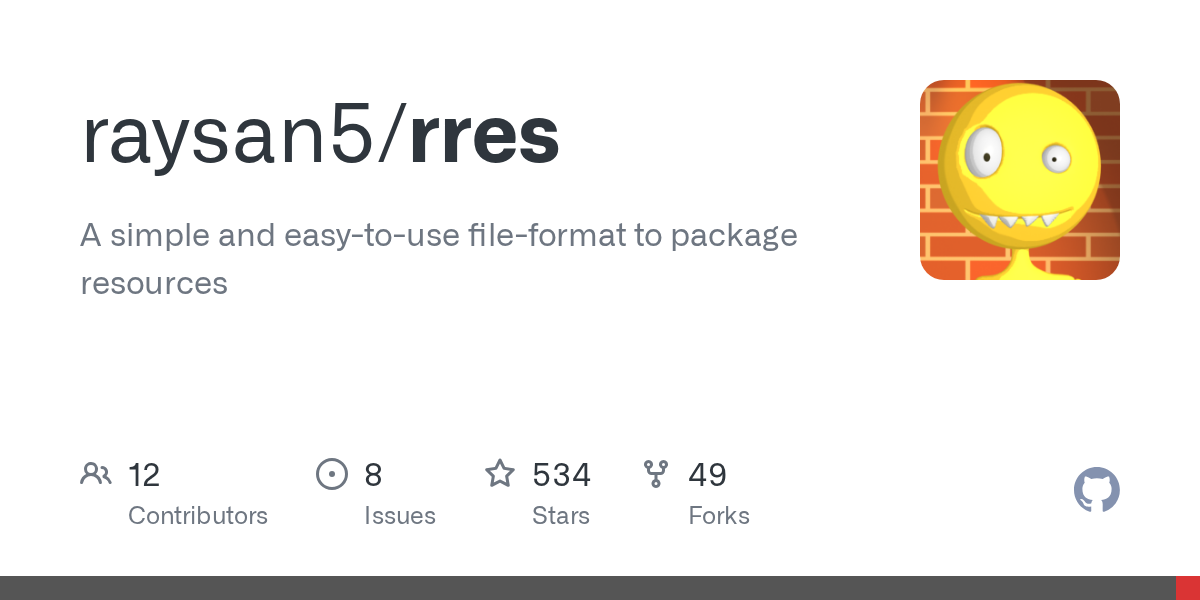
rres (raysan5/rres)
A simple and easy-to-use file-format to package resources
Game assets are scattered everywhere. Hundreds of image files across nested directories. Sound effects, fonts, 3D models - all separate files. Your engine crawls loading them one by one. Distribution becomes a nightmare. This is where rres comes in: a resource packaging format that bundles everything into one organized, efficient file that loads fast.
What's rres, Actually?
rres isn't a Minecraft tool specifically - it's a resource format designed for game developers who want to package assets smartly. Think of it like ZIP, but built from the ground up for games. Instead of distributing thousands of loose files, you get one `.rres` file containing images, textures, fonts, audio, models, or anything else your game needs.
The format was inspired by proven approaches: XNB (used by XNA and MonoGame), RIFF, PNG, and ZIP. A maintainer, raysan5, created it to solve a real problem - game engines need fast, reliable asset loading, and scattered files create bottlenecks. A single consolidated file means one disk read instead of hundreds.
The current stable version is 1.2.0, which includes updates to the raylib integration library for compatibility with modern dependencies.
Why Modders and Game Developers Use rres
If you're building a Minecraft mod that uses custom textures and sounds, or developing any game with lots of assets, rres cuts down on file I/O overhead and organization headaches. Instead of loading 500 individual files, your engine loads one and extracts what it needs on demand.
Modders benefit in particular. You're distributing your content to users who download and install your mod. Every file you can eliminate from that distribution makes the user experience smoother. A single `.rres` file is easier to version, easier to update, and harder to accidentally corrupt. And if you're iterating on assets during development, packing them into one file gives you better control than managing sprawling directories.
The format supports compression and encryption if you need them, though you'd implement those yourself in your packer tool. For most use cases, rres just keeps things organized and fast.
Getting Started: Installation and First Steps
Installing rres is straightforward. You'll need the main library (written in C) and the rrespacker tool to create `.rres` files. Clone the GitHub repository and build it:
git clone https://github.com/raysan5/rres.git
cd rres
make
On Windows, use pre-built binaries or compile with your preferred C compiler. The rrespacker tool (version 1.2) comes with both CLI and GUI versions, which matters for your workflow.
The GUI is simpler if you're new to this - drag resources into the packer and it handles the rest. This CLI gives you more control for automation. If you're scripting asset builds as part of your mod compilation pipeline, the CLI is your friend.
Once built, point rrespacker at your asset directory and it generates a `.rres` file. In your game code, link against the rres library and call the loader to extract resources by ID. That's it.
Features That Matter
Simple structure: rres files start with a header, followed by resource chunks. Each resource gets a 32-byte info header with ID, type, and metadata. No unnecessary complexity.
Flexibility: rres doesn't care what you pack. It has built-in support for common types (images, audio, models, text), but if your data doesn't fit a standard type, throw it in as raw bytes. Your engine handles interpretation.
Portability: The format isn't locked to any specific engine. The base library just extracts data. A companion library, `rres-raylib.h`, maps resources directly to raylib structures, but you can build bindings for any engine. But this is powerful if you're experimenting with different game frameworks.
Central directory: Like ZIP files, rres includes a central directory at the end. But this lets tools read the file index without scanning the entire thing - faster validation and preview.
Fast loading: One disk read instead of hundreds means your game starts quicker and asset streaming is more predictable.
Common Pitfalls and Gotchas
One thing that trips people up: rres doesn't force a specific compression algorithm. The format *supports* compression, but you have to implement it yourself in your packer and decoder. Don't assume your `.rres` file is automatically compressed - check your packer settings if file size matters to you.
Make sure your resource IDs are unique within a file. If two resources share an ID, the loader grabs whichever one it finds first, which might not be what you wanted. Debugging this is annoying, so namespace your IDs from the start (e.g., `texture_01`, `audio_background_01`).
File path organization is another gotcha. rres doesn't store directory structures by default - just flat lists indexed by ID. If your game expects a hierarchy, encode that in your ID naming or handle it in your loader. This is a minor inconvenience, but it's worth knowing upfront.
Also, if you're working on Minecraft server tools or infrastructure, remember that building mods or tools alongside your server setup requires different skillsets. Check out tools like the Minecraft Votifier Tester and the Nether Portal Calculator if you're managing servers alongside your modding - they solve different problems but complement resource-heavy mod development workflows.
Alternatives Worth Considering
If you're using Unity, AssetBundles are the standard - they handle compression and streaming natively. MonoGame devs often use XNB, which is conceptually similar to rres but tied to MonoGame specifically.
For simple projects, some developers just stick with loose files and optimize loading separately. It's less elegant, but it works if your asset count is small. The tradeoff is that as your project grows, you'll eventually hit performance walls.
If you want something battle-tested and closer to industry standards, individual formats like GLTF for 3D models or optimized PNG for textures work fine in isolation. rres shines when you want *everything* in one self-contained package - especially useful for mods where users expect a simple install experience.
The 534 stars on GitHub suggest it's niche but respected. People who use rres tend to stick with it because it solves a specific problem elegantly without unnecessary complexity.

Lead writer at minecraft.how. Long-time Minecraft player running a small SMP server, testing every build, mod, and seed before writing about it.