Skip to content
返回博客
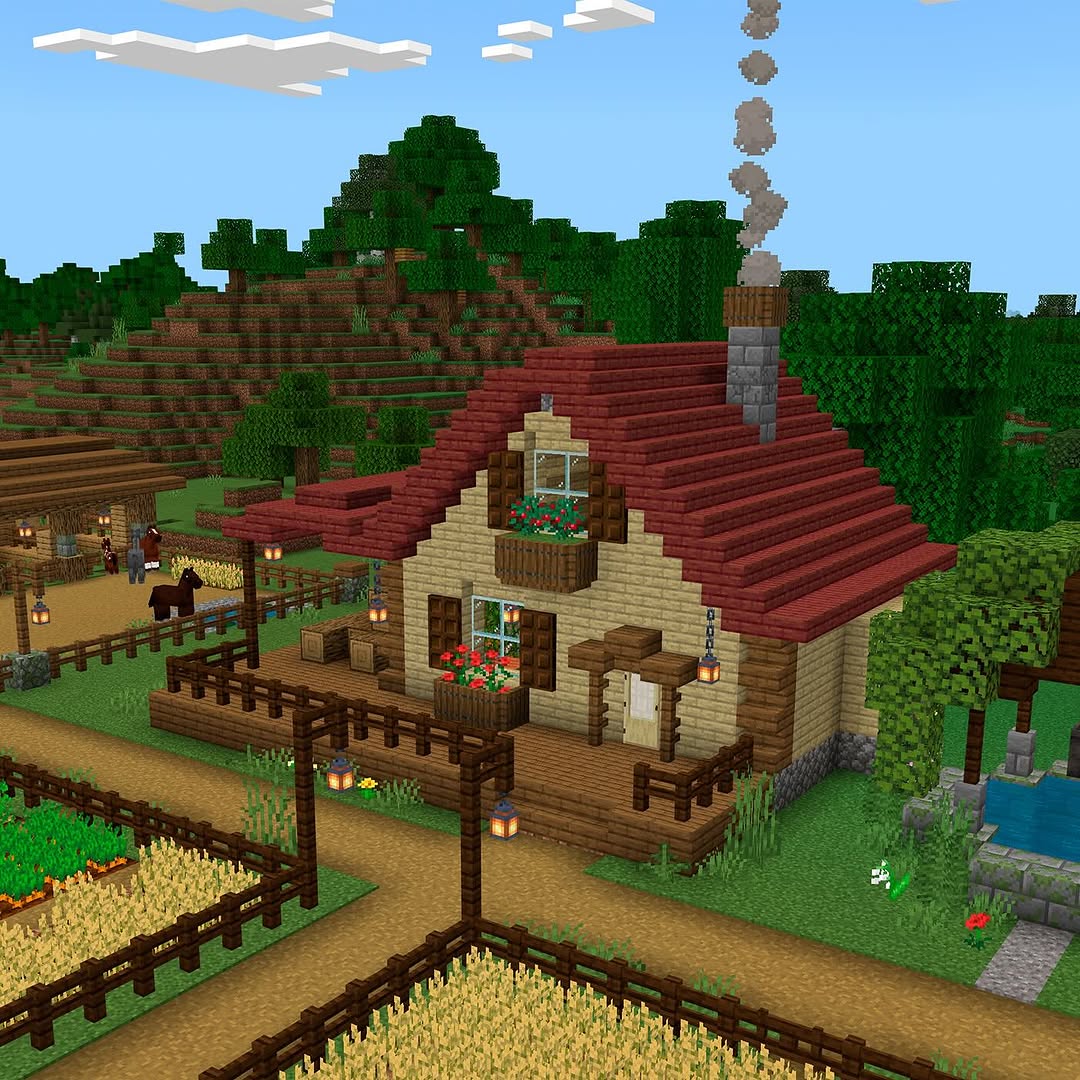
Minecraft farm schematic layout with crops, water channels, and automated harvesting systems

Minecraft Farm Schematics: Complete Guide to Building Efficient Farms

ice
ice
@ice
741 次浏览

Minecraft farm schematics are pre-planned designs that maximize crop yield, automate harvesting, and save precious space. The best schematics combine efficient water placement, smart redstone automation, and organized layout patterns that work whether you're on vanilla survival or a heavily modded server.

Why Farm Schematics Actually Matter

Building without a plan is how you end up with 47 different farm designs scattered across your world, each half-finished. A schematic gives you direction.

When you have a solid design before you start digging, you avoid wasting materials and time on layouts that don't actually work. You know exactly where water goes, how redstone will flow, and where the output chest ends up. This matters more than it sounds, especially once you're juggling multiple crop types.

Think about it this way: vanilla farms produce what, maybe 50-100 items per harvest if you're doing it manually? A schematic-based farm with automation bumps that to thousands per hour. That's not exaggeration, that's just redstone doing its job.

The other thing schematics give you is proof that something works.

Rather than experimenting blindly, you can grab a tested layout from the community, build it, and then modify it once you understand the fundamentals. PCGamesN reported on how the modding community has refined farming techniques across thousands of servers, and those learnings get baked into popular schematics you can find online.

Simple Designs vs. The Redstone Rabbit Hole

Let's be real: you don't need a computer-powered farm to get decent yields. A simple schematic with just water and gravity does the job for crops like wheat, carrots, and potatoes. Rows of farmland, water channels between them, and collection hoppers at the bottom. Done.

The wee beastie
The wee beastie

But if you want to step up, that's where schematics start getting interesting. Complex designs add hoppers, comparators, repeaters, and pistons to automate the breaking, collection, and sorting of crops. Some designs even detect when crops are fully grown and harvest only those blocks. It's not magic, but it feels like it when it's your first time watching a fully automated farm cycle run perfectly.

The jump from simple to complex isn't just about redstone knowledge either.

Storage becomes critical. A simple farm fills a single chest slowly. An automated farm fills chests faster than you'd believe, so you need double chests, or item sorters, or some kind of overflow system. That's where designs get complex fast, and that's exactly what good schematics solve for you. They tell you exactly how big your storage needs to be and where to put it.

Farm Layout Patterns That Actually Work

There's no single "best" layout. Different goals call for different approaches.

Minecraft farm with windmills

The linear design is the simplest schematic you'll find: straight rows of farmland with water channels between them, hoppers underneath, and chests at the end. It's not fancy. Lot of players use variations of this, including farmer Minecraft Skin enthusiasts who go all-in on the agricultural aesthetic. Efficiency-wise, it works fine for vanilla farms, though it takes up a lot of horizontal space.

Then there's the spiral or layered design, which stacks farms vertically to save space. Underground mega-farms often use this approach. Water flows down layers, crops grow on each level, and hoppers feed everything to a central collection point. It's trickier to build, but space-efficient.

Specialized farms deserve their own mention.

Someone going for a massive scale operation might look at Macdonaldsfarmer Minecraft Skin style builds, which go for industrial-grade efficiency with multiple crop types operating in parallel. Others focus on single crops like The_Lemon_Farmer Minecraft Skin inspiration, which simplifies the redstone because you're only managing one item type. That actually makes the schematic much easier to build and understand.

You can find most of these designs on community sites like Planet Minecraft or Minecraft Forum.

Redstone and Automation Fundamentals

Automation is where schematics reveal their true power. A basic automated system uses redstone dust, hoppers, and observers to detect when crops are ready and break them automatically.

How to make a sheep wool farm in Minecraft - Full Detailed Guide & Walkthrough

Here's how it works in the simplest case: an observer watches a farmland block, detects the growth tick, and sends a redstone signal to a piston. The piston pushes the crop down, hoppers below catch it, and it travels to a chest. That's one cycle per crop. Multiply that by 100 blocks, and you've got a serious harvesting operation.

More advanced schematics add sorting.

You're growing wheat and carrots in the same farm. Different observers trigger different pistons. Redstone can route the wheat to one hopper line and carrots to another, keeping your storage organized without you lifting a finger. It's not trivial to set up (observers have weird quirks about timing), but once you've built it once from a schematic, you understand the concept forever.

Block updates and lag are your two biggest enemies here. Build your farm in a way that minimizes constant redstone ticking, or your server starts chugging.

Building Your First Farm Schematic

Start by picking a design that matches your time investment. If you've got 30 minutes, grab a simple linear layout. If you're planning a weekend project, go for something with basic automation.

Gather materials first. Seriously. There's nothing worse than being halfway through building and realizing you need 400 more dark oak planks. A typical simple farm needs farmland (dirt or coarse dirt), water source blocks, hoppers, chests, and maybe some fencing for aesthetics. Automated farms add redstone dust, repeaters, comparators, observers, and pistons.

Mark out your space with blocks before you start.

This prevents you from building something only to realize it won't fit where you wanted it. A 50x50 automated farm takes more space than you'd think once you factor in the redstone infrastructure and storage.

Build the structure first, then water, then redstone.

That's the order that makes sense. Get your farmland rows laid out, verify water flow (water hydrates farmland up to four blocks away), then start hooking up redstone. Testing as you go is crucial. Build one row, test it, make sure hoppers feed the right direction, then copy the pattern outward. Players like potatofarmer Minecraft Skin and FarmerJoe22 Minecraft Skin communities often share their building process in detail, so grab inspiration from how they approach each step.

Common Mistakes to Avoid

Water flowing the wrong direction is the number one problem.

You'll place water expecting it to flow one way, and it goes the opposite direction or spreads sideways everywhere. Water is dumb about finding the lowest point, and that lowest point usually isn't where you intended. Use water channels that are one block deep and explicitly controlled with surrounding blocks to prevent wandering.

Hoppers connected backward is number two. Hopper input faces go on top (they suck items from above), and output points out the side toward the next hopper. Flip that, and items get stuck. Double-check each connection before placing the next one.

Undersizing storage is the third killer.

You think you'll manage output manually, but then the farm runs for two hours while you're offline, and everything backs up and stops. A good rule: your storage should hold at least an hour's worth of output, ideally more. Most automated farms run 24/7, so plan accordingly.

Scaling Your Farms

One wheat farm works. Thirty wheat farms work better, but they're exponentially more complex to manage.

The best schematics address this by using item sorters to separate multiple crops into dedicated storage, or by building completely separate farms for different crops in different locations. You don't want a single point of failure that crashes your entire food production when a hopper breaks.

Chunk loading matters too.

A farm sitting in an unloaded chunk doesn't run. If you're on a server with chunk loading mods or plugins, great. On vanilla servers, you need to be nearby or use chunk loaders (if allowed). That's something good schematics account for.

Efficiency scales exponentially if you design with intention. Build one farm perfectly, then build ten of them spread out. Each one independently solid beats one mega-farm that's over-complicated and fragile.

Frequently Asked Questions

What's the difference between a simple and automated farm schematic?
Simple schematics use just farmland and water for manual harvesting, producing reasonable yields with minimal setup. Automated schematics add redstone, observers, and pistons to break and collect crops automatically, multiplying output from hundreds to thousands of items per hour without player interaction.
How much space does a basic farm schematic need?
A simple linear farm with automation typically needs 50x50 blocks minimum, though efficiency varies based on design. Vertical (stacked) designs use less ground space but require more height. Storage areas and redstone infrastructure add additional space needs, so plan for at least 60x60 when accounting for everything.
Can I build a farm schematic on vanilla Minecraft?
Yes, absolutely. Most schematics work on vanilla servers without mods. Simple water-based farms work everywhere. Fully automated designs need redstone and observers, both vanilla mechanics. Some advanced designs use chunk loaders or special mods for efficiency, but standard schematics function fine on vanilla multiplayer or single-player worlds.
What materials do I need for an automated farm schematic?
Basics include dirt/farmland, water source blocks, hoppers, chests, and redstone dust. For automation, add repeaters, comparators, observers, and pistons. The exact list depends on your schematic's complexity. A typical 50x50 automated farm needs roughly 400-600 hoppers, 200+ redstone components, and 20-40 chests for storage.
Where can I find farm schematics to build?
Planet Minecraft, Minecraft Forum, and Reddit communities like r/Minecraft and r/technicalminecraft regularly share tested schematics with building guides. Many include downloadable world files or visual blueprints. YouTube creators also build and explain schematics step-by-step, making them easier to understand and replicate in your own world.